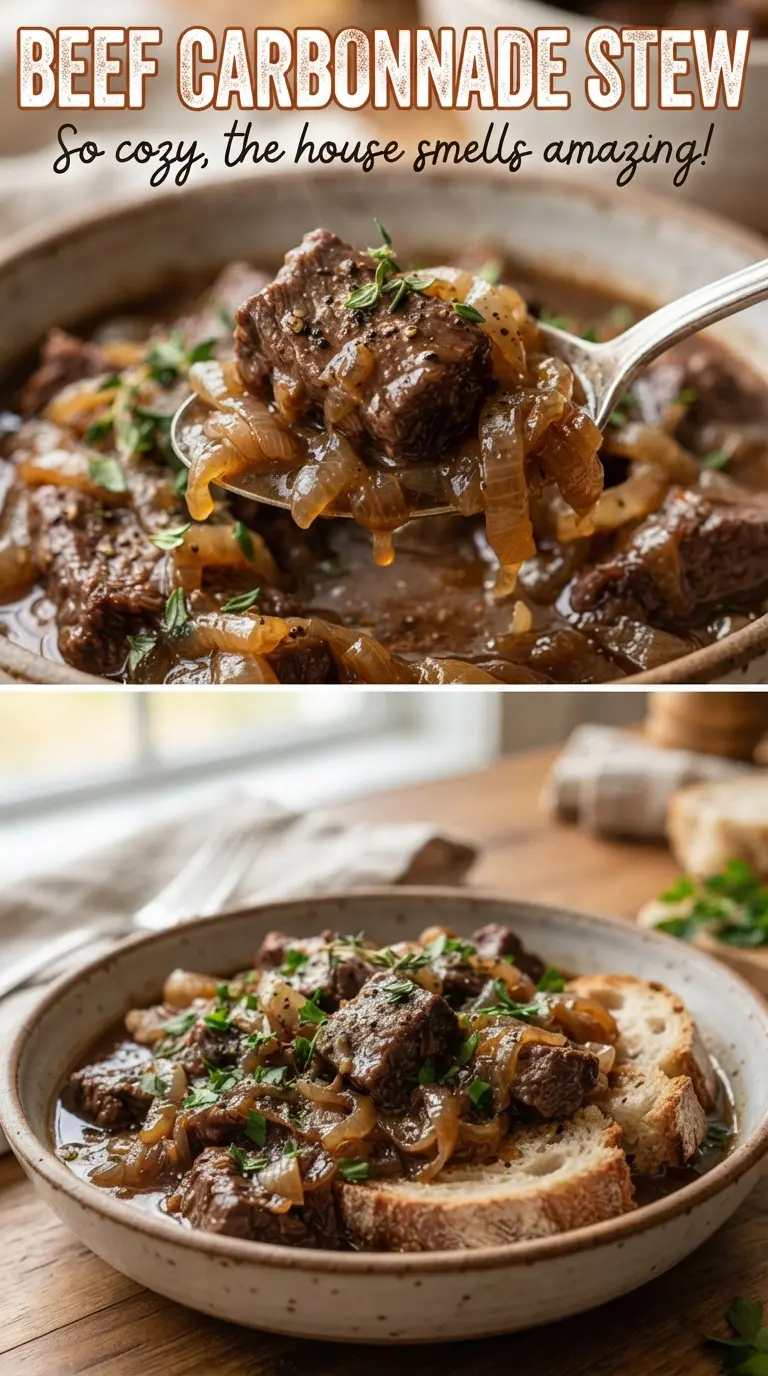
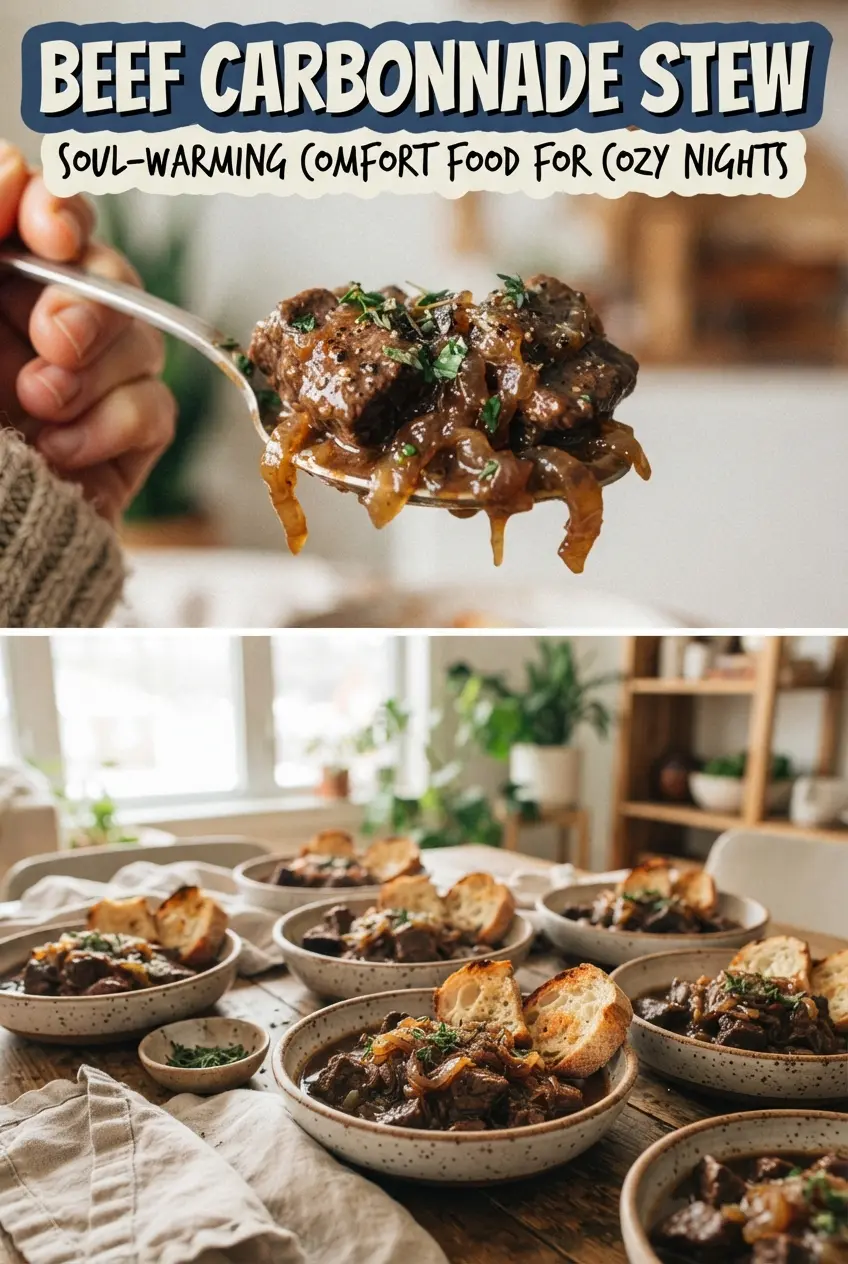
Beef carbonnade stew is the kind of pot that fills the kitchen with a dark, slow-cooked richness long before dinner is ready. The beef turns spoon-tender, the onions melt into the broth, and the sauce takes on a deep glossy finish that clings to every bite. It eats like a full meal, with a balance of sweetness, tang, and malt that keeps each spoonful from feeling heavy.
What makes this version work is the way the onions, beer, and mustard bread build the sauce together. The onions need real time to caramelize; that’s where the sweetness comes from, not from dumping in extra sugar and hoping for the best. The Belgian brown ale gives the stew its backbone, while a little cider vinegar sharpens the finish so the whole pot tastes rounded instead of flat. The mustard on top of the bread isn’t a gimmick either. It dissolves into the braising liquid and helps thicken and season the sauce as the stew cooks.
Below, I’ve included the small details that matter most: how dark the onions should get before you move on, why the bread goes on top instead of stirring it in, and a few smart swaps if you need them.
The onions got that deep jammy color and the mustard bread disappeared right into the sauce, which made the stew taste thicker and more balanced than I expected. My husband went back for seconds before I even sat down.
Save this Belgian beef carbonnade for a slow-simmered dinner with deeply caramelized onions and a rich beer sauce.
The Reason the Sauce Stays Deep and Glossy Instead of Thin
The biggest mistake in carbonnade is rushing the base. If the onions stay pale, the stew tastes sharp and one-note. They need enough time to soften, brown, and lose their raw bite before the beer goes in. That slow onion stage is what gives the finished sauce its color and sweetness.
The other piece that matters is the bread. It goes on top mustard-side down so it can break down slowly into the braising liquid instead of turning into paste at the bottom of the pot. As it cooks, it helps bind the sauce and gives the stew that characteristic Belgian thickness without needing extra starch at the end. The beer should be poured in after the flour has coated the onions, because that little bit of flour keeps the sauce from looking watery once it simmers.
- Beef chuck — This cut needs the full braise, but that’s exactly why it works. The connective tissue melts down over time and gives you tender beef with a rich, beefy sauce.
- Belgian brown ale — Use a malt-forward ale, not a bitter hop-heavy beer. The malt deepens the stew; the hops can make it taste harsh after hours in the oven.
- Dijon mustard — Spread it on the bread in a thin, even layer. Too much can take over, but the right amount adds sharpness and helps the sauce taste finished.
- Brown sugar and onions — The sugar nudges the onions toward caramelization, but the real sweetness comes from patience. If you stop the onions too early, the stew will taste flat and overly acidic.
What Each Ingredient Is Actually Doing in This Recipe
- Primary ingredient (the star) — Quality matters most. Choose the best you can find.
- Cooking medium (oil, butter, or broth) — This carries flavors and prevents dryness.
- Seasonings (salt, pepper, spices, herbs) — Layer flavors so nothing overpowers. Build depth gradually.
- Aromatics (garlic, onion, herbs) — Cook with fat to bloom flavors. Become the foundation.
- Supporting ingredients — Complement the main ingredient without overpowering it.
- Sauce or liquid (if applicable) — Brings flavors together. Balance richness with acid.
- Acid (lemon, vinegar, wine, or other) — Brightens and prevents flat-tasting results.
- Final finish (garnish, glaze, or sauce) — Prevents one-dimensional taste and adds visual appeal.
Building the Braise So the Beef Turns Tender, Not Stringy
Brown the beef in small batches
Season the beef first, then brown it in hot butter without crowding the pot. If you pile it in, the meat steams and throws off liquid, which keeps you from getting those dark browned bits that make the sauce taste like something. You want a deep crust on the outside and plenty of color left stuck to the pan. Those fond bits are the starting point for the braise.
Cook the onions until they go deep gold
Add the remaining butter and sliced onions, then cook them slowly until they soften and take on a deep golden color. Stir often enough to keep them from scorching, but not so often that they never get a chance to brown. If the pot looks dry before the onions are done, lower the heat rather than adding liquid. The onions should smell sweet and look almost jammy before you move on.
Use the bread as a built-in thickener
Once the ale, broth, and vinegar go in, scrape the bottom of the pot clean and bring the liquid up around the beef. Lay the mustard bread on top, mustard side down, then cover the pot and let the oven do the work. Halfway through the braise, the bread will start to fall apart and disappear into the sauce. That’s normal. Don’t stir aggressively early on or you’ll break the meat apart before it has time to soften fully.
Finish when the meat yields without resistance
After about 2 1/2 hours, check the beef with a fork. It should pull apart easily but still hold its shape. If it still feels tight or squeaky, it needs more time, not more heat. Pull out the thyme and bay leaves before serving, then spoon the stew over fries or mashed potatoes while the sauce is still glossy and hot.
How to Adapt This Belgian Stew for Different Tables
Gluten-Free Carbonnade
Use a gluten-free brown ale if you can find one, and replace the flour with 1 1/2 tablespoons cornstarch mixed with 2 tablespoons cold water near the end of cooking. You’ll lose a little of the old-fashioned bread-thickened texture, but the stew will still land rich and full-bodied.
No Alcohol Version
Swap the beer for a dark nonalcoholic beer or a mix of extra beef broth plus 1 tablespoon molasses and 1 teaspoon Worcestershire sauce. The stew will be a little less malty, but you’ll still get that deep, slightly sweet braising flavor.
Make It Ahead
This stew tastes even better after a night in the fridge. The sauce settles, the flavors round out, and the beef gets even more tender when reheated gently the next day.
Storage and Reheating
- Refrigerator: Store for up to 4 days. The sauce thickens as it chills, and the flavor gets deeper.
- Freezer: This freezes well for up to 3 months. Cool it completely, portion it into airtight containers, and thaw overnight in the fridge before reheating.
- Reheating: Warm it gently on the stove over low heat with a splash of broth if needed. Don’t boil it hard or the beef can dry out and the sauce can tighten up too much.
Answers to the Questions Worth Asking
Beef Carbonnade Stew
Ingredients
Equipment
Method
- Preheat the oven to 325F. Season the beef with salt and black pepper, then brown it in batches in a Dutch oven using 2 tablespoons butter.
- Add the remaining 1 tablespoon butter and the sliced onions to the Dutch oven, then cook for 20 minutes until deeply golden. Stir in the brown sugar and flour until the onions look glossy and thickened.
- Pour in the Belgian brown ale, beef broth, and apple cider vinegar, scraping the bottom to loosen all browned bits. Add the fresh thyme, bay leaves, and the browned beef.
- Lay the mustard-spread rustic bread on top, mustard side down, so it steams and dissolves into the stew. Cover the Dutch oven with the lid.
- Bake covered at 325F for 2 1/2 hours, stirring once when the bread has dissolved and the sauce thickens. Continue baking until the beef is very tender and the stew looks dark and glossy.
- Remove the fresh thyme sprigs and bay leaves before serving. Serve with fries or mashed potatoes and spoon the beer-braised sauce over the beef.