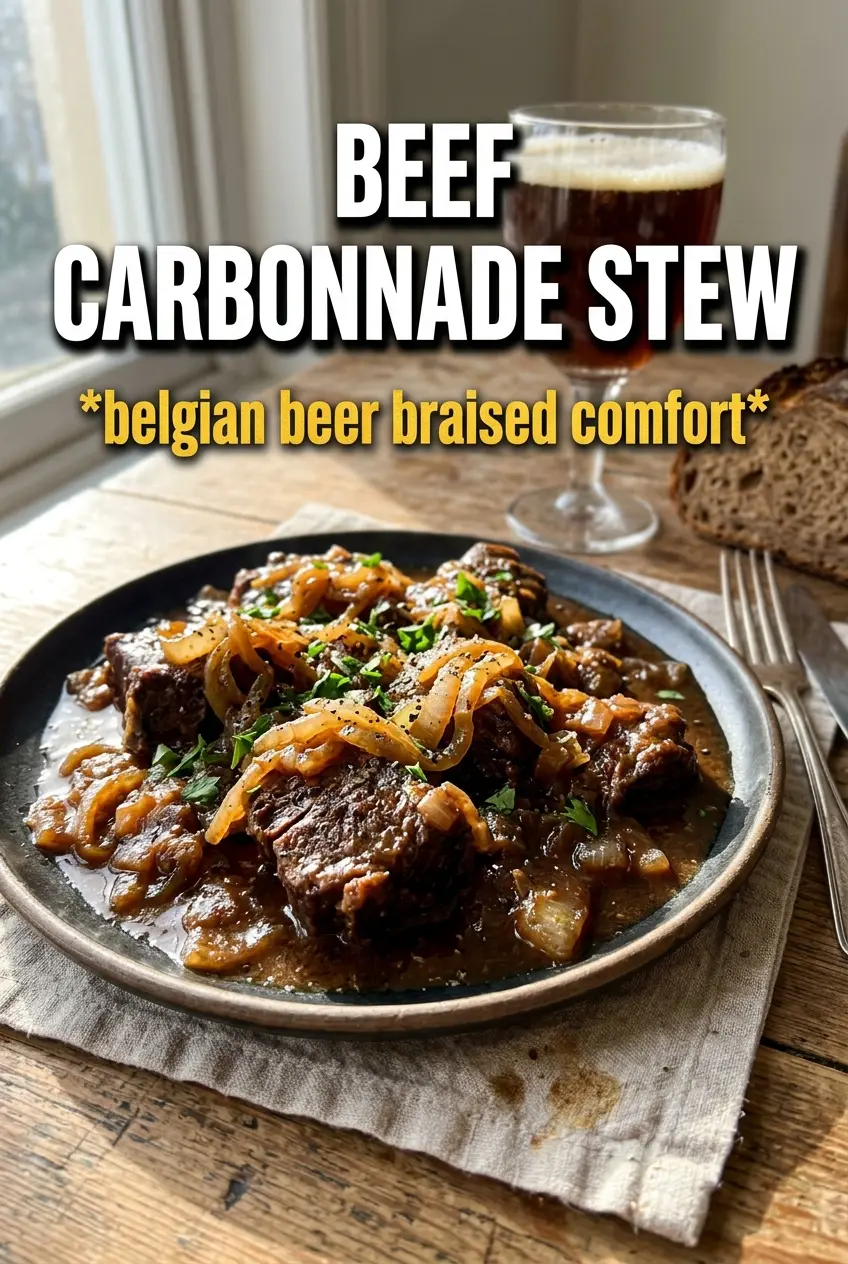
Beef carbonnade stew gives you spoon-tender beef in a deep mahogany gravy that tastes like onions, ale, and patience all worked together. The onions melt down until they turn sweet and jammy, the beer adds a dark maltiness that water or broth alone can’t fake, and the finished pot has that glossy, stick-to-the-bread texture that makes people keep tearing off one more piece. It’s the kind of stew that tastes even better at the table than it smells on the stove.
What makes this version work is the order. The beef gets a hard sear first, which builds the base flavor, and the onions cook long enough to lose their sharp edge before the beer goes in. That matters because carbonnade isn’t supposed to taste like a quick beef soup; it should taste layered and round, with enough acidity from the vinegar and enough sweetness from the onions and brown sugar to keep the stew from feeling heavy.
Below, I’ve included the small details that keep the sauce balanced and the beef tender, plus a few swaps if you want to adapt it without losing the character of the dish.
The onions broke down beautifully and the sauce turned glossy and thick after the full braise. I served it with crusty bread and the beef was fork-tender without falling apart into strings.
Love that deep Belgian beer gravy? Save this beef carbonnade stew for the nights when you want fork-tender beef and crusty bread in one pot.
The Trick to Keeping the Beer Gravy Deep Instead of Bitter
The biggest mistake with carbonnade is rushing the onions or using a beer that’s too aggressive. This stew needs time for the onions to collapse into sweetness, because that sweetness softens the ale and keeps the sauce from tasting sharp. If the onions still look pale and separate when you add the flour, keep cooking; they should be soft enough to smear when pressed and golden at the edges.
The other thing that matters is what happens after the beer goes in. Scrape the pot well and let the liquid simmer for a minute before adding the broth and beef. That brief simmer tames the beer’s bitterness and lifts the browned bits from the pan, which is where most of the flavor lives.
- Beef chuck — This is the right cut because it has enough connective tissue to turn silky over a long braise. Lean stew meat dries out faster and won’t give you the same rich texture.
- Dark Belgian ale or stout — Use a beer you’d actually drink. A dark ale gives the stew depth without making it taste burnt; a stout works too, but anything overly bitter will dominate the pot.
- Onions — Three large onions may sound like a lot, but they cook down into the body of the sauce. This is where the stew gets its sweetness and that soft, almost jammy finish.
- Dijon mustard and red wine vinegar — These keep the broth from feeling flat. The mustard emulsifies into the sauce and the vinegar sharpens all the dark flavors without making it taste sour.
What Each Ingredient Is Actually Doing in This Recipe

- Primary ingredient (the star) — Quality matters most. Choose the best you can find.
- Cooking medium (oil, butter, or broth) — This carries flavors and prevents dryness.
- Seasonings (salt, pepper, spices, herbs) — Layer flavors so nothing overpowers. Build depth gradually.
- Aromatics (garlic, onion, herbs) — Cook with fat to bloom flavors. Become the foundation.
- Supporting ingredients — Complement the main ingredient without overpowering it.
- Sauce or liquid (if applicable) — Brings flavors together. Balance richness with acid.
- Acid (lemon, vinegar, wine, or other) — Brightens and prevents flat-tasting results.
- Final finish (garnish, glaze, or sauce) — Prevents one-dimensional taste and adds visual appeal.
Building the Pot in the Right Order
Get the Beef Deeply Browned First
Season the beef well and sear it in batches in a hot Dutch oven. You want a dark crust, not just a pale gray surface, because that crust is what gives the stew its roasted backbone. If the pan gets crowded, the meat steams instead of browning, and you lose the flavor that makes the finished sauce taste slow-cooked instead of boiled.
Cook the Onions Until They Collapse
Once the beef is out, add the onions and let them cook over medium heat until soft, golden, and noticeably smaller. Stir often, but don’t keep the heat too high or the edges will scorch before the onions have time to sweeten. You’re looking for a soft, silky base here, not browned onion bits floating in fat.
Flour, Beer, and the Braise
When the garlic is fragrant, stir in the flour and cook it for a minute so the raw taste disappears. Then pour in the beer and scrape the bottom thoroughly; the liquid should pick up every brown bit. Add the broth, tomato paste, vinegar, brown sugar, Dijon, herbs, and beef, bring it just to a boil, then lower the heat to a gentle simmer. A hard boil will tighten the meat and can make the sauce greasy instead of smooth.
Finish When the Beef Gives Without Resistance
After about 2 hours, check the beef with a fork. It should yield easily and the sauce should have a darker, thicker look from the onions breaking down. Pull out the bay leaves and thyme before serving, then taste for salt and pepper at the end. The seasoning often needs that final adjustment because the beer, broth, and mustard all mellow as they cook.
How to Adapt This Carbonnade Without Losing Its Character
Gluten-Free Version
Skip the all-purpose flour and use a gluten-free flour blend or thicken the braise at the end with a cornstarch slurry. The flavor stays the same, but the sauce may need a few extra minutes to thicken after the beef is tender.
Alcohol-Free Braise
Use extra beef broth with 1 to 2 teaspoons of balsamic vinegar and a splash of extra tomato paste for depth. It won’t taste exactly like the beer version, but the onions and browned beef will still give you a rich, savory stew.
Make It Dairy-Free Without Changing a Thing
This stew is naturally dairy-free as written, so there’s nothing to change in the pot. Just serve it with bread that fits your needs, or spoon it over mashed potatoes if you want something softer under the sauce.
Make Ahead for Better Flavor
Carbonnade tastes even better the next day because the onions and beer settle into each other overnight. Cool it completely, chill it, and reheat gently before serving; the sauce usually tightens up in the fridge and needs a splash of broth to loosen.
Storage and Reheating
- Refrigerator: Store for up to 4 days. The sauce thickens and the flavor deepens as it sits.
- Freezer: Freezes well for up to 3 months. Cool completely and freeze in airtight containers, leaving a little space for expansion.
- Reheating: Rewarm slowly on the stovetop over low heat with a splash of broth if needed. Don’t rush it over high heat or the beef can tighten and the sauce can separate.
Answers to the Questions Worth Asking
Beef Carbonnade Stew
Ingredients
Equipment
Method
- Season beef with salt and pepper, then sear in vegetable oil in a Dutch oven over high heat until deeply browned, about 6-8 minutes total. You should see a dark crust form on most surfaces before removing the beef.
- Cook onions over medium heat for 20-25 minutes until very soft and golden. Stir occasionally so they turn translucent and develop browned edges without scorching.
- Add garlic and cook for 1 minute, stirring until fragrant. The onions should smell sweet and the garlic should not brown.
- Whisk in all-purpose flour and cook for 1 minute. The mixture should look slightly paste-like and smell toasty.
- Deglaze with dark Belgian ale or stout beer, scraping up all browned bits from the bottom of the Dutch oven. Make sure you dissolve the fond into the liquid until mostly smooth.
- Add beef broth, tomato paste, red wine vinegar, brown sugar, Dijon mustard, fresh thyme, bay leaves, and beef. Stir to coat the beef and distribute the aromatics evenly.
- Bring to a boil, then reduce heat, cover, and braise for 2 hours until the beef is very tender. The liquid should be gently bubbling under the cover, and the meat should break apart easily when pressed.
- Remove bay leaves and thyme, then taste and season with more salt and pepper if needed. Serve once the broth tastes balanced and the beef is fork-tender.
- Serve the beef carbonnade stew with crusty bread for soaking up the thick mahogany broth. The bread should be ready on the side while the stew is hot.