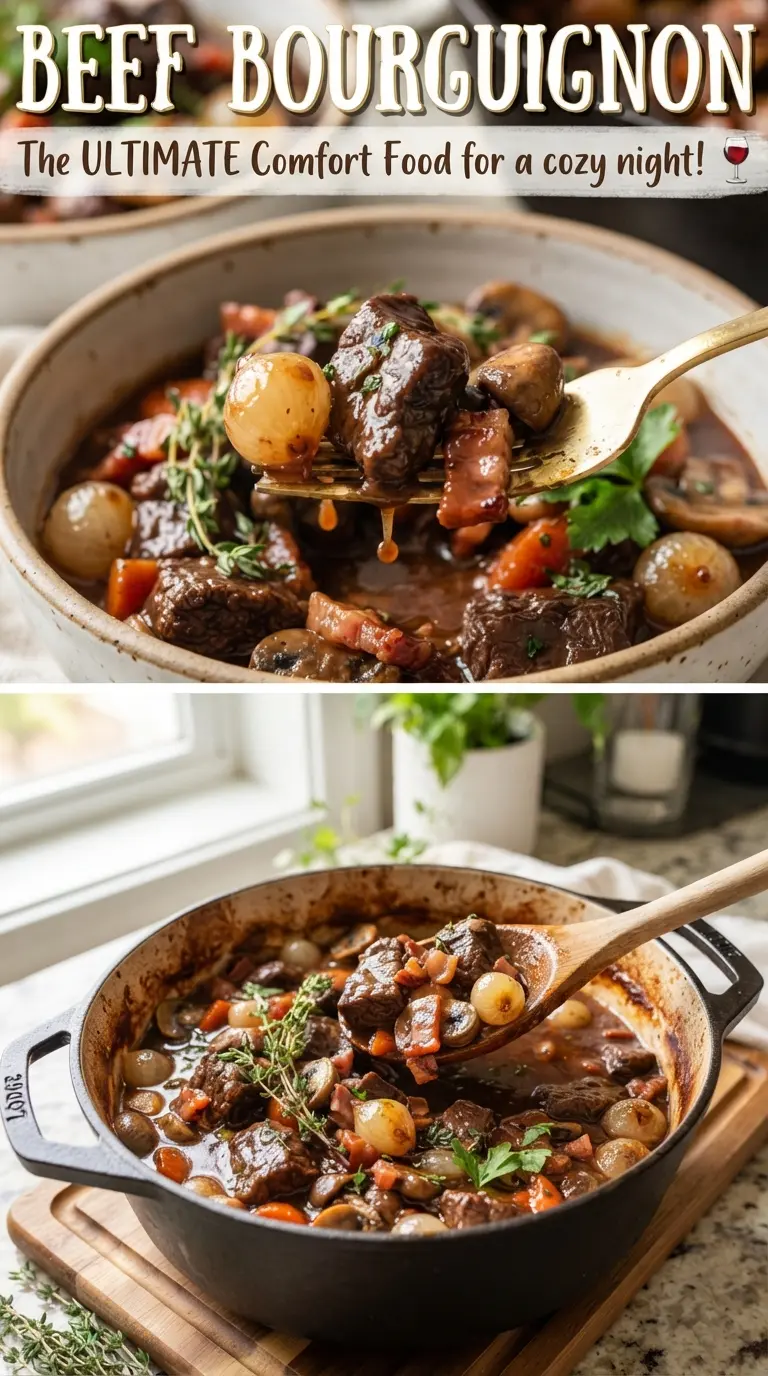
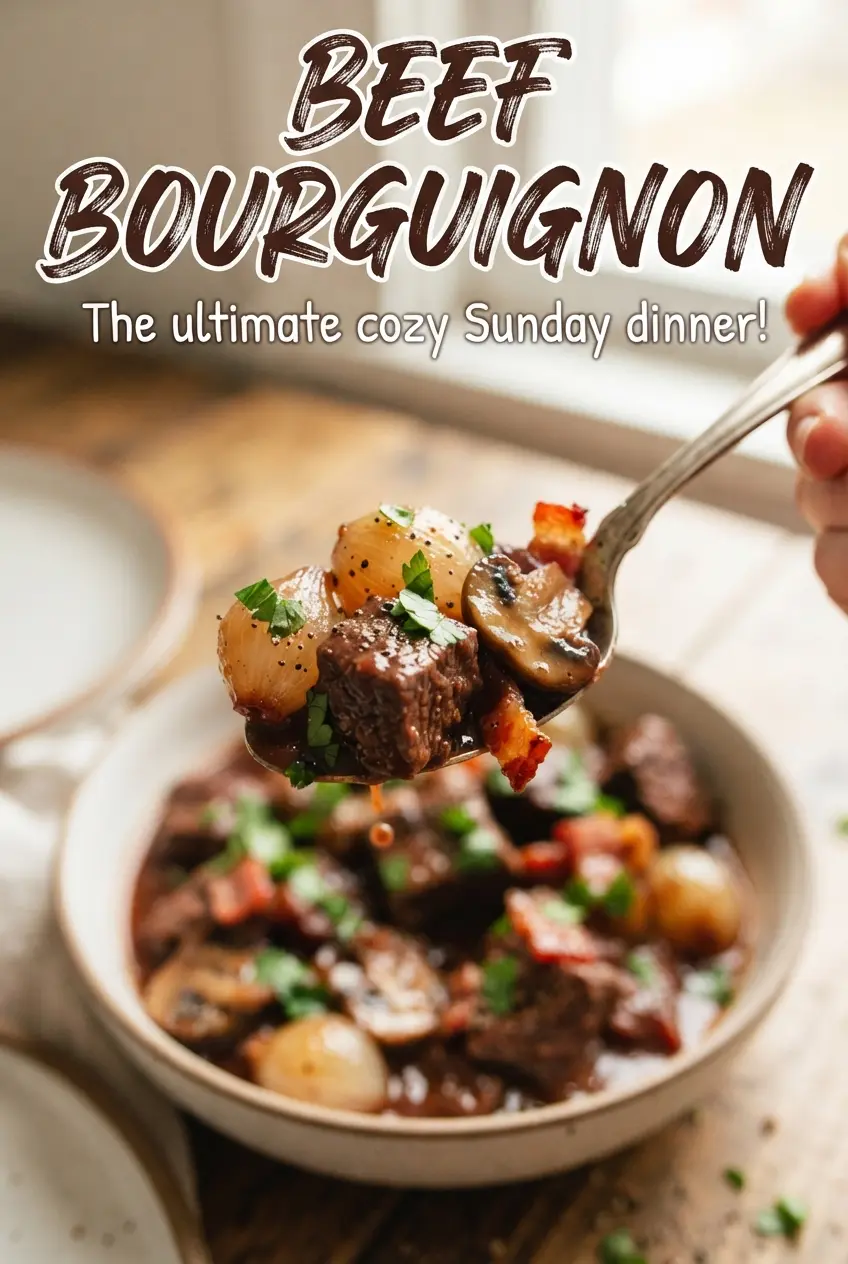
Beef bourguignon turns tough chuck into spoon-tender beef in a red wine sauce that tastes like it spent the whole day getting deeper and better. The bacon gives the base a smoky edge, the wine braise brings the richness, and the mushrooms and pearl onions finish it with the kind of savory sweetness that makes the whole pot taste complete.
The trick is building flavor in layers instead of rushing straight to the braise. Browning the bacon first gives you fat for searing the beef, and that sear matters because the dark bits left in the pot become the backbone of the sauce. The flour and tomato paste need a minute in the hot fat before the wine goes in, or the stew can taste flat and the sauce won’t thicken as cleanly.
Below, I’ve broken down the parts that matter most: how to get the beef properly browned, why the mushrooms and pearl onions go in near the end, and what to do if you want to make this a day ahead. That extra rest gives the sauce an even better texture the next day.
The beef came out incredibly tender and the sauce had that glossy, wine-rich body that coated the spoon without feeling heavy. Browning the mushrooms separately made a huge difference.
Save this Beef Bourguignon for a slow Sunday braise with tender beef, red wine sauce, and buttery mushrooms.
The Reason This Braise Stays Silky Instead of Muddy
The biggest difference between a good beef bourguignon and a heavy one is restraint at the stove. If the beef goes into the oven without a deep sear, the sauce never gets the layered flavor that makes this dish worth the time. If the flour goes in too late or doesn’t cook for a minute with the tomato paste, the braise can taste raw and the sauce can feel pasty instead of glossy.
This dish also depends on adding the mushrooms and pearl onions near the end. If they braise for hours, the mushrooms collapse and the onions lose their shape. Cooking them separately keeps their texture intact and gives you distinct bites of beef, mushroom, and onion instead of one uniform stew.
- Bacon lardons — These render out the fat that starts the whole dish and leave behind a smoky, savory base. Thick-cut bacon works best because it holds up during browning and still has enough fat to flavor the pot.
- Beef chuck — Chuck is the cut that transforms in a long braise. Buy it well-marbled and cut it into large chunks so it stays juicy instead of shredding into strings.
- Dry red wine — This is where the sauce gets its depth. Use a wine you’d drink, because it makes up a big part of the final flavor; something dry and medium-bodied works better than anything sweet or overly oaky.
- Cremini mushrooms and pearl onions — These finish the dish with texture and sweetness. Browning them separately is worth the extra pan because it keeps them from turning soft and gray in the oven.
Building the Braise in the Right Order
- Bacon first — Cook the lardons until the fat has rendered and the edges are browned. Pull them out before they get brittle; they go back into the pot later and will finish softening in the braise.
- Sear the beef in batches — Patting the meat dry matters here. If the pieces are damp or crowded, they steam instead of browning, and that missing crust shows up in the final sauce. Keep each batch in a single layer and let the pot recover its heat between additions.
- Cook the vegetables before the liquid — The onion and carrot need enough time to soften and pick up color from the fond. The flour and tomato paste should cook until the raw edge is gone and the pot smells rich, not dusty.
- Use the oven for the long braise — Once the wine and broth go in, a covered oven does the work evenly. The stew should move at a gentle simmer, not a hard boil; too much heat can make the beef tighten instead of relax.
How to Finish the Stew So Every Bite Stays Distinct
Rendering the Bacon
Set the Dutch oven over medium heat and cook the bacon until the fat is rendered and the pieces are lightly browned. That fat becomes your searing medium, so don’t rush this stage or drain too much away. You want enough left in the pot to coat the beef and help it brown, but not so much that the stew turns greasy.
Getting a Deep Sear on the Beef
Pat the beef dry and season it before it hits the pan. Sear in batches until each piece has a dark brown crust on multiple sides, then move it to a plate. If the pot looks crowded or the pieces give off a lot of steam, stop and do fewer at a time; pale beef means a flatter-tasting stew.
Building the Sauce Base
Cook the onion and carrots in the same pot, then add the garlic, flour, and tomato paste and stir for about 2 minutes. The flour should disappear into the fat and the tomato paste should darken slightly. That short cooking time keeps the sauce from tasting raw and helps it thicken naturally during the braise.
Slow Braising in the Oven
Pour in the wine and broth, add the thyme, bay leaves, beef, and bacon, then bring everything to a simmer before covering it and moving it to the oven. Let it cook until the beef yields easily when pierced with a fork, about 3 hours. If the pot boils hard, the sauce can turn harsh and the beef can tighten, so keep the heat gentle.
Finishing with the Mushrooms and Butter
Brown the pearl onions and mushrooms in butter in a skillet until the mushrooms have good color and the onions are tender. Stir them into the stew for the last 20 minutes so they soak up flavor without losing shape. Pull out the thyme and bay leaves, swirl in the last bit of butter, and finish with parsley for a sauce that looks polished and tastes round.
How to Adapt Beef Bourguignon Without Losing the Character of the Dish
Make-ahead beef bourguignon
This stew gets even better after a night in the fridge. Cool it fully, then refrigerate it without the parsley. The beef relaxes and the sauce settles into a smoother, deeper flavor, and you can reheat it gently the next day before adding the fresh herbs.
Gluten-free version
Swap the all-purpose flour for a gluten-free 1:1 flour blend or thicken the sauce by reducing it a little longer after braising. The texture stays close to the original, but the flour-free route gives you a slightly lighter sauce with a cleaner finish.
No-bacon version
Leave out the bacon and start with olive oil, then add a pinch of smoked paprika if you want back some of that background savoriness. The stew will still be rich, but it loses the smoky depth that bacon brings from the first step.
Freezing for later
Beef bourguignon freezes well once cooled, though the mushrooms soften a bit after thawing. Freeze it in portions without the parsley, then thaw overnight in the refrigerator and reheat slowly so the sauce doesn’t split.
Storage and Reheating
- Refrigerator: 4 days. The sauce thickens as it chills, and the flavor deepens.
- Freezer: Freezes well for up to 3 months in airtight containers. Leave a little room at the top for expansion.
- Reheating: Warm it gently on the stovetop over low heat or covered in a 325F oven until hot. High heat can make the beef dry and the sauce oily, so go slow and stir occasionally.
Answers to the Questions Worth Asking
Beef Bourguignon
Ingredients
Equipment
Method
- Preheat the oven to 325°F. Brown the bacon in olive oil in a Dutch oven, then set the bacon aside.
- Pat the beef dry and season with salt and black pepper. Sear the beef in batches in the bacon fat until deeply browned.
- In the same Dutch oven, cook the onion and carrots for 5 minutes. Add the garlic, flour, and tomato paste and cook for 2 minutes.
- Add the red wine, beef broth, thyme, bay leaves, beef, and bacon to the pot. Bring to a simmer, cover, and braise in the oven at 325°F for 3 hours until very tender.
- In a skillet, melt 2 tablespoons butter and brown the pearl onions and mushrooms. Add them to the stew for the last 20 minutes of the braise.
- Remove the thyme and bay leaves, then swirl in the remaining 1 tablespoon butter. Top with the chopped parsley to finish.