Halved baby potatoes take on a deep, tangy balsamic dressing in a way mayonnaise never could. The warm potatoes drink in the vinaigrette, so every bite tastes seasoned all the way through instead of sitting on top of a heavy coating. Sun-dried tomatoes bring a little chew and sweetness, while basil and parsley keep the whole bowl bright and fresh.
The trick is timing. Tossing the potatoes while they’re still warm gives the vinegar and mustard a chance to sink in before the starches set up. That’s what turns this from a simple potato salad into one with real depth. A little balsamic glaze at the end adds shine and a sharper, stickier finish that clings to the potatoes instead of pooling in the bowl.
Below, I’ll walk through the small details that matter here: when to dress the potatoes, why the herbs go in twice, and how to keep the salad lively if you make it ahead.
The dressing soaked into the potatoes instead of sliding off, and the basil with the sun-dried tomatoes made it taste fresh even after sitting on the table for a while.
Like this balsamic potato salad? Save it for the side dish that stays bright, glossy, and full of herbs instead of drowning in mayo.
Why Warm Potatoes Absorb the Dressing Instead of Leaving It Behind
Potato salad gets disappointing when the dressing never really gets inside the potatoes. Cold potatoes hold onto their shape, but they don’t take in much flavor. Warm potatoes are different. The surface is still open from cooking, so the balsamic vinaigrette clings and soaks in while the centers stay tender.
The other common mistake is overcooking the potatoes until they start breaking apart in the bowl. You want fork-tender halves that still hold a clean edge. That’s what gives you a salad with distinct pieces instead of a mash dressed up as potato salad.
- Baby potatoes — Their thin skins and creamy centers are ideal here. Yukon Golds work too if you cut them into even chunks, but avoid starchy potatoes that fall apart too fast.
- Balsamic vinegar and glaze — The vinegar brings the tang, while the glaze gives body and that glossy finish. If you skip the glaze, the salad still works, but it will taste lighter and less rounded.
- Dijon mustard — This is what helps the dressing emulsify and stay clinging to the potatoes. Yellow mustard won’t give the same sharpness or texture.
- Sun-dried tomatoes in oil — Drain them well, but don’t rinse them. A little of that oil carries flavor and helps the salad taste fuller.
What Each Ingredient Is Actually Doing in This Salad
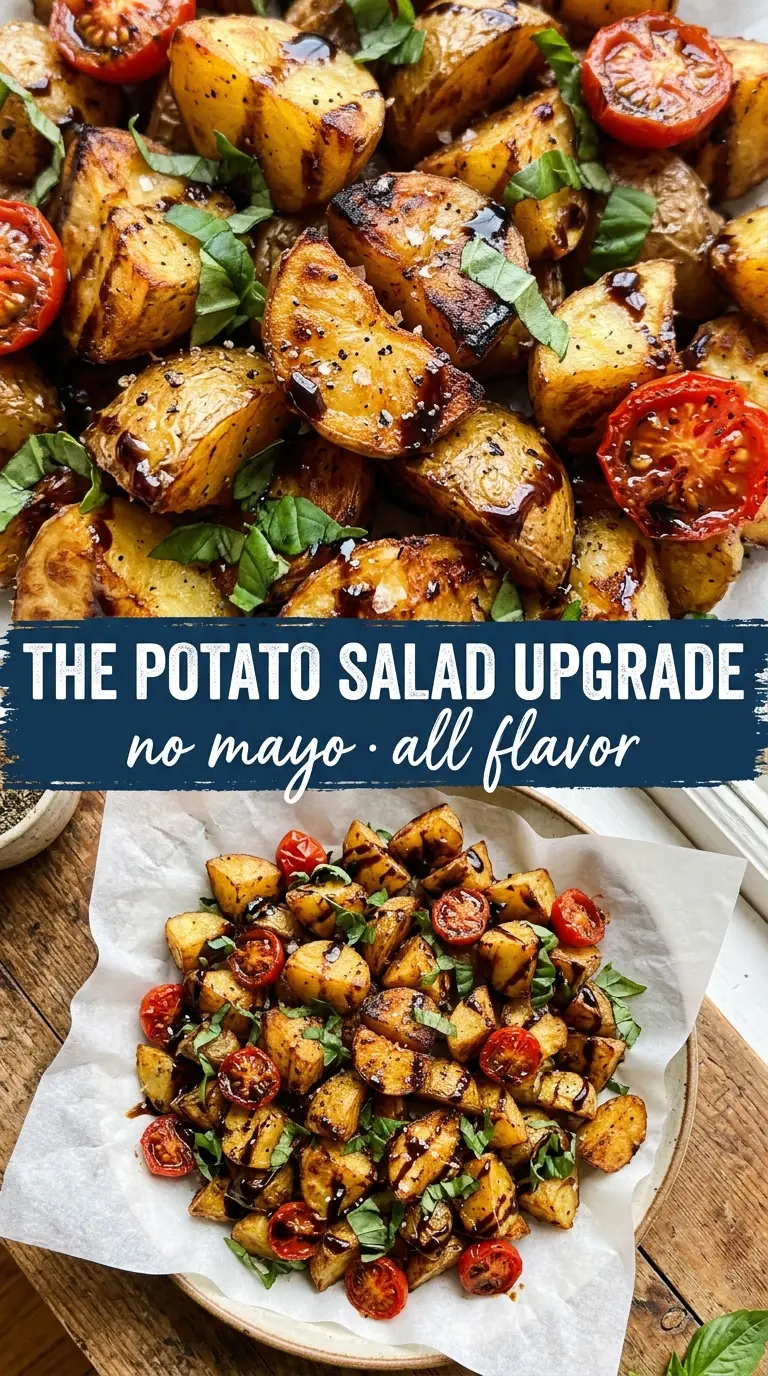
Baby potatoes are the backbone. Their size gives you quick, even cooking, and cutting them in half creates more surface area for the dressing to grab. If you only have larger potatoes, cut them into similar-sized chunks so they cook at the same pace.
Fresh basil and parsley do more than garnish the bowl. Basil brings sweetness and that unmistakable Italian note, while parsley keeps the dressing from tasting flat after the vinegar settles in. Add most of the herbs while the potatoes are still warm, then save a little for the top so the salad looks and tastes fresh.
Parmesan is the salty finish that ties everything together. Shaved Parmesan gives little rich pockets instead of disappearing into the dressing the way finely grated cheese would. If you need a dairy-free version, leave it out and add a pinch more salt plus a little extra balsamic glaze for balance.
The 30 Minutes That Turn This Into Real Potato Salad
Cooking the Potatoes Until They’re Tender, Not Fragile
Start the potatoes in salted water and cook them until a knife slides in with almost no resistance. Drain them promptly and let them sit long enough that steam fades, but don’t chill them completely. If they go cold before the dressing goes on, they won’t take in nearly as much flavor.
Whisking a Dressing That Actually Clings
Whisk the balsamic vinegar, glaze, olive oil, Dijon, garlic, honey, and Italian seasoning until it looks smooth and slightly thickened. If the dressing separates in the bowl, keep whisking for another few seconds; the mustard is doing the work of holding everything together. Taste it now, because once it hits the potatoes the sharpness will soften.
Tossing While the Potatoes Are Still Warm
Combine the potatoes with the sun-dried tomatoes, red onion, and most of the basil and parsley, then pour the dressing over the top. Toss gently enough to keep the halves intact, but long enough that every cut face gets coated. If you stir too hard, the potatoes smear and the salad turns muddy instead of glossy.
Letting the Salad Marinate Before the Final Finish
Give the salad at least 30 minutes at room temperature so the potatoes can absorb the dressing. Right before serving, add the remaining herbs, shaved Parmesan, and an extra drizzle of balsamic glaze. That last hit of glaze wakes everything back up after the rest time and makes the bowl look finished.
How to Adapt This for a Crowd, a Cooler, or a Dairy-Free Table
Dairy-Free Version
Leave off the Parmesan and add a little more salt plus another drizzle of balsamic glaze at the end. You’ll lose the salty, nutty finish, but the salad still keeps its bright, herb-heavy character.
Make-Ahead for a Party
You can make this a few hours ahead and hold it at room temperature for serving, or refrigerate it and bring it back to cool room temperature before serving. Add the fresh herbs and Parmesan just before the salad goes out so they stay vivid instead of sinking into the dressing.
More Savory, Less Sweet
Cut the honey back to half a teaspoon if you want the balsamic to lead more aggressively. The dressing will taste sharper and less rounded, which works well next to grilled meats or richer mains.
Storage and Reheating
- Refrigerator: Store for up to 3 days. The potatoes will firm up a little, but the flavor deepens as they sit.
- Freezer: Don’t freeze this salad. The potatoes turn grainy and the herbs lose their freshness.
- Reheating: This salad is best served room temperature or slightly cool. If it has been chilled, let it sit out for 20 to 30 minutes and add a fresh drizzle of balsamic glaze before serving instead of trying to rewarm it.
Answers to the Questions Worth Asking
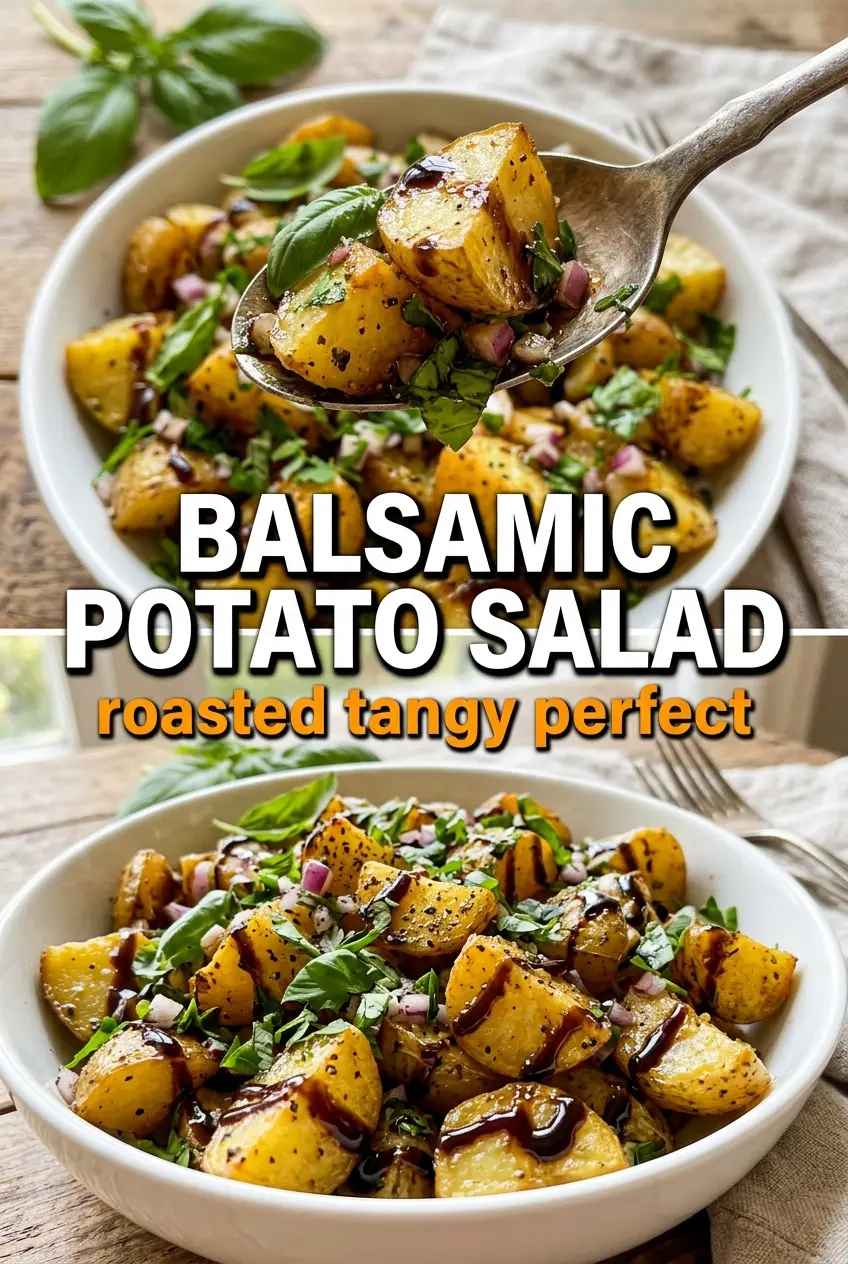
Balsamic Potato Salad
Ingredients
Equipment
Method
- Bring a pot of salted water to a boil, then add the halved baby potatoes and boil for 12-15 minutes until fork-tender.
- Drain the potatoes and let them cool for 10 minutes until still warm, then spread them on a sheet pan so they don’t steam and get soggy.
- Whisk balsamic vinegar, balsamic glaze, olive oil, Dijon mustard, minced garlic, honey, and Italian seasoning until emulsified and glossy.
- In a large bowl, combine the warm potatoes with sun-dried tomatoes, red onion, and most of the torn basil and chopped parsley.
- Pour the balsamic dressing over the warm potatoes and toss until every potato half is coated; keep tossing until the sheen looks even.
- Let the salad marinate for 30 minutes at room temperature (or refrigerate if preferred) so the dressing absorbs into the potatoes.
- Top with shaved Parmesan, the remaining fresh herbs, and an extra drizzle of balsamic glaze right before serving.