Balsamic baked chicken breast with mozzarella lands on the table juicy, glossy, and just rich enough to feel like more than a plain chicken dinner. The balsamic cooks down into a dark, sticky glaze, the mozzarella melts into soft pools over the top, and the cherry tomatoes bring the whole dish back to a bright, caprese-style finish.
What makes this version work is the short marinade and the quick sear before baking. The honey balances the vinegar without making the sauce cloying, while the Dijon helps the marinade cling to the chicken instead of sliding off the pan. Searing first gives you color and flavor on the outside, and finishing with mozzarella at the end keeps the cheese supple instead of rubbery.
Below, I’ve laid out the part that matters most: how to keep the chicken from drying out, why fresh mozzarella is worth using here, and the small timing details that keep the glaze from turning bitter or thin.
The marinade gave the chicken great flavor in just 20 minutes, and the mozzarella melted over the top without turning greasy. I loved how the tomatoes and basil made it taste like a baked caprese dinner.
Save this balsamic baked chicken breast with mozzarella for the nights when you want a glossy pan sauce, melted cheese, and a caprese-style finish without a long ingredient list.
The Part That Stops the Chicken From Drying Out
The biggest risk with baked chicken breast is carrying it too far. By the time a thick breast looks done on the outside, the center can already be heading toward dry. The fix here is to sear first for color, then finish in the oven and pull it the moment it hits 165°F at the thickest point. That rest time matters too; the juices settle back into the meat instead of running all over the cutting board.
The other key move is not drowning the chicken in sauce from the start. The reserved marinade goes into the pan for the bake, but the mozzarella comes later. That keeps the cheese from scorching and gives you a cleaner finish with real browning on the chicken itself.
- Searing before baking gives you a better crust and keeps the outside from turning pale and soft.
- Reserve part of the marinade so the chicken has flavor in the oven, but don’t reuse any marinade that touched raw chicken unless it has been cooked first.
- Pulling at 165°F protects the texture. Chicken breast gets tough fast once it runs past that point.
What the Balsamic, Honey, and Fresh Mozzarella Each Bring to the Pan
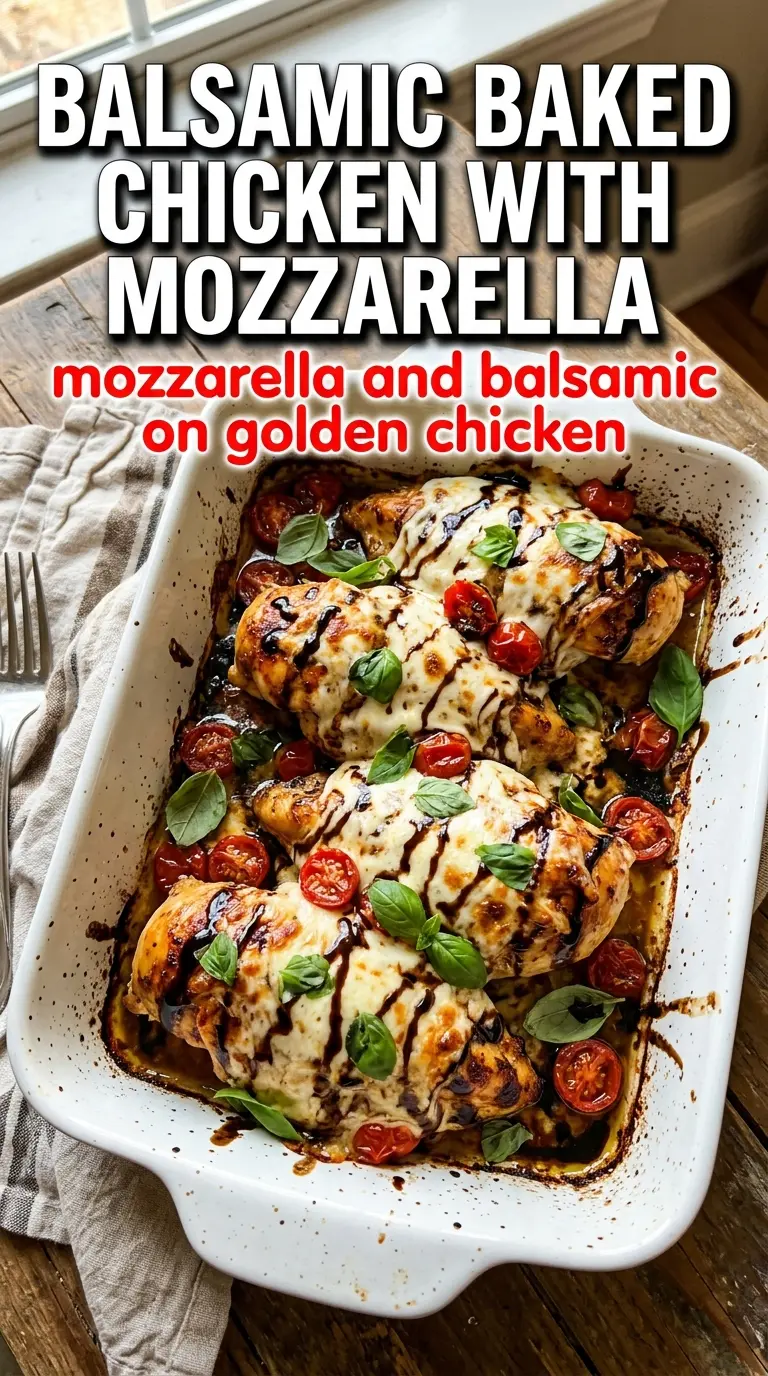
- Balsamic vinegar is the backbone of the glaze. Use a decent bottle here because cheap, harsh vinegar can taste sharp after baking. It doesn’t need to be fancy, but it should taste balanced on its own.
- Honey softens the acidity and helps the marinade turn glossy in the oven. If you use too much, the pan juices can get sticky before the chicken finishes, so keep the measurement as written.
- Dijon mustard helps the marinade emulsify. That means the oil and vinegar stay blended long enough to coat the chicken evenly instead of separating in the bowl.
- Fresh mozzarella is worth buying for this dish. Pre-shredded mozzarella won’t melt as softly, and it can bring a drier finish. Slice the fresh cheese and add it only at the end so it turns creamy, not oily.
- Cherry tomatoes and basil do more than garnish. The tomatoes burst into the cheese and glaze, and the basil cuts through the richness with a clean, fresh finish.
Getting the Sear, Bake, and Cheese Finish in the Right Order
Marinating the Chicken
Whisk the balsamic vinegar, olive oil, honey, minced garlic, and Dijon until the mixture looks slightly thickened and glossy. Coat the chicken and let it sit for 20 minutes, no longer than that unless the breasts are very thick. Balsamic is acidic, and too much time can start to toughen the surface instead of tenderizing it. Pat the chicken lightly before searing if there’s a lot of marinade clinging in puddles; you want coating, not excess liquid in the pan.
Building Color in the Skillet
Heat the oven-safe skillet over medium-high and lay the chicken down without crowding it. You’re listening for a steady sizzle, not a wild sputter. Three minutes per side is usually enough to build a golden surface. If the pan is too cool, the chicken will steam and the marinade sugars can get blotchy instead of caramelized.
Finishing in the Oven
Transfer the skillet to the oven with the remaining marinade and bake until the thickest part of the chicken reaches 165°F, usually 18 to 20 minutes. If the breasts are especially large, check them a few minutes early and use the thermometer rather than guessing. The surface should look lacquered and the pan juices should smell sweet and savory, not burnt. If the sauce starts looking too dark around the edges, the oven was too hot or the honey-heavy marinade needed less exposure on the stovetop.
Melting the Mozzarella Without Overcooking the Chicken
Once the chicken is cooked through, top it with mozzarella and halved cherry tomatoes, then return it to the oven for just 4 to 5 minutes. You want the cheese soft and just beginning to slump, not bubbling hard for too long. The tomatoes should look warmed through and slightly wrinkled. This last step is short on purpose; the chicken is already done, and extra time here is how juicy meat turns dry.
The Basil and Glaze Finish
Drizzle with balsamic glaze and scatter basil over the top right before serving. Add the basil after the chicken leaves the oven so it stays bright instead of darkening in the heat. The glaze should stay on the surface in shiny ribbons. If you pour it on too early, it can melt into the cheese and disappear into the pan.
How to Adapt This for a Smaller Dinner or a Dairy-Free Plate
Make it dairy-free
Skip the mozzarella and finish with the cherry tomatoes, basil, and a heavier drizzle of balsamic glaze. You’ll lose the creamy caprese layer, but the dish still has enough shine and acidity to feel complete. A few torn basil leaves at the end help replace some of the richness with freshness.
Use chicken cutlets for a faster bake
If your chicken breasts are very thick, slice them horizontally into cutlets before marinating. They’ll sear faster, bake in less time, and stay more even from edge to center. Watch them closely in the oven because thin cutlets can go from juicy to dry in a couple of minutes.
Swap the honey for a lower-sugar finish
Use a smaller amount of honey or replace part of it with a sugar-free sweetener that measures like honey. The glaze won’t caramelize quite as deeply, but it will still soften the vinegar and cling to the chicken. Keep an eye on the skillet because lower-sugar versions can look done a little sooner.
Storage and Reheating
- Refrigerator: Store leftovers in an airtight container for up to 3 days. The mozzarella will firm up, but the flavor holds well.
- Freezer: Freeze the chicken without the basil for up to 2 months. The cheese texture changes a bit after thawing, so it’s best for meal prep rather than a fresh plated dinner.
- Reheating: Warm it covered in a 325°F oven until heated through, or reheat gently in a skillet with a splash of water. The common mistake is blasting it in the microwave, which dries out the chicken and makes the cheese greasy.
Answers to the Questions Worth Asking
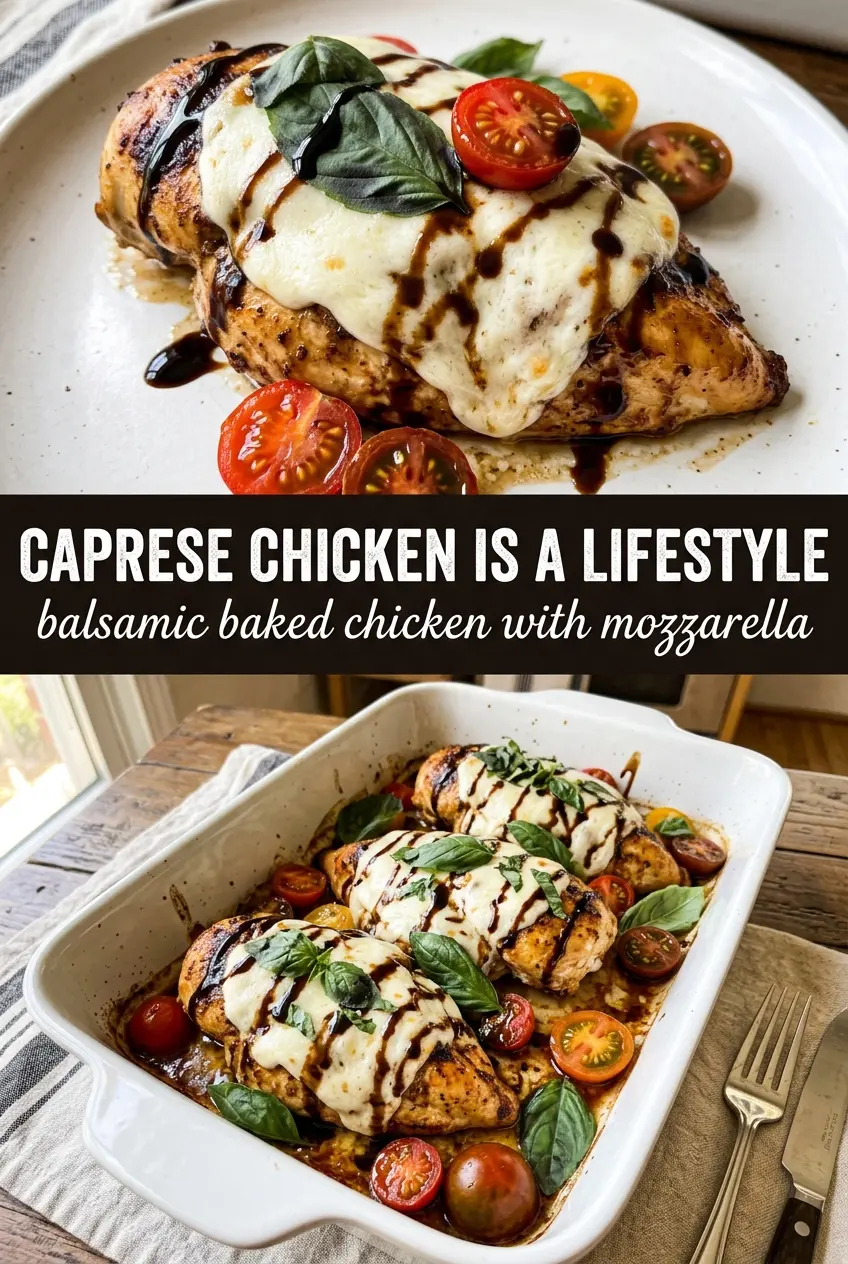
Balsamic Baked Chicken Breast with Mozzarella
Ingredients
Equipment
Method
- Whisk balsamic vinegar, olive oil, honey, minced garlic, and Dijon mustard in a bowl until smooth. Season chicken with salt, pepper, garlic powder, and Italian seasoning, then marinate in the mixture for 20 minutes and reserve some marinade.
- Preheat oven to 400°F, then heat an oven-safe skillet over medium-high heat. Sear the marinated chicken in the skillet for 3 minutes per side until golden.
- Transfer the skillet to the oven with the remaining reserved marinade. Bake for 18-20 minutes, until the internal temperature reaches 165°F.
- Remove from the oven and top each breast with sliced mozzarella and halved cherry tomatoes. Return to the oven for 4-5 minutes, just until the cheese is melted and starting to turn golden.
- Drizzle with balsamic glaze and garnish with fresh basil leaves before serving. Let stand briefly so the glaze clings to the chicken.