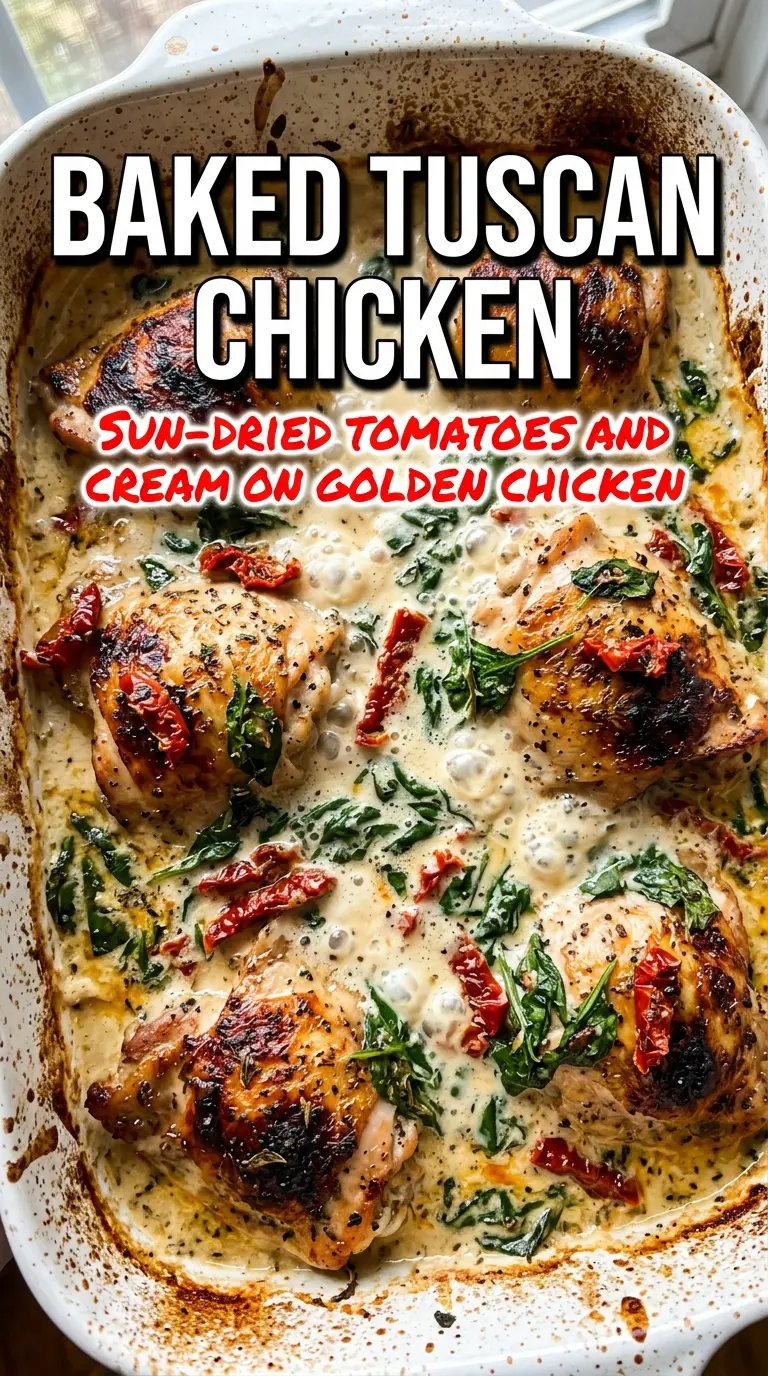
Golden, crisp-skinned chicken thighs tucked into a creamy sun-dried tomato sauce with wilted spinach is the kind of baked dinner that looks restaurant-level but eats like something you’d make on a weeknight when you want the pan to do most of the work. The chicken stays juicy because it’s seared first, then finished in the oven just long enough to cook through without drying out, and the sauce picks up all the browned bits from the skillet before it turns silky with cream and Parmesan.
What makes this version work is the order. The thighs get real color in the pan before they ever touch the sauce, which keeps the skin from going limp in the oven. The sun-dried tomatoes bring concentrated sweetness and a little tang, and the spinach goes in at the end so it softens without disappearing. That balance is what keeps this dish from tasting heavy.
Below, I’ll walk you through the part that matters most: getting the skin crisp, building a sauce that doesn’t split, and knowing exactly when to pull the pan from the oven so the chicken stays tender.
The chicken skin crisped up beautifully and the sauce thickened just enough in the oven without breaking. I loved how the sun-dried tomatoes gave it a little tang against the cream.
Love the crispy-skinned chicken and creamy sun-dried tomato sauce? Save this Baked Tuscan Chicken for an easy oven dinner that still feels special.
The Trick to Keeping the Chicken Skin Crisp Under a Cream Sauce
The biggest mistake with baked Tuscan chicken is putting raw chicken straight into the sauce and expecting the oven to fix everything. It won’t. Skin needs direct contact with hot fat in the skillet first, or it softens before the chicken is even cooked through. That sear gives you the deep color and the roasted flavor that carry the whole dish.
Once the sauce goes in, keep the chicken skin-side up and uncovered. That matters more than people think. The sauce should surround the chicken, not cover the top of it, so the skin can stay lifted and browned instead of steaming under the cream. If your chicken ever comes out pale and rubbery, it usually means it spent too long buried in liquid.
What Each Ingredient Is Actually Doing in This Dish
- Bone-in, skin-on chicken thighs — These are the right cut for this recipe because they stay juicy through searing and baking. Boneless thighs work in a pinch, but they won’t give you the same crisp skin or the same rich pan drippings.
- Sun-dried tomatoes in oil — Oil-packed tomatoes are softer, more flavorful, and blend into the sauce better than dry-packed ones. Drain them before slicing, but don’t rinse them; that little bit of oil carries flavor into the pan.
- Heavy cream — This is what makes the sauce stable enough to simmer and bake without curdling easily. Half-and-half can work, but the sauce will be thinner and more likely to split if it boils.
- Parmesan — Grated Parmesan thickens the sauce and adds salt, but it needs low heat. If you dump it into a hard boil, it can turn grainy instead of melting smooth.
- Fresh spinach — Add it at the very end so it wilts into the sauce without turning mushy. Frozen spinach is a poor swap here because it releases too much water and makes the sauce loose.
- Chicken broth — This loosens the pan drippings just enough to build the sauce. If you use water instead, the sauce tastes flat and you’ll notice the difference immediately.
How to Build the Sauce Without Breaking the Cream
Season and Sear First
Season the chicken generously before it hits the skillet. When the oil shimmers, lay the thighs skin-side down and leave them alone until the skin is deeply golden and releases easily. If you try to move them too early, the skin sticks and tears. Flip them just long enough to color the other side, then pull them out; they finish cooking later.
Pull Flavor From the Pan
Garlic goes in for only about 30 seconds, just until fragrant. If it browns, it turns bitter fast. Add the sun-dried tomatoes next so they can soften in the fat, then pour in the broth and scrape up every browned bit from the bottom of the pan. That fond is what gives the sauce its depth.
Keep the Heat Low for the Cream
Once the cream, Parmesan, Italian seasoning, and red pepper flakes go in, lower the heat and let the sauce simmer gently. You want small bubbles, not a rolling boil. High heat is the fastest way to make the cheese look grainy or oily. Stir in the spinach just until it wilts, then nestle the chicken back in skin-side up.
Bake Until the Center Is Just Done
Slide the skillet into the oven uncovered and bake until the chicken reaches 165°F in the thickest part. Thighs can go a little beyond that and stay tender, but if you push them too far, the sauce starts to reduce too much and the skin dries out. Fresh basil at the end wakes up the whole pan and keeps the final dish from tasting heavy.
How to Adapt This for a Lighter Pan Dinner or a Bigger Crowd
Dairy-Free Version
Use full-fat coconut cream in place of heavy cream and skip the Parmesan, then add a little extra salt and a squeeze of lemon at the end for balance. The sauce will taste less sharp and less cheesy, but it still turns silky and coats the chicken well.
Lower-Carb Serving Style
The recipe is already fairly low in carbohydrates, so the main adjustment is what you serve with it. Spoon it over cauliflower mash, zucchini noodles, or sautéed greens so the sauce has something to cling to without needing pasta or rice.
Using Boneless Chicken Thighs or Breasts
Boneless thighs cook faster and still stay juicy, though you’ll lose the crisp skin. Chicken breasts work too, but they need a shorter bake time and a closer eye so they don’t dry out; pull them as soon as they hit temperature.
Scaling for a Crowd
Double everything and use a large roasting pan or two oven-safe skillets instead of crowding the chicken into one dish. If the pieces sit on top of each other, they steam instead of roast, and the skin loses the texture that makes this recipe worth making.
Storage and Reheating
- Refrigerator: Store leftovers in an airtight container for up to 3 days. The sauce thickens as it chills, and the skin will soften.
- Freezer: The chicken freezes well, but the cream sauce can separate a little after thawing. Freeze in a freezer-safe container for up to 2 months if you don’t mind a less-smooth sauce.
- Reheating: Reheat gently in a covered skillet over low heat with a splash of broth to loosen the sauce. Avoid high heat or the cream can break and the chicken can dry out before the center is hot.
Questions I Get Asked About This Recipe

Baked Tuscan Chicken
Ingredients
Equipment
Method
- Preheat the oven to 400°F and season the chicken thighs generously with salt, pepper, garlic powder, Italian seasoning, and smoked paprika.
- Pat the chicken dry so the skin roasts crisp and then set the thighs aside while the skillet heats.
- Heat olive oil in an oven-safe skillet over medium-high heat and sear the chicken skin-side down for 6-7 minutes until deeply golden.
- Flip the thighs and sear for 3 minutes, then remove them to a plate.
- Cook the minced garlic for 30 seconds until fragrant, then add the sun-dried tomatoes and cook for 1 minute.
- Pour in the chicken broth to deglaze the pan, scraping up the browned bits.
- Stir in the heavy cream, Parmesan, Italian seasoning, and red pepper flakes, then simmer briefly until the sauce looks slightly thickened.
- Stir in the baby spinach until wilted and distributed through the sauce.
- Nestle the chicken back into the sauce with the skin-side up so the browned skin stays visible.
- Bake uncovered for 18-20 minutes at 400°F until the internal temperature reaches 165°F and the Parmesan sauce bubbles around the edges.
- Garnish with fresh basil immediately after baking for a bright red-and-green finish.