Baked Tuscan chicken casserole lands on the table with crisp, bronzed chicken thighs sitting in a silky Parmesan cream sauce that tastes like it spent hours simmering, even though it comes together in under an hour. The sun-dried tomatoes bring sweet-tart depth, the spinach softens into the sauce without disappearing, and the whole dish feels rich without turning heavy or greasy.
The trick is building the sauce in the same pan after the chicken sears. Those browned bits at the bottom are what give the cream its backbone, and the oven finish keeps the chicken juicy while the sauce thickens around it instead of reducing too far on the stove. Bone-in, skin-on thighs matter here because they stay flavorful and hold up to the creamy sauce better than lean cuts.
Below you’ll find the timing that keeps the chicken crisp, the small ingredient choices that make the sauce taste balanced, and a few smart swaps for when you need this to work with what you have in the kitchen.
The sauce thickened beautifully in the oven and the chicken skin stayed crisp enough that my husband kept sneaking bites before I served it.
Pin this creamy Tuscan chicken casserole for the nights when you want golden chicken, spinach, and sun-dried tomatoes baked into one pan.
The Skillet Step You Can’t Rush if You Want Crisp Chicken and a Stable Sauce
The sear is doing two jobs here. It builds flavor on the chicken skin and leaves behind browned bits that help the sauce taste deeper than a quick cream-and-cheese mix ever could. If you skip that first hard sear or crowd the pan, the thighs steam instead of brown and the whole dish loses its best texture.
Keep the heat at medium-high for the chicken, then lower it once the garlic and tomatoes go in. Garlic burns fast, and burnt garlic turns the sauce bitter before the cream even hits the pan. The sauce doesn’t need to boil hard; it needs enough heat to come together smoothly while the oven finishes the chicken through.
What Each Ingredient Is Actually Doing in This Dish
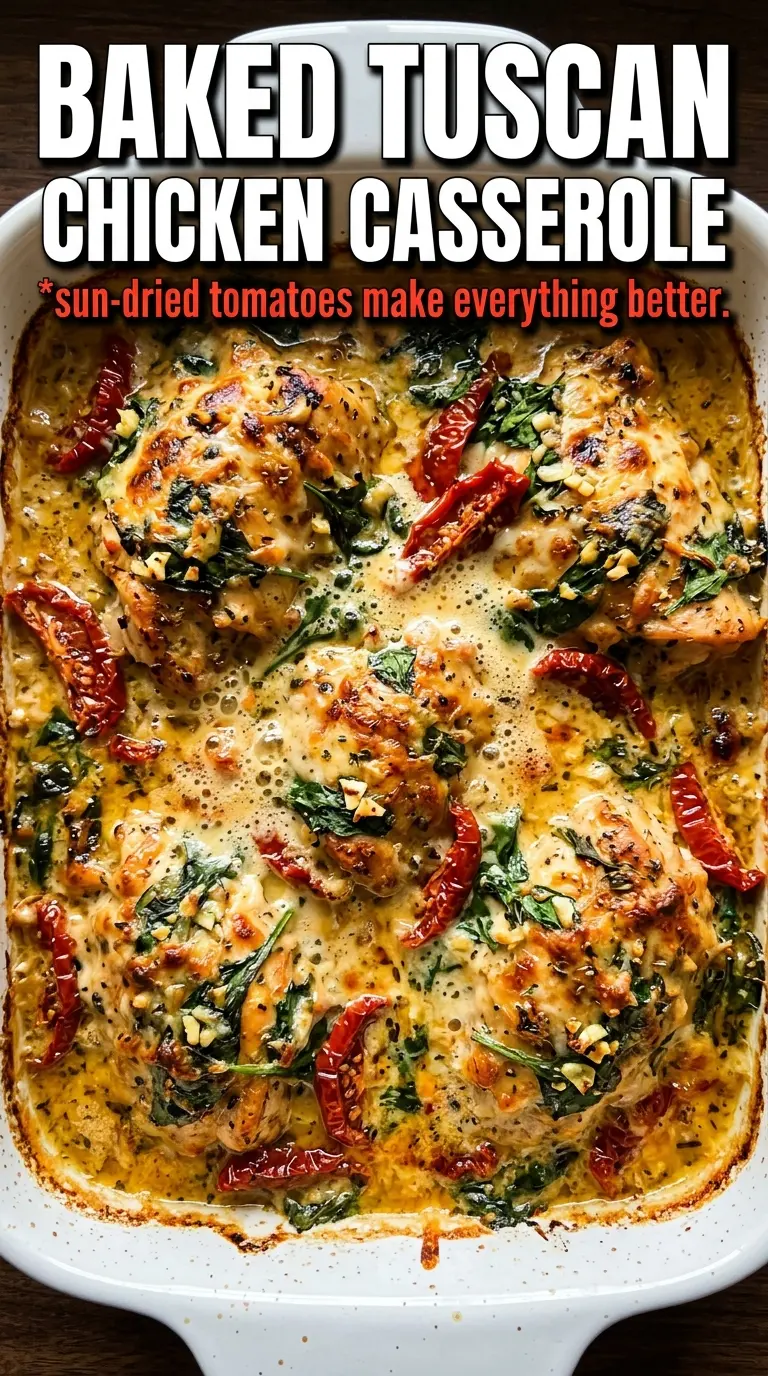
- Chicken thighs — Bone-in, skin-on thighs stay juicy in the oven and give you a better payoff than breasts in a creamy bake. If you swap in chicken breasts, reduce the oven time and expect a leaner result that won’t self-baste the same way.
- Sun-dried tomatoes — These bring concentrated sweetness and tang, and their oil-packed version gives the sauce a little roundness if you drain them lightly. If yours are very dry, soak them in hot water for 10 minutes so they don’t stay chewy in the finished casserole.
- Heavy cream and Parmesan — This is the sauce’s structure. Heavy cream holds up under oven heat better than half-and-half, and freshly grated Parmesan melts smoother than the pre-shredded kind, which can turn grainy.
- Baby spinach — It wilts fast at the end without turning the sauce muddy. Add it after baking or in the last minute of stovetop finishing so it stays bright and doesn’t overcook.
- Chicken broth — This loosens the browned bits from the pan and keeps the sauce from turning too thick before it goes in the oven. Use a broth you actually like the taste of, because the flavor carries through the finished sauce.
Building the Sauce So It Stays Silky in the Oven
Season and Sear the Chicken First
Pat the thighs dry before seasoning them. Wet skin won’t brown properly, and that’s the difference between crisp, mahogany skin and pale skin that softens in the sauce. Lay them skin-side down in hot oil and leave them alone until they release cleanly from the pan, which usually takes 6 to 7 minutes. If they stick, they need another minute.
Use the Pan Drippings, Not a Clean Skillet
After the chicken comes out, cook the garlic and sun-dried tomatoes just long enough to smell fragrant. Then pour in the broth and scrape the pan until the bottom looks clean and glossy. That’s where the flavor is hiding, and once it dissolves into the broth, the sauce has a built-in roasted taste that cream alone can’t give you.
Let the Oven Finish the Work
Stir in the cream, Parmesan, seasoning, and red pepper flakes, then return the chicken skin-side up. Keep the skin above the sauce so it stays as crisp as possible while the meat finishes cooking. Bake until the chicken reaches 165°F at the thickest part and the sauce bubbles around the edges; if it looks thin at first, give it a few minutes out of the oven to settle.
Wilt the Spinach at the End
Spinach only needs a minute or two in the hot sauce. Stir it in after baking until the leaves collapse and turn glossy. If you add it too early, it fades into the sauce and loses that fresh green contrast that makes the dish taste balanced.
How to Adapt This for Dairy-Free, Lower-Carb, or a Different Cut of Chicken
Dairy-Free Version
Use full-fat coconut cream instead of heavy cream and swap the Parmesan for a dairy-free hard cheese or nutritional yeast. The sauce will taste a little less sharp and a touch richer-sweet, but it still thickens well as long as you keep the heat gentle.
Chicken Breast Swap
Boneless breasts work if that’s what you have, but they cook faster and dry out sooner, so shorten the bake and check early. You lose some richness from the skin and bone, so the sauce matters even more here.
Lower-Carb Serving Style
This dish is already naturally low in starch, so the main adjustment is what you serve with it. Spoon it over cauliflower mash or zucchini noodles to catch every bit of sauce without changing the casserole itself.
Storage and Reheating
- Refrigerator: Store leftovers in an airtight container for up to 4 days. The sauce will thicken as it chills, which is normal.
- Freezer: It freezes better than a lot of cream casseroles, but the sauce can separate slightly when thawed. Freeze in portions, then thaw overnight in the fridge.
- Reheating: Warm gently on the stovetop or in a covered dish in a 325°F oven with a splash of broth. High heat can break the cream sauce and dry out the chicken before the center is hot.
Answers to the Questions Worth Asking
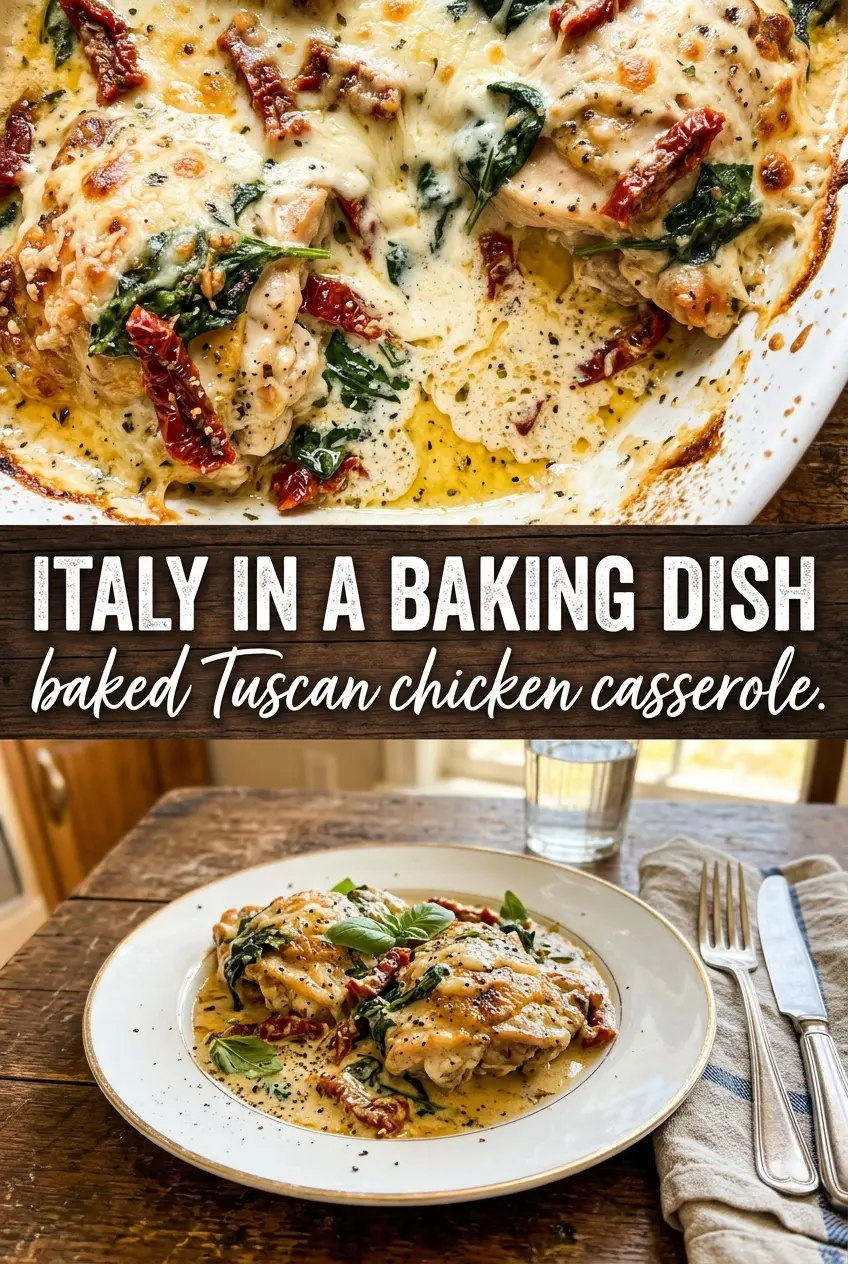
Baked Tuscan Chicken Casserole
Ingredients
Equipment
Method
- Preheat oven to 400°F, then season chicken thighs with salt, pepper, garlic powder, Italian seasoning, and smoked paprika.
- Arrange the thighs skin-side up so they’re ready to sear.
- Heat olive oil in a large oven-safe skillet or braiser and sear chicken skin-side down for 6-7 minutes until deeply golden, keeping the heat steady.
- Flip the chicken and sear for 3 more minutes, then remove to a plate.
- In the same pan, cook garlic and sun-dried tomatoes for 1 minute until fragrant, scraping up browned bits.
- Pour in chicken broth and deglaze, then stir to loosen the fond.
- Stir in heavy cream, Parmesan, Italian seasoning, and red pepper flakes until smooth and beginning to thicken into a silky cream sauce.
- Return chicken skin-side up to the pan, then bake uncovered for 20-22 minutes at 400°F until the chicken reaches 165°F and the casserole is bubbling at the edges.
- Stir baby spinach into the sauce until wilted and bright green, letting it sink into the cream pool.
- Garnish with fresh basil and serve while hot.