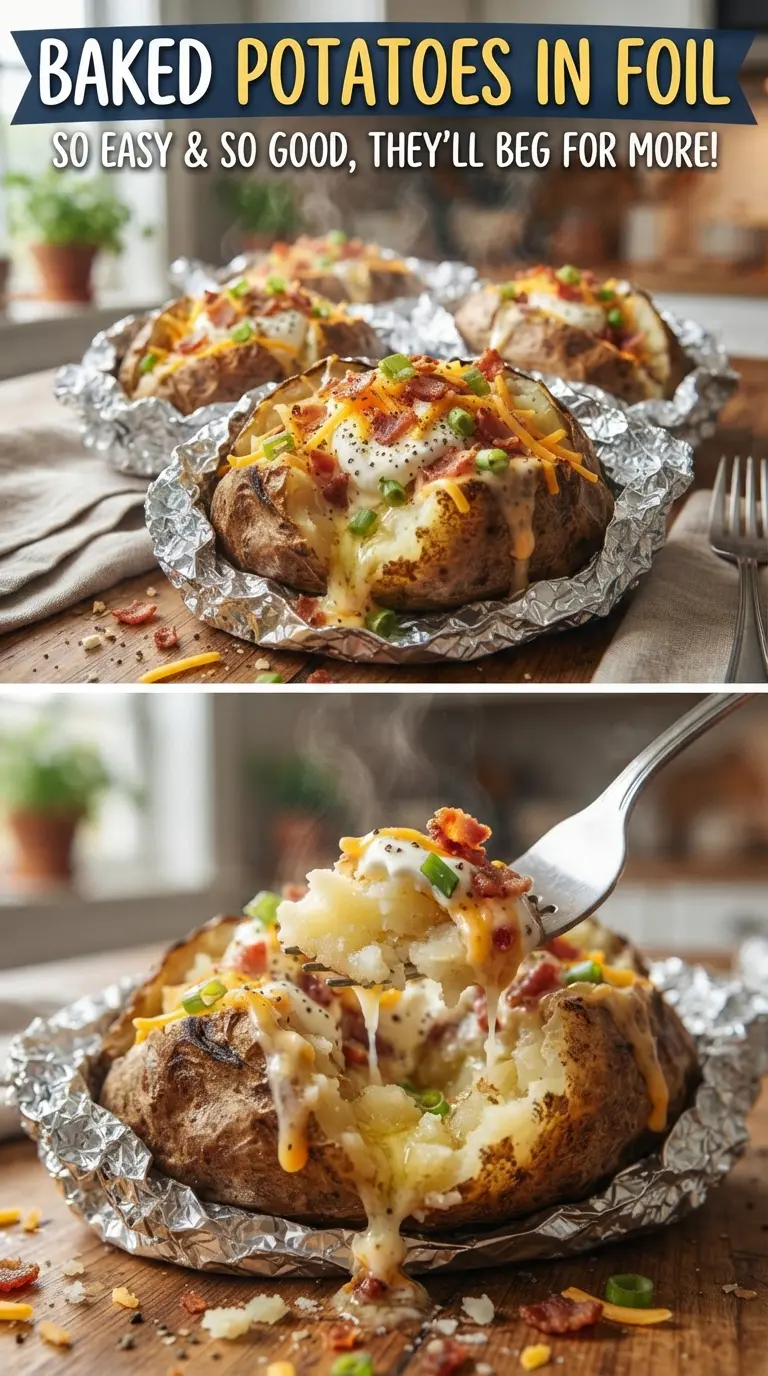
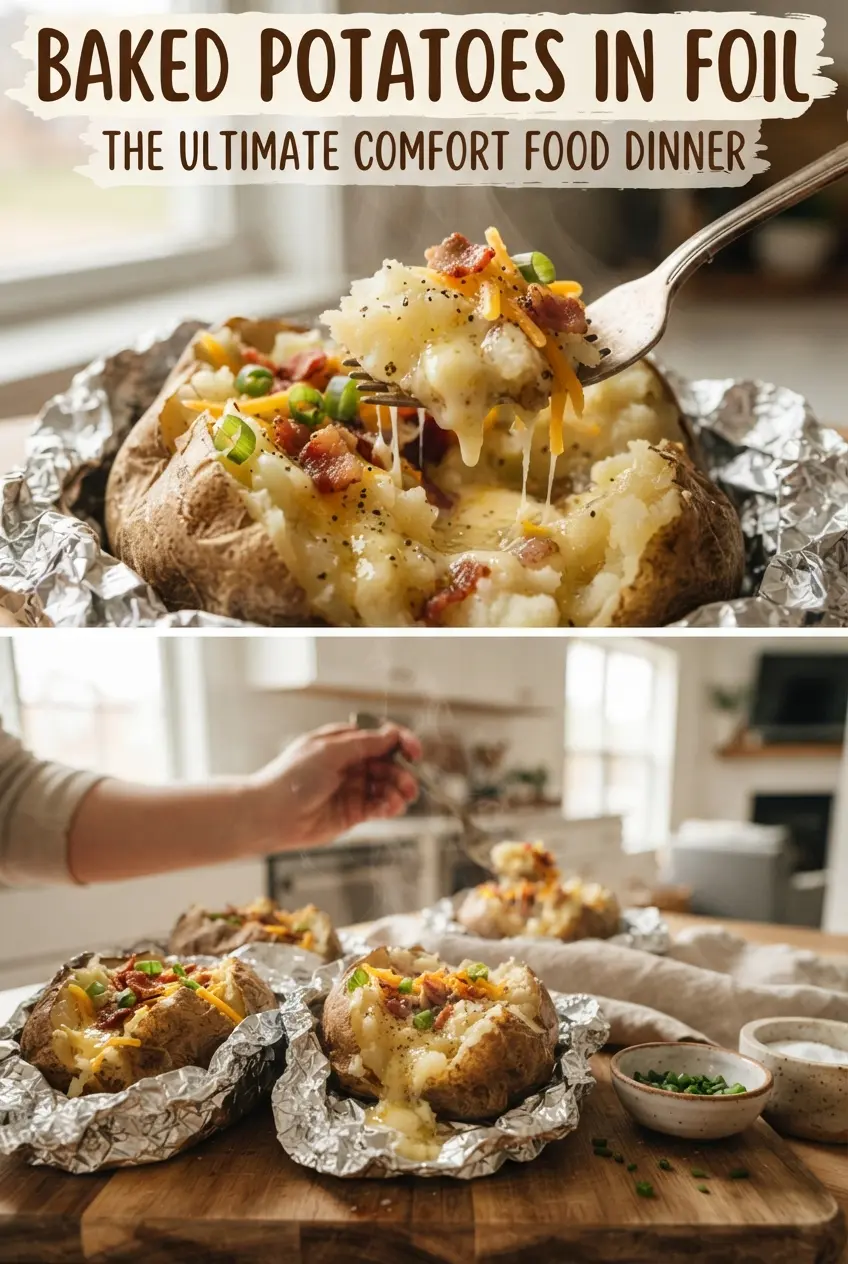
Foil-wrapped baked potatoes come out with tender, steaming centers and skin that stays soft enough to split cleanly without shredding. The foil does the job of trapping heat evenly, so you get a potato that cooks through all the way to the middle without drying out on the outside. When you open the packet and add garlic butter, the steam carries the flavor straight into the cut potato, and the melted butter settles into every fluffy bite.
This version keeps the prep as bare-bones as it should be: scrubbed russets, a little olive oil and salt, then a tight wrap so the steam stays inside. Russets are the right potato here because their dry, starchy texture turns light and fluffy instead of waxy. A quick prick before wrapping keeps them from splitting open in the oven or on the grill, and finishing with butter, garlic, and parsley gives you a simple topping that tastes like much more than the ingredient list suggests.
If you’ve ever ended up with potatoes that were still firm in the center or oddly damp on the outside, the timing notes below will help. There’s also a useful method tip for the grill, plus a few swaps if you want to change the topping without losing that classic baked-potato texture.
The potatoes were fluffy all the way through, and the garlic butter soaked right into the split centers instead of sliding off. I did them on the grill for a cookout and they turned out just as good as the oven version.
Save these foil-baked potatoes for an easy side with fluffy centers, soft skins, and garlicky butter.
The Small Vent That Keeps Foil Potatoes from Going Dense
The biggest mistake with foil-wrapped potatoes is sealing them so tightly that steam has nowhere to move. That sounds helpful, but it can leave the skins leathery and the centers a little heavy instead of fluffy. A few quick pricks before wrapping give the potato a place to release pressure, which keeps the flesh from tightening up as it cooks.
Russets are the right choice because their high starch content breaks down into that dry, pillowy texture you want from a baked potato. Waxy potatoes hold their shape too well here and can turn creamy in a way that feels wrong for this dish. The olive oil and salt on the outside aren’t there for decoration; they help the skin season evenly and keep it from tasting flat once the foil comes off.
What the Garlic Butter Is Doing Here
- Russet potatoes — These are the whole reason the texture works. They bake up fluffy and dry inside, which gives the butter a place to melt into instead of turning the center gummy.
- Olive oil — A thin coat helps the salt cling and keeps the skin from drying out before the potatoes are tender. Any neutral oil will work, but olive oil adds a little more flavor.
- Butter — Use real butter here if you can. It melts into the split potato and carries the garlic and parsley better than a margarine substitute, which tends to sit greasy on top.
- Garlic — Fresh minced garlic gives the topping its bite. If all you have is garlic powder, use a small pinch, but it won’t give the same sharp, savory finish.
- Parsley — Fresh parsley keeps the butter from tasting heavy and adds a clean finish. Dried parsley won’t bring the same brightness, so use it only if that’s all you’ve got.
The Heat, the Wrap, and the Moment to Open the Packet
Prepping the Potatoes
Scrub the potatoes well and dry them completely before you add the oil. Any water left on the skin turns to steam under the foil and works against the dry, fluffy texture you want. Prick each potato in a few places, then rub it with oil and salt so the skin seasons evenly.
Wrapping for Even Cooking
Wrap each potato tightly in foil, but don’t crush the shape as you seal it. The foil should hug the potato, not mash it flat, or the heat will move unevenly and the centers can cook at different rates. If you’re grilling, turn them once halfway through so the side closest to the heat doesn’t overcook while the other side lags behind.
Knowing When They’re Done
Bake or grill until the potato gives easily when pressed with a towel or tongs and a knife slides into the center without resistance, about 50 to 60 minutes. If the potato still feels firm in the middle, give it more time; foil can make the outside seem done before the center actually is. Open the packet carefully because a blast of steam will escape fast.
Finishing with the Garlic Butter
Split the potato open as soon as it’s cool enough to handle and fluff the inside lightly with a fork. Mix the butter, garlic, and parsley while the potato is still hot so the butter melts on contact and the garlic starts to soften from the heat. Spoon it into the center and let it sink into the fluffy flesh before serving.
How to Change the Topping Without Losing the Texture
Make It Dairy-Free
Use a good plant-based butter in place of the dairy butter. You’ll still get the same melting effect and the garlic will carry through, though the finish will be a little less rich and a bit more neutral.
Turn It into a Loaded Side
After splitting the potato, add shredded cheddar, sliced chives, or a spoonful of sour cream. The base potato stays the same, but the added toppings make it richer and turn it into something closer to a meal-sized side.
Skip the Grill and Use the Oven
The oven gives you the most even result, especially if you’re cooking other parts of dinner at the same time. The texture stays fluffy and consistent, and you don’t have to turn the potatoes unless you want the heat to hit a little more evenly on all sides.
Storage and Reheating
- Refrigerator: Store leftovers wrapped or in an airtight container for up to 4 days. The skin softens a little more after chilling, but the potato stays usable.
- Freezer: These freeze better without the butter topping. Wrap the cooled potatoes well and freeze for up to 2 months, then add fresh butter after reheating.
- Reheating: Reheat in a 350F oven until hot all the way through, or warm in the microwave if you’re short on time. Don’t blast them on high too long or the edges dry out before the center heats.
Answers to the Questions Worth Asking
Baked Potatoes in Foil
Ingredients
Equipment
Method
- Preheat the oven to 400°F (or heat a grill to medium-high) for steady cooking. Set up a sheet pan for foil packets if using the oven.
- Prick the potatoes all over and rub them with olive oil and salt. Look for an even coat so steam cooks the centers reliably.
- Wrap each potato tightly in foil. Press the seams closed so the packet holds in steam as it bakes.
- Bake or grill the foil-wrapped potatoes for 50–60 minutes, turning once on the grill if grilling. They’re ready when a fork slides in easily with tender skin.
- Mix butter, garlic, and parsley in a small bowl until combined. You should see flecks of parsley and evenly distributed garlic.
- Open the foil, split the potatoes, and add the garlic butter into the center. The butter should begin melting into the warm, fluffy interior right away.