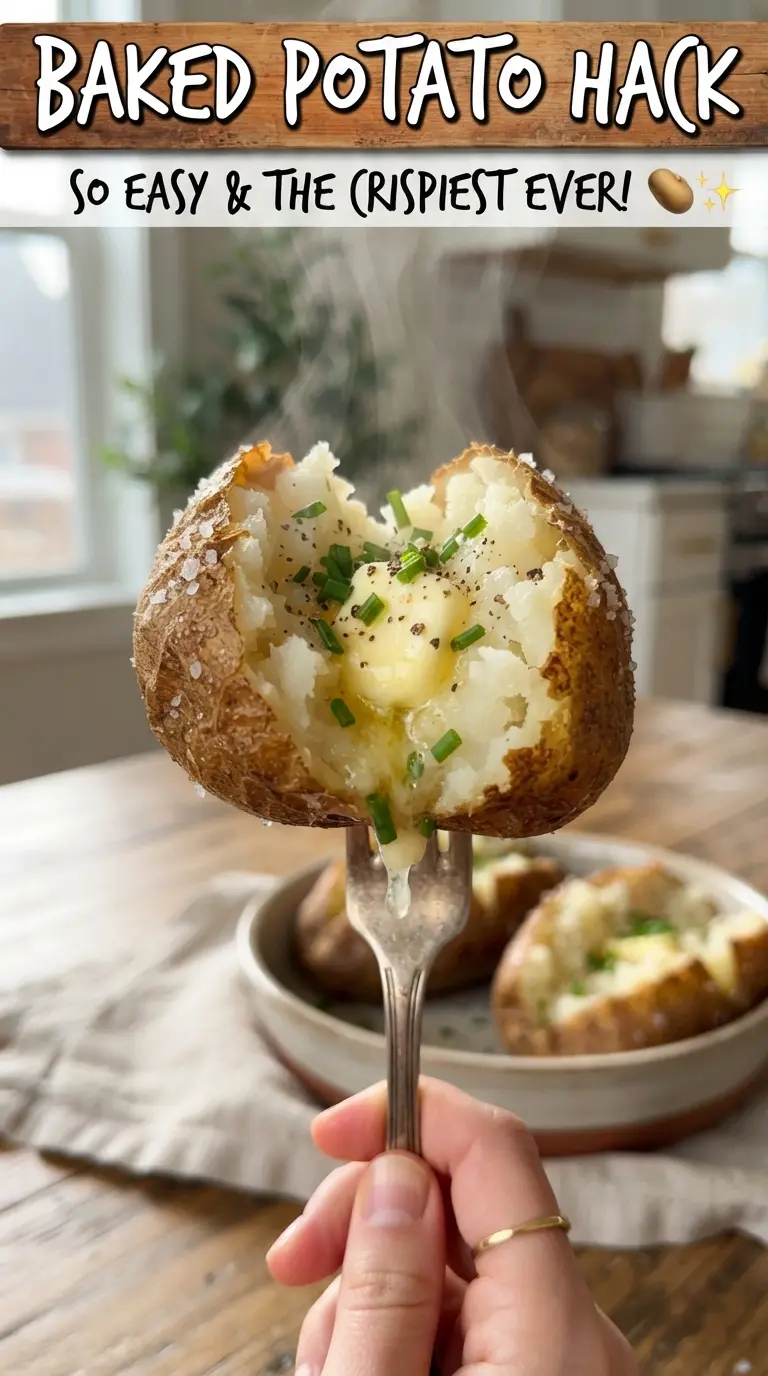
Deep golden potato edges and a fluffy, steaming center are what make this baked potato hack worth repeating. The trick is turning the potatoes cut-side down on an oiled sheet pan, where the exposed flesh gets direct contact with the hot metal and turns crisp instead of drying out in the oven. You get the contrast people usually hope for in a twice-baked potato, but with almost no extra work.
Russet potatoes are the right choice here because their starch works in your favor. They bake up light inside and blistered outside, and the cut face has enough surface area to pick up salt, garlic, and pepper before it hits the pan. A little oil on the skins helps them roast instead of shriveling, and the coarse salt gives the crust a better bite than fine salt ever will.
Below, I’ve included the small details that keep the potatoes from sticking, the one visual cue that tells you they’re done, and a few easy ways to change the topping without losing that crisp, salty crust.
The cut sides got unbelievably crisp, and the centers stayed fluffy all the way through. I only had to bake mine about 45 minutes, and the butter melted right into those crunchy edges.
Like this baked potato hack? Save it for the nights when you want crisp cut sides, fluffy centers, and almost no hands-on work.
The Cut-Side-Down Trick That Gives You the Crunch
Most baked potatoes soften on the bottom because they sit whole on a rack or tray and steam in their own skins. Halving them changes the game. The cut surface has direct contact with the hot pan, so the starches on the exposed flesh brown and crisp before the interior overcooks. That’s the whole hack, and it works because the potato is flat enough to behave like a little skillet hash instead of a giant, insulated tuber.
The other piece that matters is the oil on the sheet pan itself. That thin slick keeps the surface from welding to the metal while the potato is forming its crust. If the potatoes stick when you try to flip them, they weren’t ready yet. Give them more time; the crust will release once it’s properly browned.
What the Potatoes and Seasonings Are Actually Doing Here
- Russet potatoes — These are the right potatoes because their high starch content turns fluffy inside and crisp on the cut surface. Waxy potatoes won’t give you the same contrast. If you only have Yukon Golds, they’ll taste good, but the inside will be denser and the crust a little less dramatic.
- Olive oil — This helps the potatoes roast instead of dry out. You need enough to coat the pan and lightly gloss the skins; the oil is carrying heat to the surface and helping the browning happen. Neutral oil works too, but olive oil adds a little more flavor.
- Coarse salt, garlic powder, and black pepper — The seasoning goes on the cut side before baking so it bakes into the crust instead of sitting on top at the end. Garlic powder holds up better than fresh garlic here, which would burn before the potatoes finish.
- Butter and chives — These finish the potatoes while the center is still hot enough to melt the butter into the fluffy flesh. Chives bring a fresh, sharp note that keeps the whole thing from tasting flat.
Getting the Crust Right Without Drying Out the Center
Season the cut faces first
Heat the oven to 425F and drizzle oil onto the sheet pan before anything else goes on it. Season the cut sides of the potatoes with salt, garlic powder, and black pepper, then set them cut-side down on the oiled pan. That direct contact is what builds the crust, and the seasoning on the flesh gets trapped against the pan where it can toast instead of blowing off in the oven.
Roast until the bottoms turn deep gold
Bake for 40 to 50 minutes, depending on the size of the potatoes. The cue you want is a deeply golden, almost bronzed cut face that releases from the pan without force. If you try to flip too early, the potatoes will cling and tear; if they’re ready, they’ll lift with a little nudge and smell nutty, not raw.
Flip and finish while they’re hot
Turn the potatoes over, add butter, and scatter chives over the top right away. The heat from the potatoes melts the butter into the fluffy center and carries the chive flavor through every bite. If you leave them sitting cut-side down after baking, the crust can soften from trapped steam, so serve them promptly.
Three Ways to Make This Baked Potato Hack Fit Dinner Tonight
Dairy-Free Finish
Skip the butter and finish with extra olive oil, chopped chives, or a spoonful of dairy-free sour cream. You lose the rich meltiness of butter, but the potatoes still carry plenty of flavor because the crust is built before the toppings go on.
Loaded Potato Style
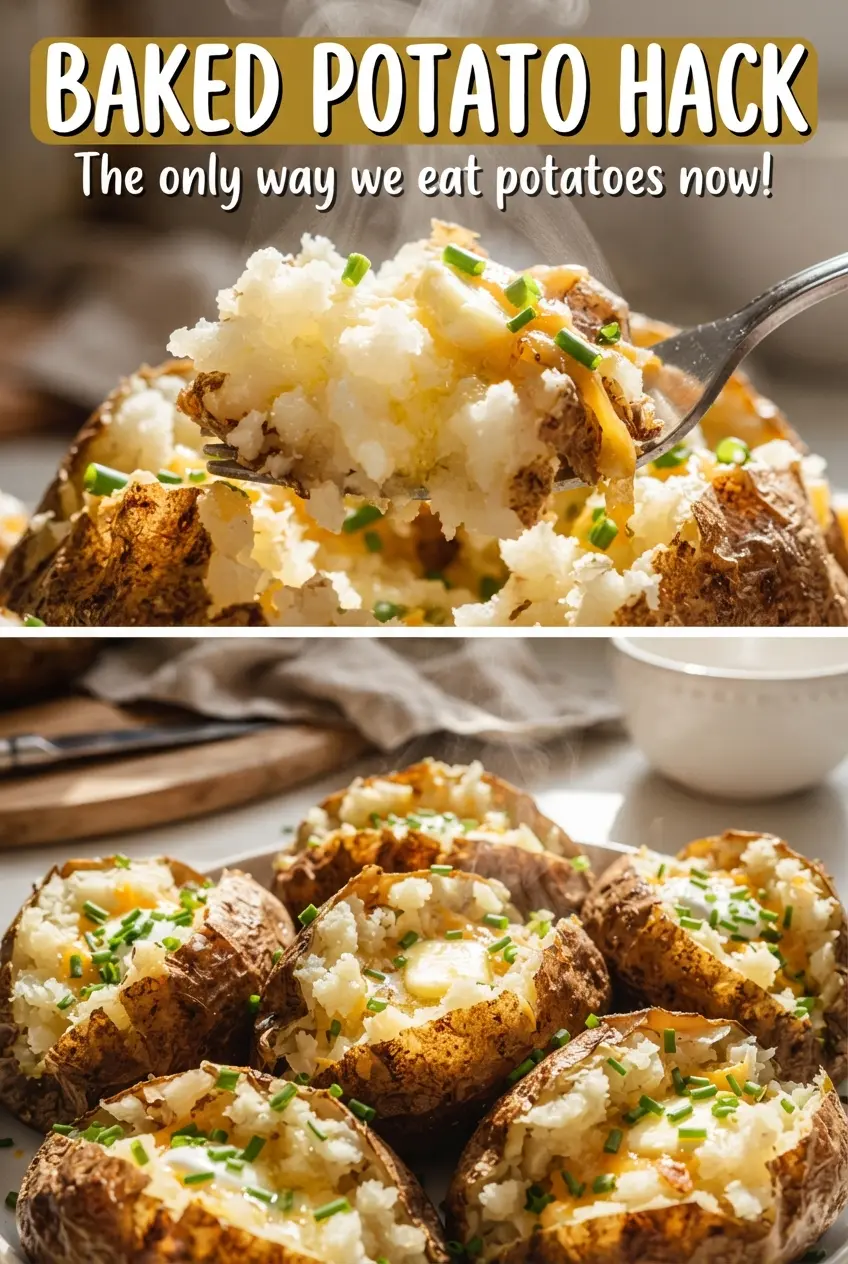
Add shredded cheddar, crumbled bacon, or a dollop of sour cream after flipping the potatoes. The base stays the same, but the toppings turn this from a simple side into something that can stand in for a light meal.
Garlic Herb Variation
Swap the chives for parsley, dill, or a pinch of rosemary added after baking. Fresh herbs bring brightness, but add them at the end so they stay vivid instead of turning dull and wilted in the oven.
Make-Ahead for a Crowd
You can bake the potatoes earlier in the day, then re-crisp them in a hot oven before serving. The skin won’t be quite as fresh as it is straight from the first bake, but the cut sides still pick up plenty of crunch if you give them a few minutes on a hot sheet pan.
Storage and Reheating
- Refrigerator: Store leftovers in an airtight container for up to 4 days. The cut sides will soften in the fridge, but the flavor holds.
- Freezer: Not ideal. Potatoes can turn mealy after freezing, and the crisp crust won’t survive.
- Reheating: Reheat on a sheet pan in a 400F oven until hot and the edges wake back up. The microwave will steam the potatoes and wipe out the crust, which is exactly what you don’t want here.
Answers to the Questions Worth Asking
Baked Potato Hack
Ingredients
Equipment
Method
- Preheat oven to 425°F, then drizzle olive oil onto a sheet pan.
- Season the cut sides of the potatoes with coarse salt, garlic powder, and black pepper.
- Place potatoes cut-side down on the oiled pan, then rub the skins with a little more olive oil to help browning.
- Bake 40-50 minutes at 425°F until the cut sides are deep golden and crisp, with a visibly browned crust.
- Flip the potatoes and bake briefly at 425°F if needed until the underside is hot and the crust looks set.
- Top with butter and fresh chives, then serve while the centers are fluffy and the crust stays crisp.