Juicy baked pork tenderloin rewards you with a deep golden crust and a blush-pink center that slices cleanly instead of shredding into dryness. It’s one of those dinners that looks like you worked a lot harder than you did, which is exactly why it earns a regular spot in my kitchen.
The trick is treating the tenderloin like a fast-cooking roast, not a long braise. A dry surface, a hot skillet for the sear, and a short oven finish are what keep the exterior flavorful while the center stays tender. The garlic-herb rub does plenty of the heavy lifting, but the real insurance policy is pulling the pork at 145°F and letting it rest before slicing.
Below, I’ll walk through the small details that matter most, including how to avoid the two classic mistakes: under-seasoning and overcooking. I’ve also included a few smart swaps and storage notes so you can use what you have and still land on a good result.
The pork came out juicy and the herb crust browned beautifully in the skillet before it went into the oven. I used a thermometer like you suggested and pulled it right at 145, and it sliced perfectly after the rest.
Save this baked pork tenderloin for the night you want a juicy roast, a quick sear, and a herb crust that actually stays flavorful.
The Sear Is What Keeps This Pork Tenderloin Juicy
Most dry pork tenderloin starts with skipping the sear or rushing through it. That first minute or two in a hot skillet builds a browned crust before the oven takes over, and that crust does more than add color — it protects the surface from overcooking while the center comes up to temperature.
The other thing people get wrong is treating tenderloin like pork loin. They’re not the same cut, and tenderloin is lean enough that even a few extra minutes can push it from juicy to chalky. A thermometer is the only reliable guide here. When the center hits 145°F, pull it. The rest time finishes the job.
- Pork tenderloins — Look for pieces that are close to the same thickness so they cook at the same pace. If one end is much thinner, tuck it under slightly before searing so it doesn’t dry out before the thicker part is done.
- Olive oil — This carries the spices and helps the surface brown. A regular olive oil is fine; you don’t need anything fancy here, just enough fat to coat the meat evenly.
- Garlic and dried herbs — Fresh garlic gives the rub a sharper bite, while dried thyme and rosemary hold up better in the oven than fresh herbs mixed into the coating. Fresh rosemary is best saved for garnish so it stays fragrant instead of burnt.
- Smoked paprika and onion powder — These round out the rub and help the crust taste fuller without needing a long marinade. If you don’t have smoked paprika, regular paprika works, but you’ll lose that subtle woodsy note.
How to Move From Seasoned to Sliced Without Drying It Out
Building the Herb Rub
Pat the pork dry first. That matters more than people think, because moisture on the surface blocks browning and turns your seasoning paste slippery instead of clingy. Stir the olive oil, garlic, smoked paprika, thyme, rosemary, onion powder, salt, and pepper into a loose paste, then rub it all over every side of the tenderloins. If the seasoning looks patchy, the crust will look patchy too.
Getting the Sear Right
Heat the skillet over medium-high until it’s properly hot, then lay the tenderloins in and leave them alone for about two minutes per side. You’re looking for a deep golden edge and a slight release from the pan before turning. If they stick, give them another few seconds; forcing the flip too early tears off the crust you just built.
Finishing in the Oven
Move the whole skillet to the oven and roast until the thickest part reaches 145°F, usually 18 to 22 minutes. Start checking early if your tenderloins are small, because the difference between juicy and dry can be just a couple of minutes. Pull them from the oven the moment the thermometer says 145°F; carryover heat will finish the center while it rests.
The Rest Before the First Slice
Let the pork sit for five minutes before slicing. That pause keeps the juices from flooding the cutting board the second your knife goes in. Slice against the grain into thick pieces, and use a sharp knife so the crust stays intact instead of dragging apart.
How to Adjust This Baked Pork Tenderloin for Different Kitchens
Dairy-Free and Naturally Gluten-Free
This recipe already fits both of those needs as written. Keep an eye on any store-bought spice blends if you swap them in, since some contain hidden starches or additives, but the base rub and cooking method are clean and simple.
If You Don’t Have Smoked Paprika
Use regular paprika in the same amount. The pork will still brown nicely, but you’ll lose some of the smoky depth that helps the crust taste like more than just garlic and herbs.
Using Fresh Herbs Instead of Dried
Fresh thyme or rosemary can work, but use about three times as much as the dried amount. Chop them finely so they stick to the pork, and expect a softer, less concentrated seasoning crust than you get with dried herbs.
Scaling Up for a Crowd
You can cook more than two tenderloins, but give each piece space in the pan so they sear instead of steam. If your skillet is crowded, brown them in batches and finish all of them in the oven together, checking each one with a thermometer.
Storage and Reheating
- Refrigerator: Store sliced pork in an airtight container for up to 4 days. It stays juicy if you keep any pan juices with it.
- Freezer: It freezes well for up to 2 months. Wrap tightly and thaw overnight in the fridge so the texture doesn’t turn watery.
- Reheating: Rewarm gently in a covered skillet with a splash of broth or pan juices over low heat, or use a low oven. High heat dries tenderloin fast, so don’t blast it in the microwave unless you want the edges to turn tough.
Questions I Get Asked About This Recipe
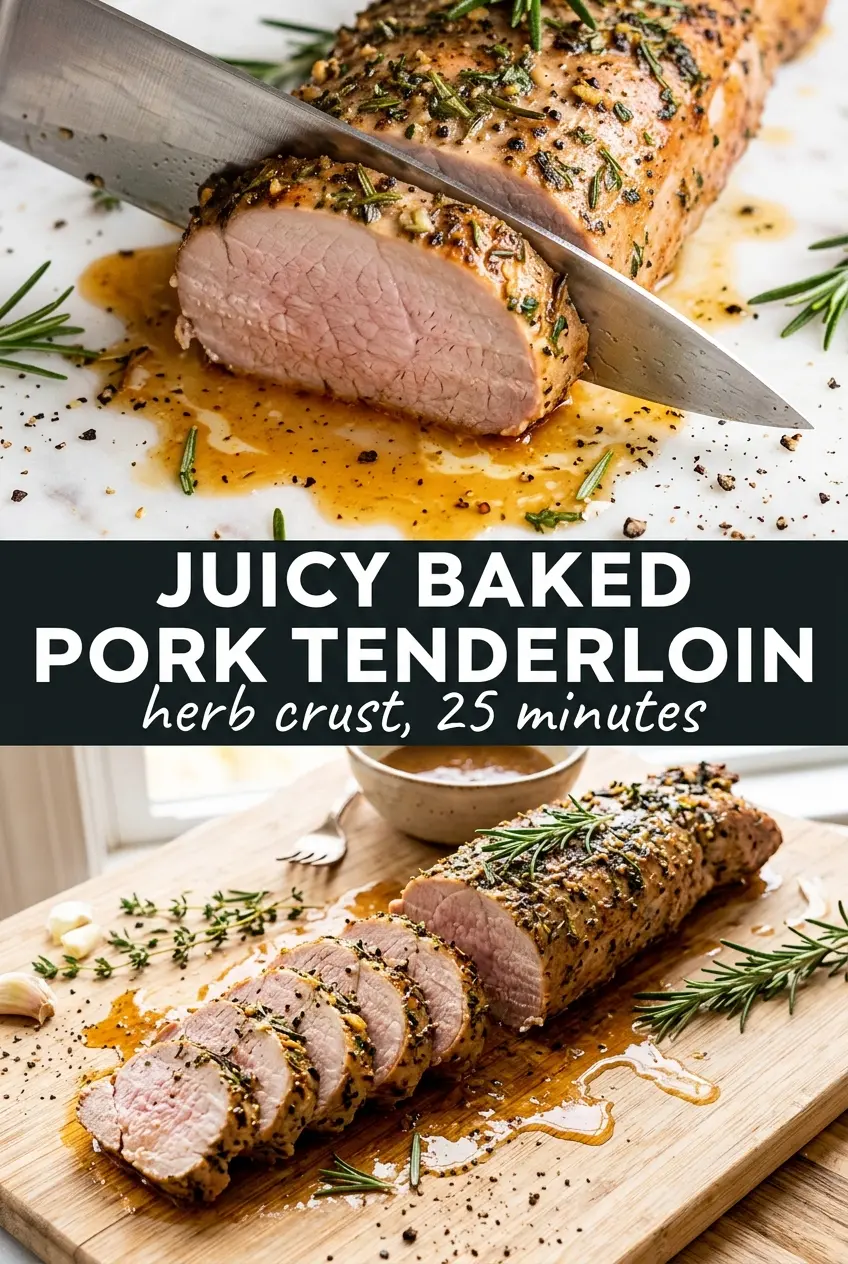
Baked Pork Tenderloin
Ingredients
Equipment
Method
- Preheat the oven to 425°F so it’s ready for roasting.
- Pat pork tenderloins dry and mix olive oil with garlic, smoked paprika, thyme, rosemary, onion powder, salt, and pepper.
- Rub the herb-oil mixture all over both tenderloins to coat evenly.
- Heat an oven-safe skillet over medium-high heat and sear tenderloins 2 minutes per side until golden all over.
- Transfer the skillet to the oven and roast 18–22 minutes, until the internal temperature reaches 145°F.
- Rest the pork tenderloins 5 minutes before slicing to keep the interior juicy.
- Slice and serve, garnishing with fresh rosemary and any pan juices.