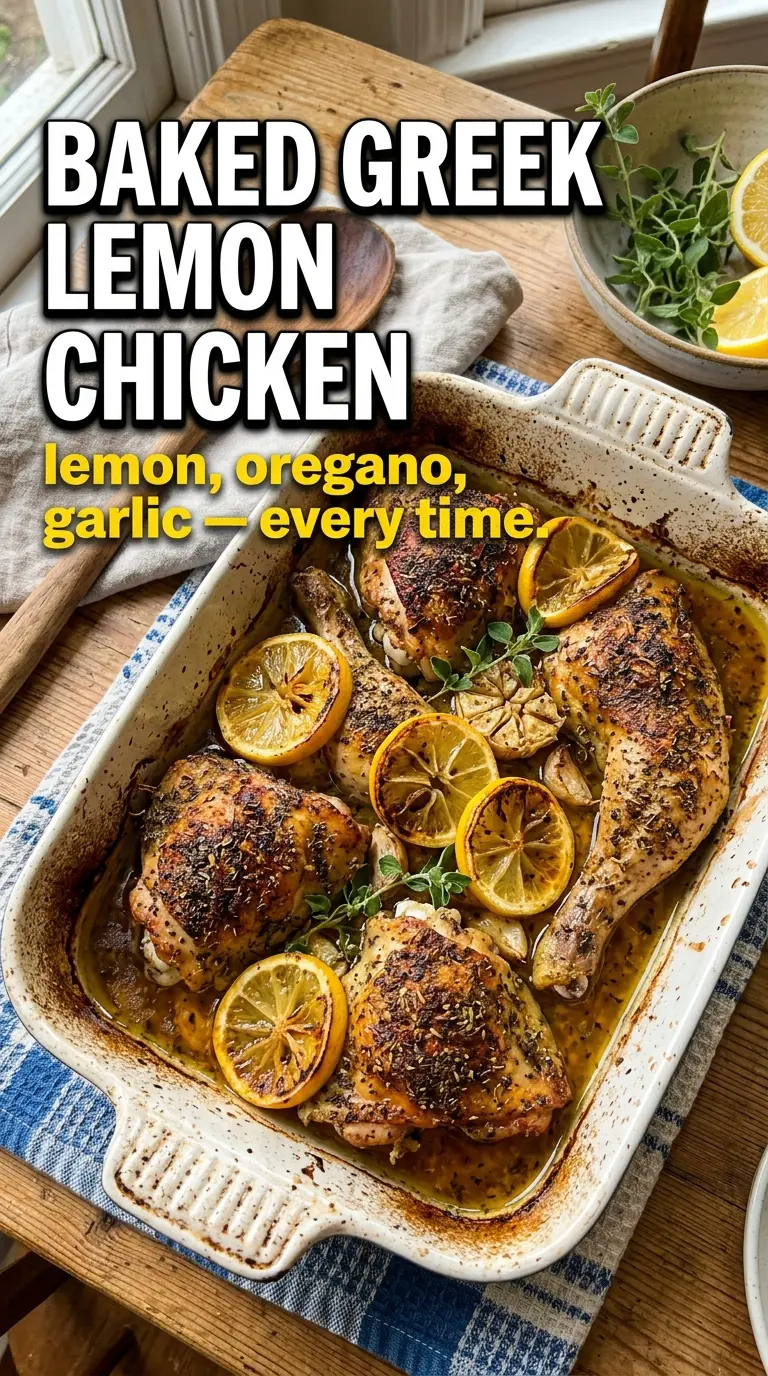
Golden baked Greek lemon chicken lands on the table with crisp skin, juicy meat, and pan drippings that taste like they’ve been working all afternoon, even though the hands-on part is short. The lemon softens into something sweet and concentrated in the oven, the garlic turns mellow, and the oregano gives the whole dish that unmistakable Mediterranean edge. It’s the kind of chicken that makes a plain pan of roast pieces feel like a real dinner.
What separates this version from a forgettable lemon chicken is the balance in the marinade and the high-heat roast. The olive oil carries the herbs, the lemon juice brightens without bulldozing the chicken, and the broth under the meat keeps the pan from drying out while also building enough juices to spoon back over everything at the end. Thin lemon slices tucked into the pan don’t just decorate the dish; they caramelize and perfume the drippings.
Below, I’ve included the one timing detail that matters most for getting browned skin instead of pale chicken, plus a few swaps that keep the recipe flexible without losing the Greek character.
The chicken came out with crisp, browned skin and the lemon-garlic pan juices were perfect spooned over rice. I marinated it for about 45 minutes and the flavor went all the way through.
Like this baked Greek lemon chicken? Save it to Pinterest for the nights when you want crispy chicken, caramelized lemon, and easy pan juices without extra fuss.
The Marinade Window That Gives You Flavor Without Softening the Skin
The trick here is not maxing out the marinating time. Lemon juice is great for flavor, but too long in the acid can make the outer layer of the chicken tighten up and turn a little chalky, especially on bone-in pieces with skin. Thirty minutes is enough to season the meat and set the direction of the dish without starting the texture in the wrong place.
High heat in the oven does the rest. At 425°F, the skin renders and browns while the broth underneath protects the pan juices from burning. If the chicken goes into a lukewarm oven or sits crowded in a shallow dish, you get steamed chicken instead of roasted chicken, and the lemon slices never caramelize the way they should.
- Bone-in chicken pieces — Skin-on thighs, drumsticks, and split breasts hold up best here. Boneless pieces cook faster but won’t give you the same browned skin or rich drippings.
- Fresh lemon juice and zest — Juice brings the sharp brightness, while zest carries the fragrant citrus oils that don’t disappear in the oven. Bottled juice works in a pinch, but it tastes flatter.
- Olive oil — This coats the chicken and helps the herbs cling. Use a decent everyday olive oil; there’s no need to save your fanciest bottle for roasting.
- Chicken broth — Don’t skip it. It keeps the pan moist enough for drippings to develop and gives you spoonable juices at the end. Water will not give the same depth.
What Each Ingredient Is Actually Doing in the Pan
- Whole chicken cut into pieces — Cutting the bird into parts gives you more browned surface area and more even cooking. If you buy pre-cut pieces, look for similar sizes so the breasts and legs finish together.
- Garlic — Six cloves sounds bold, but roasted garlic turns sweet and mellow in the pan. Mince it finely so it disperses in the marinade instead of sitting in clumps that can scorch.
- Dried oregano and thyme — Oregano is the backbone of the Greek flavor here, while thyme rounds it out with a woodsy note. Dried herbs work especially well because they bloom in the oil and cling to the skin.
- Smoked paprika — This adds a little warmth and helps the chicken take on a deeper color as it roasts. It doesn’t make the dish taste smoky in the barbecue sense; it just gives the crust more presence.
- Thin lemon slices — These are worth doing carefully. Thin slices soften and caramelize; thick slices can stay firm and taste sharper than you want.
Getting the Skin Golden Before the Pan Drippings Burn
Build the Marinade First
Whisk the olive oil, lemon juice, zest, garlic, oregano, thyme, paprika, salt, and pepper until the mixture looks emulsified and fragrant. It should smell bright and punchy, not oily and separated. Coat the chicken well, then let it sit for at least 30 minutes so the seasonings settle into the skin and the meat starts to pick up the lemon and herb flavor.
Arrange for Roasting, Not Steaming
Place the chicken skin-side up in a large roasting pan or baking dish with a little breathing room between the pieces. Pour the broth around the chicken, not over the top, so the skin can brown properly. Tuck the lemon slices around and under the chicken where they can roast against the heat and sweeten in the drippings.
Roast Until the Skin Tightens and Turns Deep Gold
Put the pan into a fully preheated 425°F oven and roast for 40 to 45 minutes. The skin should look deeply golden, the edges crisped, and the juices around the chicken should be bubbling. If your pan is crowded or the oven runs cool, the skin can stay pale, so use a thermometer and aim for 165°F at the thickest part of the meat.
Finish With the Pan Juices
Baste once halfway through with the pan drippings, then spoon the juices over the chicken again right before serving. That last spoonful matters because it carries the concentrated lemon, garlic, and oregano that settle in the bottom of the pan. Finish with fresh oregano while the chicken is still hot so the herb fragrance wakes up as soon as it hits the surface.
How to Adapt This for a Different Table or a Different Night
Gluten-Free and Naturally Dinner-Friendly
This recipe is already gluten-free as written, which makes it an easy main when you’re serving a mixed crowd. Just keep an eye on your chicken broth label, since a few brands add flour-based flavorings or additives.
Using Boneless Chicken Instead
Boneless thighs or breasts will cook faster, usually closer to 25 to 30 minutes, and they won’t give you the same amount of pan juices. The flavor still works, but you lose some of the richness that comes from roasting bone-in pieces.
If You Want It More Herb-Forward
Add a little chopped fresh oregano or parsley at the end instead of increasing the dried herbs in the marinade. Fresh herbs give a brighter finish, while too much extra dried oregano can start to taste dusty in the oven.
Dairy-Free, With Nothing Extra Needed
There’s no dairy in the base recipe, so it already fits a dairy-free table. Serve it with rice, potatoes, or roasted vegetables and spoon the lemony pan juices over everything.
Storage and Reheating
- Refrigerator: Store leftovers in an airtight container for up to 4 days. The skin softens as it sits, but the flavor holds up well.
- Freezer: It freezes well if you remove the chicken from the bones first. Freeze with a little of the pan juices in a sealed container for up to 2 months.
- Reheating: Reheat covered in a 325°F oven until hot, then uncover for the last few minutes if you want to bring back some texture. The biggest mistake is blasting it in the microwave, which makes the skin rubbery and the meat dry around the edges.
Answers to the Questions Worth Asking

Baked Greek Lemon Chicken
Ingredients
Equipment
Method
- Whisk together olive oil, lemon juice, lemon zest, minced garlic, dried oregano, dried thyme, smoked paprika, salt, and cracked black pepper until evenly combined. Marinate the chicken for at least 30 minutes so the flavor clings to the pieces.
- Preheat oven to 425°F and arrange the marinated chicken skin-side up in a large roasting pan or baking dish. Position the lemon slices to tuck around and under the chicken pieces.
- Pour chicken broth around the chicken to keep the pan drippings glossy while roasting. Roast for 40-45 minutes, basting with pan juices once halfway through, until the skin is deeply golden and the internal temperature reaches 165°F.
- Spoon the caramelized pan drippings over the chicken right before serving to coat the roasted lemon and herb glaze. Garnish with fresh oregano for a fragrant, herb-flecked finish.