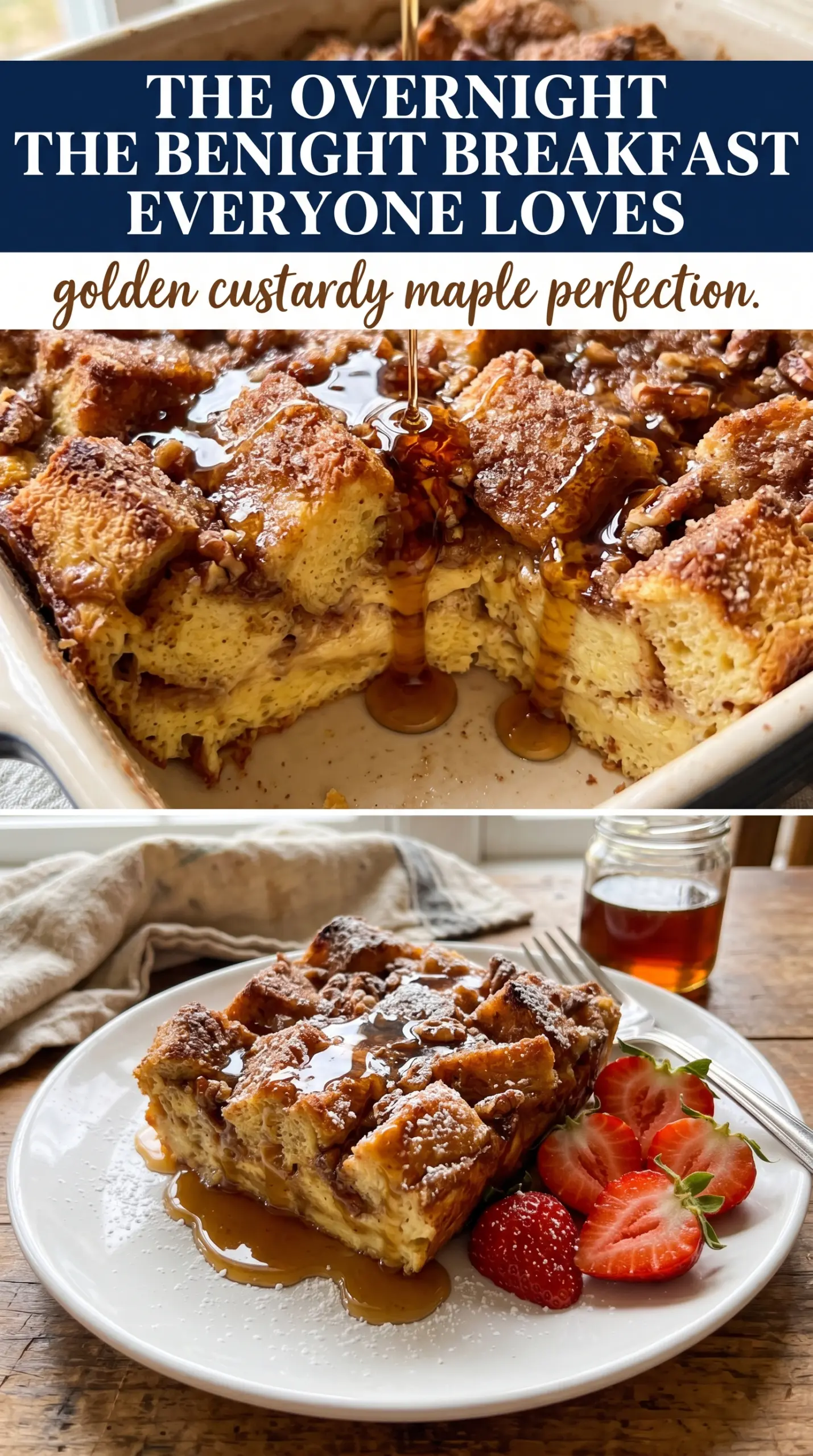
Golden, puffy baked French toast casserole is the kind of breakfast that disappears fast because it gives you everything people want in a brunch dish: crisp sugar on top, a custardy center, and those soft brioche bites that taste like they soaked up every bit of cinnamon vanilla goodness overnight. It comes out of the oven with a bronzed top and a spoonable middle, which is exactly the balance a good French toast bake should have.
What makes this version work is the bread choice and the rest time. Brioche or challah holds its shape while still soaking up the custard, so you get rich, tender pieces instead of a soggy pan. The overnight chill gives the eggs time to move all the way through the bread cubes, and the cold butter on top melts into the brown sugar as it bakes, creating that crackly cinnamon crust.
You’ll find a few practical tips below for keeping the center creamy without underbaking it, plus a couple of smart swaps if you need to change the bread or make it ahead for a crowd.
The top turned out crisp and sugary while the middle stayed custardy instead of wet. I used challah, let it sit overnight, and it sliced cleanly with no soggy bottom at all.
Love the crisp cinnamon top and custardy brioche center? Save this baked French toast casserole for your next make-ahead brunch.
The Overnight Rest Is What Keeps the Center Custardy, Not Wet
The biggest mistake with baked French toast casserole is baking it too soon after pouring on the custard. The bread needs time to absorb the liquid all the way through, or you end up with dry cubes on top and a puddly bottom underneath. Overnight is ideal because the bread settles into the custard and bakes up evenly.
Pressing the bread down after you add the custard matters more than people think. You’re not trying to mash it; you’re helping every cube make contact with the liquid so the whole dish bakes as one. If your bread is very fresh, it can take even longer to soak, which is why day-old brioche or challah gives you a better structure and a cleaner slice.
What the Bread, Eggs, and Topping Are Each Doing Here
- Brioche or challah — These breads hold their shape after soaking, which is why the casserole feels rich instead of collapsing into bread pudding mush. Brioche brings a little extra sweetness and tenderness; challah is slightly sturdier and still bakes up beautifully. If you use regular sandwich bread, cut the custard back a little or the texture can turn soft in a hurry.
- Eggs — The eggs set the custard and give the casserole its sliceable body. Six eggs is enough to bind the whole dish without making it rubbery. If the center tastes eggy, it usually means the ratio leaned too hard toward egg or the casserole was pulled too early.
- Heavy cream and whole milk — This combination makes the custard rich without turning heavy. All milk works in a pinch, but the finished texture won’t be as lush. The cream matters most here because it keeps the center soft and gives the custard that creamy baked finish.
- Brown sugar and cold butter on top — This is what gives you that crackly, caramelized lid. Cold butter melts slowly and helps the sugar form little crisp pockets instead of disappearing into the bread. Don’t skip the cold part; soft butter blends in too quickly and you lose the texture on top.
How to Bake It So the Top Browns Before the Center Dries Out
Building the Custard
Whisk the eggs, milk, cream, sugar, vanilla, cinnamon, and nutmeg until the mixture looks smooth and fully blended. You want the sugar mostly dissolved before it hits the bread so you don’t end up with gritty pockets at the bottom. Pour it evenly over the bread, then press down gently and wait a minute or two for the liquid to settle into the gaps.
Letting It Rest Overnight
Cover the dish and refrigerate it for at least 4 hours, though overnight gives the best result. The bread should look fully saturated by the time it bakes, with no dry edges peeking up above the custard. If you rush this part, the top browns too fast while the middle stays underdone.
Adding the Crunchy Top
Right before baking, scatter the cold butter cubes over the casserole and sprinkle on the brown sugar and cinnamon. The butter should stay in visible pieces so it melts into a craggy topping in the oven. If you melt the butter first, the topping turns flat and the best texture disappears.
Baking Until Puffy and Set
Bake at 350°F for 40 to 45 minutes until the casserole is puffed, deeply golden, and no longer sloshes in the center when you move the pan. The top should look crisp and bronzed, while the middle still has a slight softness when you nudge it with a spoon. If the top browns too fast, lay a loose sheet of foil over it for the last 10 minutes so the custard can finish without burning the sugar.
How to Adapt This Baked French Toast Casserole for Your Kitchen
Dairy-Free with Full Flavor
Swap the whole milk and cream for full-fat canned coconut milk plus an unsweetened dairy-free milk. The casserole will still set, but the flavor will pick up a faint coconut note and the top won’t brown quite as richly. Use a neutral dairy-free butter for the topping if you want to keep the same crisp finish.
Gluten-Free Bread That Still Holds Up
Use a sturdy gluten-free brioche-style loaf if you can find one, and let it dry out overnight before assembling. Softer gluten-free breads can break apart once the custard goes in, so structure matters more than brand here. The finished casserole will be a little more delicate, but the flavor and texture still work if the bread is firm enough.
Making It Less Sweet
Cut the granulated sugar slightly and lean on maple syrup at the table instead of in the custard. That keeps the casserole more balanced, especially if your brioche is already sweet. The brown sugar topping still gives you the caramelized crust, so you don’t lose the best part.
Storage and Reheating
- Refrigerator: Store leftovers covered for up to 4 days. The top softens a little, but the custard stays pleasant.
- Freezer: It freezes well in individual portions. Wrap tightly and freeze for up to 2 months, then thaw in the fridge before reheating.
- Reheating: Warm in a 325°F oven until heated through, or microwave a slice in short bursts. The oven keeps the top closer to its original texture; the microwave works, but it softens the crisp sugar crust.
Answers to the Questions Worth Asking
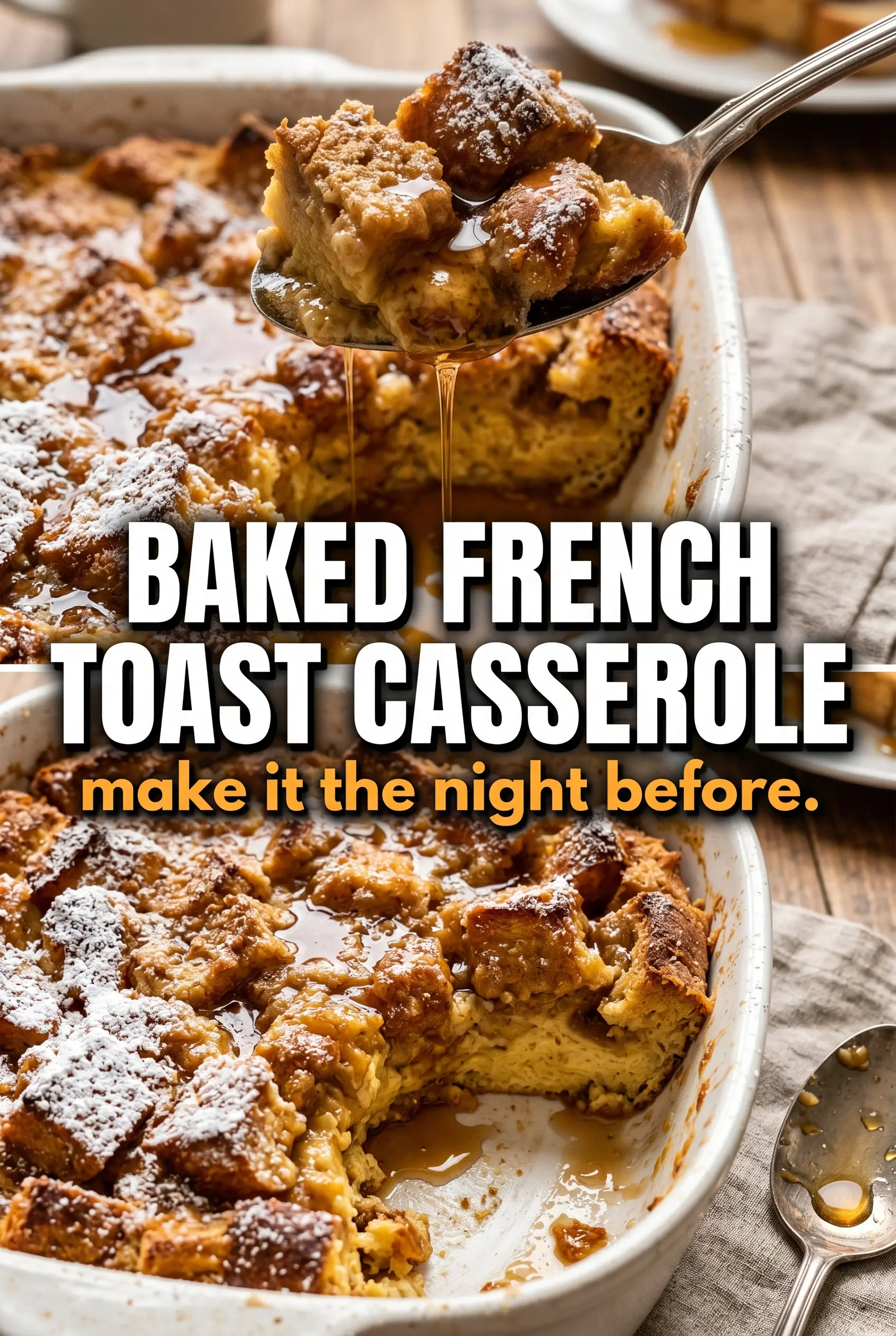
Baked French Toast Casserole
Ingredients
Equipment
Method
- Grease a 9x13 dish, then arrange the bread cubes in an even layer so they’re spaced for custard coverage.
- Whisk the eggs, whole milk, heavy cream, sugar, vanilla extract, cinnamon, and nutmeg until smooth, then pour over the bread.
- Press down the bread gently until every cube is soaked, then cover the dish and refrigerate overnight (or at least 4 hours) to hydrate the brioche.
- Scatter cold butter cubes over the surface, then sprinkle brown sugar and cinnamon evenly for a crisp cinnamon-sugar top.
- Bake at 350°F for 40–45 minutes, until the casserole is golden and puffed in the center.
- Let the baked French toast casserole sit briefly, then dust with powdered sugar and drizzle with maple syrup before serving.