Golden baked apple fritters hit that sweet spot between a tender breakfast pastry and a glazed donut, with crisp edges, soft apple-studded centers, and just enough cinnamon to make the whole kitchen smell like you know exactly what you’re doing. Baking them instead of frying keeps the texture lighter, but the right batter still gives you that sturdy outside and a soft, almost cake-like middle that holds the glaze without turning soggy.
The trick is keeping the batter thick and barely mixed. That gives the fritters enough structure to mound on the pan and bake up with those crackly edges instead of spreading into flat pucks. The diced apples stay in visible chunks, which matters here — you want bites of real apple, not just background flavor.
Below you’ll find the small details that make these worth repeating: how to keep the glaze from sliding right off, which apple texture works best, and what to change if you want a stronger cider note or a dairy-free version.
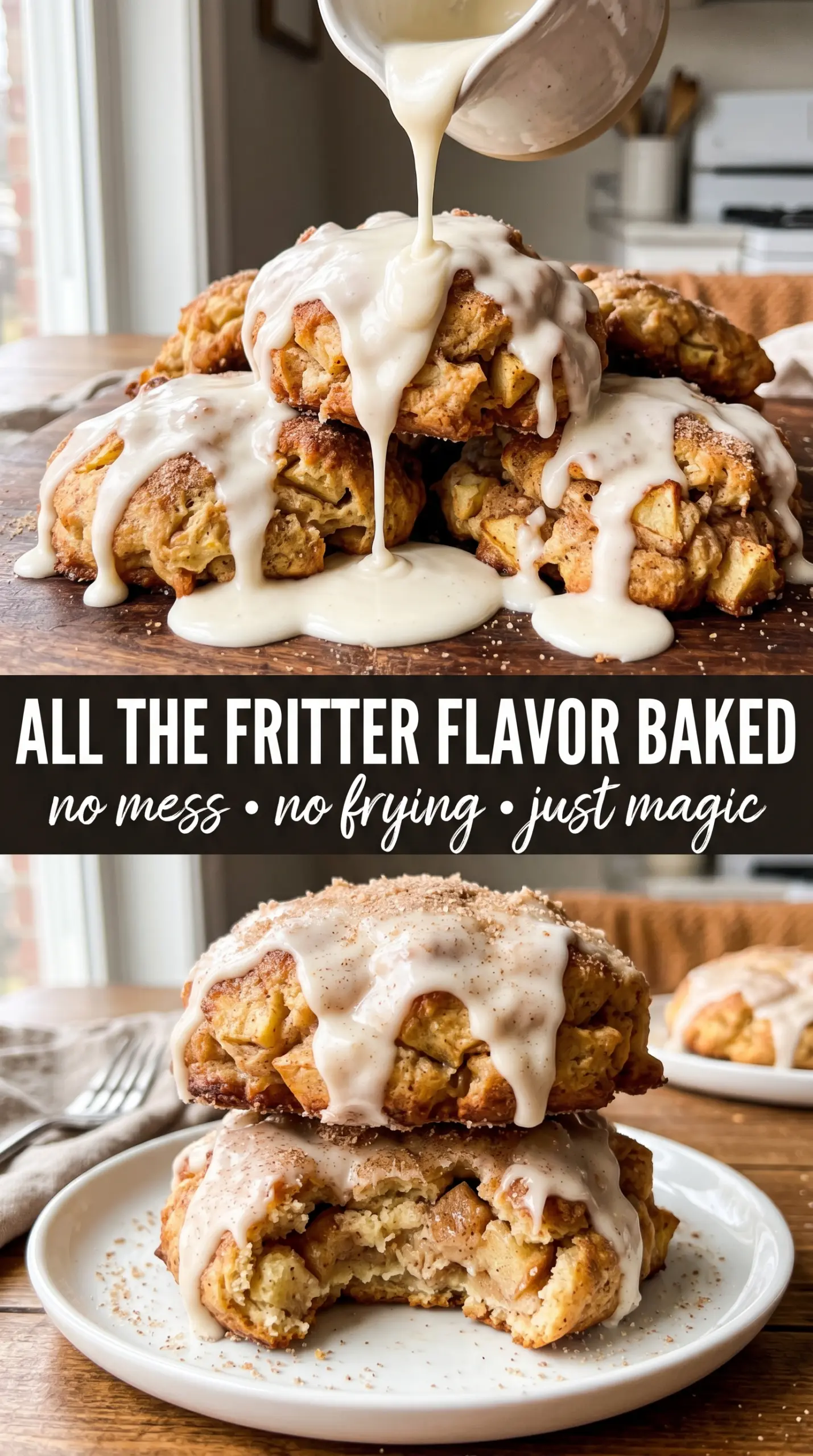
The fritters baked up with crisp edges and stayed fluffy inside, and the glaze set just enough that it didn’t run everywhere. I used Granny Smith apples and the little tart bite was perfect with the cinnamon.
These baked apple fritters come out crisp on the outside, tender in the middle, and covered in that thick vanilla glaze that sets just enough to stay put.
The Secret to Crisp Edges Without Frying
Baked fritters can turn soft fast if the batter is too loose or the oven isn’t hot enough when they go in. A 400°F oven gives the outside a head start, which is what helps the mounded scoops hold their shape and develop those golden edges before the apples have time to leak too much moisture.
The other piece is restraint. Once the wet ingredients go into the dry, stop stirring as soon as the flour disappears. Overmixing wakes up the gluten and gives you a chewy, bready fritter instead of one that stays tender and light. The diced apples should be folded in at the very end so they stay intact and don’t stain the batter into a heavy paste.
What the Apples and Glaze Are Each Doing Here
- Apples — Firm, peeled apples hold their shape better than softer varieties. Granny Smith gives the sharpest contrast against the sweet glaze, while Honeycrisp or Fuji lean sweeter and softer. Cut them into small, even dice so they cook through before the fritters overbake.
- Whole milk — This gives the batter enough richness to taste like a real pastry, not a quick bread. If you need to swap, buttermilk works well, but it will add a little tang and make the batter slightly thicker. If you use a thinner non-dairy milk, expect a looser batter and add it slowly.
- Butter — Melted butter adds flavor and helps the fritters brown. Don’t skip it for oil unless you have to; oil will work, but it won’t give the same bakery-style taste. Keep it melted but not hot so it doesn’t scramble the eggs.
- Powdered sugar glaze — This is what gives the fritters that classic apple-donut finish. Use apple cider instead of milk if you want the glaze to taste more like fall without adding extra spice. Whisk until smooth and spoon it on while the fritters are still warm so it settles into the rough edges instead of sitting on top in a thick shell.
Getting the Batter Thick Enough to Mound
Mix the dry ingredients first
Whisk the flour, baking powder, sugar, cinnamon, nutmeg, and salt until everything looks evenly speckled. This keeps the spice from clumping in one bite and makes the baking powder distribute evenly, which matters for rise. If the dry mixture isn’t fully blended, you can end up with random bitter pockets of nutmeg or flat spots in the fritters.
Bring the batter together just until combined
Beat the eggs, milk, vanilla, and melted butter in a separate bowl, then stir that into the dry ingredients with a light hand. The batter should look thick and shaggy, not silky. Fold in the apples last and stop as soon as they’re spread through the batter, because every extra stir makes the fritters tougher.
Shape and bake for a deep golden crust
Use heaping 1/4-cup scoops and flatten them slightly on parchment-lined pans so they bake evenly. If the mounds are too tall, the centers can lag behind the outside and stay doughy. Bake until the tops are golden and the edges look set; if they still look pale, give them another minute or two, because underbaked fritters collapse once the glaze goes on.
Glaze while they’re still warm
Whisk the glaze until smooth, then spoon it over the fritters after they’ve cooled just enough to hold their shape. If they’re piping hot, the glaze melts right off and turns watery. Let them sit for five minutes after glazing so the surface firms up and you get that sticky, bakery-style finish.
How to Adapt These Baked Apple Fritters
Dairy-Free Version
Use a neutral non-dairy milk and swap the butter for melted coconut oil or a plant-based butter. The fritters still bake up well, but coconut oil adds a faint coconut note and plant butter usually keeps the flavor closest to the original.
Glaze With Apple Cider Instead of Milk
Swap the milk in the glaze for apple cider if you want a sharper apple finish. It won’t taste boozy or strong; it just gives the glaze a little more depth and keeps the sweetness from flattening out.
Make Them Smaller for Snack Sized Bites
Drop smaller scoops and reduce the bake time by a few minutes for a bite-size version. Smaller fritters bake more evenly and get more crisp surface area, but they also dry out faster, so pull them as soon as the edges turn golden.
Storage and Reheating
- Refrigerator: Store in an airtight container for up to 3 days. The glaze softens the crust a bit, but the flavor stays good.
- Freezer: Freeze unglazed fritters for up to 2 months. Wrap them well and thaw at room temperature before reheating and glazing.
- Reheating: Warm in a 325°F oven for about 8 minutes or until heated through. The mistake is microwaving them too long, which makes the apples wet and the outside rubbery.
Answers to the Questions Worth Asking
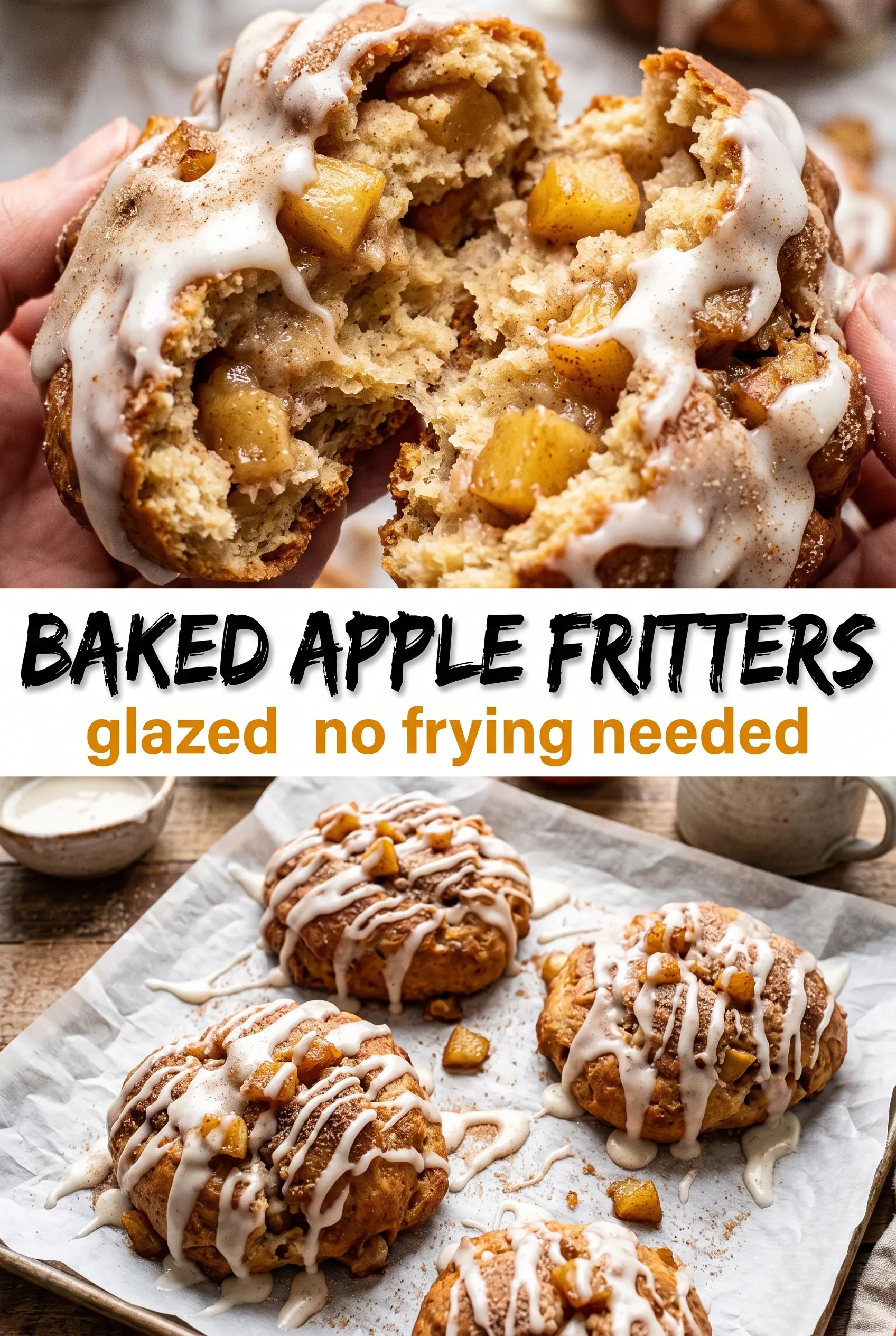
Baked Apple Fritters
Ingredients
Equipment
Method
- Preheat the oven to 400°F and line a sheet pan with parchment paper, so the fritters brown without sticking.
- Whisk all-purpose flour, baking powder, sugar, cinnamon, nutmeg, and salt together until evenly combined.
- In another bowl, beat eggs, whole milk, vanilla extract, and melted butter, then stir into the dry ingredients just until combined.
- Fold in the diced peeled apple until evenly distributed through the batter.
- Drop heaping 1/4-cup scoops onto the sheet pan and flatten slightly for even browning.
- Bake at 400°F for 15–18 minutes until golden and crisp at the edges, with a visibly set top.
- Whisk powdered sugar, milk or apple cider, vanilla, and a pinch of cinnamon until smooth and thick.
- Spoon the glaze over the warm fritters so it drips down the sides, then let set for 5 minutes before serving.