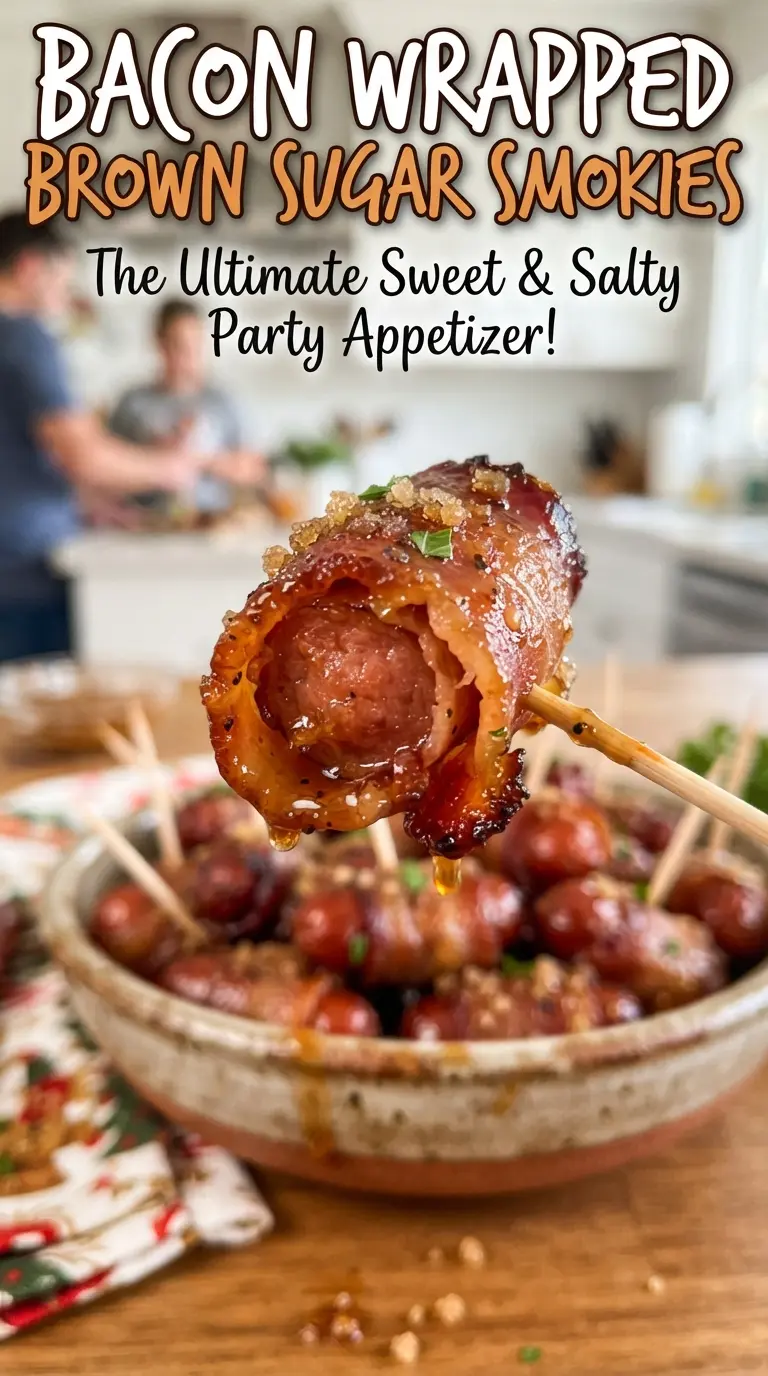
Bacon wrapped brown sugar smokies disappear fast because they hit three things at once: salty, sweet, and crisp. The bacon turns crackly at the edges, the sugar melts into a sticky glaze, and the little smokies stay juicy in the middle. On a party tray, these are the ones people circle back for after they “just try one.”
The trick is using thin-cut bacon and cutting each slice into thirds so it can cook through in the same time the smokies need in the oven. Brown sugar does more than sweeten here; it helps the bacon caramelize and gives the outside that lacquered finish. A little cayenne keeps the sweetness from tasting flat and gives the glaze a gentle back-end warmth instead of heat that takes over.
Below you’ll find the timing that keeps the bacon crisp instead of chewy, plus the little details that help the sugar cling instead of sliding off the pan. If you’ve ever had bacon-wrapped appetizers go soft before the tray was empty, this version fixes that.
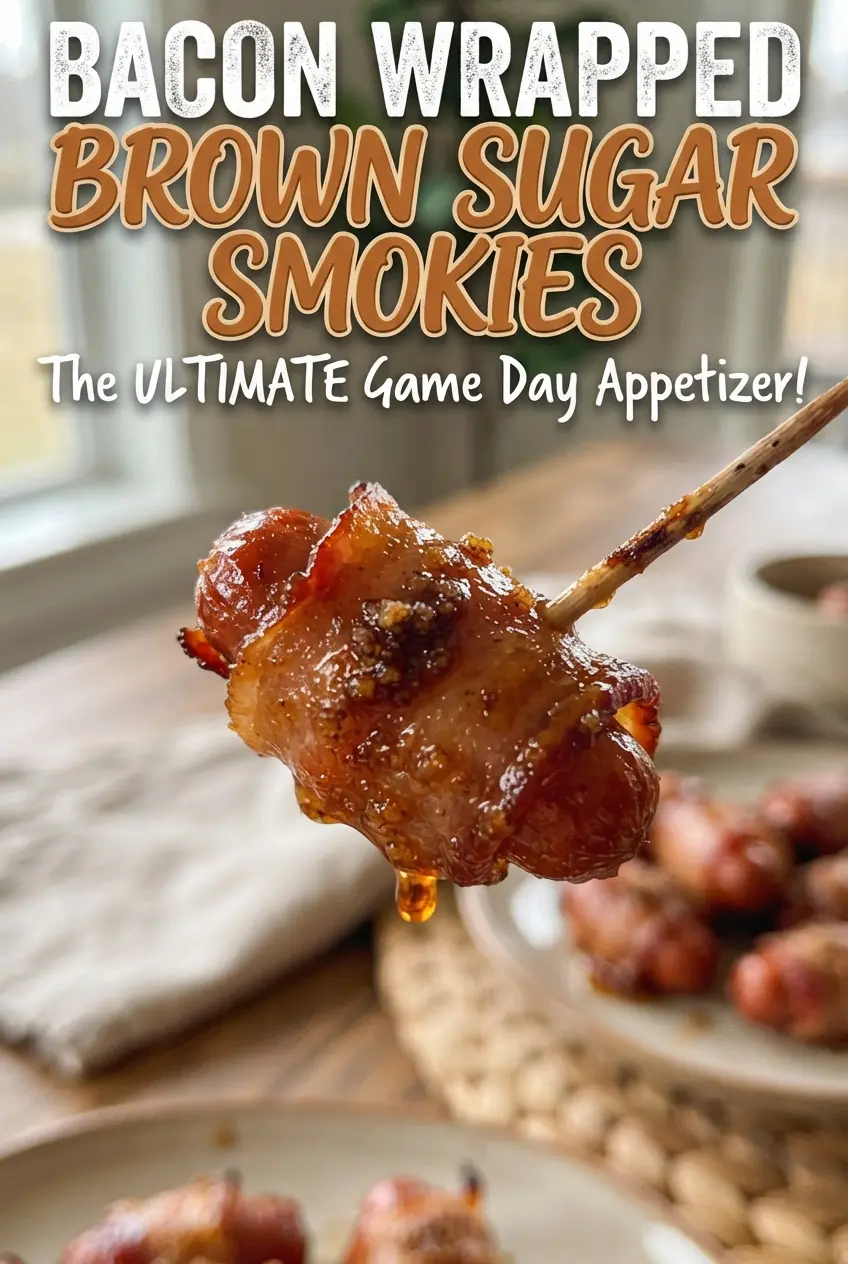
The bacon crisped up all the way through and the brown sugar made this shiny caramel shell that stayed on the smokies instead of running all over the pan. I baked them on parchment and they were gone before I could refill the platter.
Bacon wrapped brown sugar smokies with a crisp candied crust are the first appetizer to vanish—pin this for your next game day platter.
The Bacon Trick That Keeps the Smokies Crisp Instead of Flabby
The biggest mistake with bacon-wrapped appetizers is using bacon that’s too thick or wrapping it too tightly. Thick-cut bacon needs longer than the smokies do, which leaves you with soft bacon and overcooked filling by the time it’s done. Thin-cut bacon sliced into thirds cooks at the same pace as the little smokies, so the outside crisps while the sausage stays plump.
Spacing matters too. If the pieces sit in a crowded pan, they steam in their own fat and the sugar turns wet instead of caramelized. A lined baking sheet gives you the easiest cleanup, but it also helps the sugar-butter glaze release once it bubbles and hardens.
- Thin-cut bacon — This is the piece that makes the timing work. Thicker bacon stays rubbery unless you par-cook it first, and that changes the texture in a way this recipe doesn’t need.
- Brown sugar — Packed brown sugar melts into a glossy coating and gives you the candied shell. White sugar won’t give the same depth or sticky finish.
- Cayenne — Just enough to cut through the sweetness. You won’t taste heat first; you’ll notice a little warmth at the end that keeps the glaze from tasting one-note.
- Butter — The melted butter helps the sugar bloom and caramelize on the pan. It also keeps the bacon from drying out before the fat renders.
What Each Ingredient Is Actually Doing in This Recipe
- Primary ingredient (the star) — Quality matters most. Choose the best you can find.
- Cooking medium (oil, butter, or broth) — This carries flavors and prevents dryness.
- Seasonings (salt, pepper, spices, herbs) — Layer flavors so nothing overpowers. Build depth gradually.
- Aromatics (garlic, onion, herbs) — Cook with fat to bloom flavors. Become the foundation.
- Supporting ingredients — Complement the main ingredient without overpowering it.
- Sauce or liquid (if applicable) — Brings flavors together. Balance richness with acid.
- Acid (lemon, vinegar, wine, or other) — Brightens and prevents flat-tasting results.
- Final finish (garnish, glaze, or sauce) — Prevents one-dimensional taste and adds visual appeal.
Building the Candied Coating Without Burning the Sugar
Wrapping the Smokies Tight Enough
Cut the bacon into thirds and wrap each piece snugly around a smokie, then secure it with a toothpick. The wrap should sit flat, not overlap in a thick lump, or the bacon underneath won’t crisp before the rest is done. If the bacon wants to unwind, the piece is probably too long for the sausage, so trim a little more off the strip.
Coating in Brown Sugar and Cayenne
Mix the brown sugar and cayenne in a shallow bowl, then roll each wrapped smokie through it until the surface is fully covered. The sugar should cling in a grainy layer; that turns into the sticky crust in the oven. If the sugar looks patchy, press the piece lightly into the mixture a second time instead of dumping extra over the top later.
Baking Until the Bacon Renders and the Glaze Bubbles
Arrange the smokies on the prepared pan with a little space between each one, drizzle with melted butter, and scatter any remaining sugar over the top. Bake at 350°F for 30 to 35 minutes until the bacon looks crisp at the edges and the sugar is bubbling into a dark amber glaze. If the sugar is browning too fast before the bacon is done, the pan is too high in the oven; move it to a lower rack and keep going.
Letting the Glaze Set Before Serving
Give them about 5 minutes out of the oven before moving them. That short rest lets the caramelized sugar firm up just enough so the coating stays on the smokies instead of sliding off in hot sheets. Serve them warm, while the bacon still has some snap.
Three Ways to Make These Smokies Fit the Crowd You’re Serving
Milder Version for Kids or Heat-Sensitive Guests
Leave out the cayenne and use the same amount of brown sugar. You’ll get the same caramelized bacon and sweet glaze, just without the gentle heat at the end. This is the best swap if the platter is going to a mixed crowd and you want the flavor to stay broadly appealing.
Maple Variation With a Deeper Sweetness
Replace half of the brown sugar with maple sugar if you have it, or drizzle a small amount of maple syrup over the wrapped smokies before baking. The result is richer and a little more woodsy, but syrup adds more moisture, so don’t overdo it or the glaze can turn loose on the pan.
Gluten-Free and Dairy-Free by Default
This recipe already fits both needs as written, as long as the little smokies you buy are labeled gluten-free. The butter is a small part of the finish, but if you need to avoid it, swap in melted dairy-free butter. The glaze won’t lose its texture; it just tastes a little less rich.
Making a Bigger Tray for a Party
Double everything, but use two pans so the pieces don’t crowd each other. Crowding traps steam and softens the bacon before it can crisp. If you only have one oven rack available, rotate the pans halfway through baking so both batches caramelize evenly.
Storage and Reheating
- Refrigerator: Store leftovers in an airtight container for up to 4 days. The bacon softens a bit as it sits, but the flavor stays good.
- Freezer: They freeze better after baking than before. Freeze in a single layer, then move to a bag or container; expect the bacon to lose some crispness after thawing.
- Reheating: Reheat on a foil-lined sheet pan at 350°F for 8 to 12 minutes until hot and the glaze loosens again. The microwave makes the bacon chewy and the sugar sticky in the wrong way.
Answers to the Questions Worth Asking
Bacon Wrapped Brown Sugar Smokies
Ingredients
Equipment
Method
- Preheat the oven to 350F, and line a baking sheet with foil and parchment for easy cleanup. Lay the sheet pan out now so you can load the smokies right away.
- Wrap each little smokie in a piece of thin-cut bacon and secure it with a toothpick, keeping the bacon snug. Space them so they hold their shape during baking.
- Mix the brown sugar and cayenne in a bowl, then roll each bacon-wrapped smokie in the mixture to coat. Aim for an even, thick layer so it turns caramel-golden in the oven.
- Arrange the coated smokies on the prepared pan, then drizzle with the melted butter and sprinkle with any remaining sugar. You should see sugar on top and along the bacon seams.
- Bake for 30-35 minutes at 350F until the bacon is crisp and the sugar is bubbly and caramelized. Look for browned edges and glossy caramel bubbles.
- Cool for 5 minutes so the glaze sets, then serve warm. The caramel should look thicker and cling better after resting.