Bacon Ranch Chicken Foil Packets come out with exactly what you want from a meal cooked in foil: juicy chicken, crisp-tender potatoes, broccoli that still has some bite, and bacon that seasons everything as it cooks. The ranch mix pulls the whole packet together, and the melted cheddar at the end gives you that salty, creamy finish without turning the vegetables soggy.
The trick is building the packets so the chicken steams and the vegetables roast at the same time. Heavy-duty foil matters here because thin foil can tear when the bacon tightens and the potatoes start to soften. Halving the baby potatoes keeps them in the same cooking window as the chicken, and opening the packet only at the end lets the cheese melt without overcooking the vegetables.
Below, I’ll walk you through the small details that keep these packets from leaking or undercooking. There’s also a simple way to adapt them for the oven when you’re not cooking over a fire, plus the storage notes I use when I’m packing these for lunch the next day.
The potatoes were tender right on time and the bacon drippings seasoned the chicken all the way through. I was worried the broccoli would go mushy, but it stayed bright and had a perfect bite.
Bacon Ranch Chicken Foil Packets are worth saving for nights when you want one packet to do the work of a full dinner.
The Part Where Most Foil Packets Go Wrong
The biggest mistake is treating every ingredient like it needs the same amount of time. Chicken breast, halved potatoes, and broccoli all cook differently, so the packet has to be built around the slowest piece without wrecking the fastest one. That’s why the potatoes get cut small and the broccoli stays in bigger florets; both choices help the whole packet finish together instead of leaving you with dry chicken and raw potatoes.
Sealing the foil tightly matters more than people think. You want a closed packet that traps steam, but leave a little room above the food so the bacon can render and the vegetables can cook instead of getting compressed into a dense block. If the packet is packed too flat, the chicken steams unevenly and the bacon never has a chance to turn its drippings into part of the sauce.
What the Ranch, Bacon, and Potatoes Are Each Doing Here
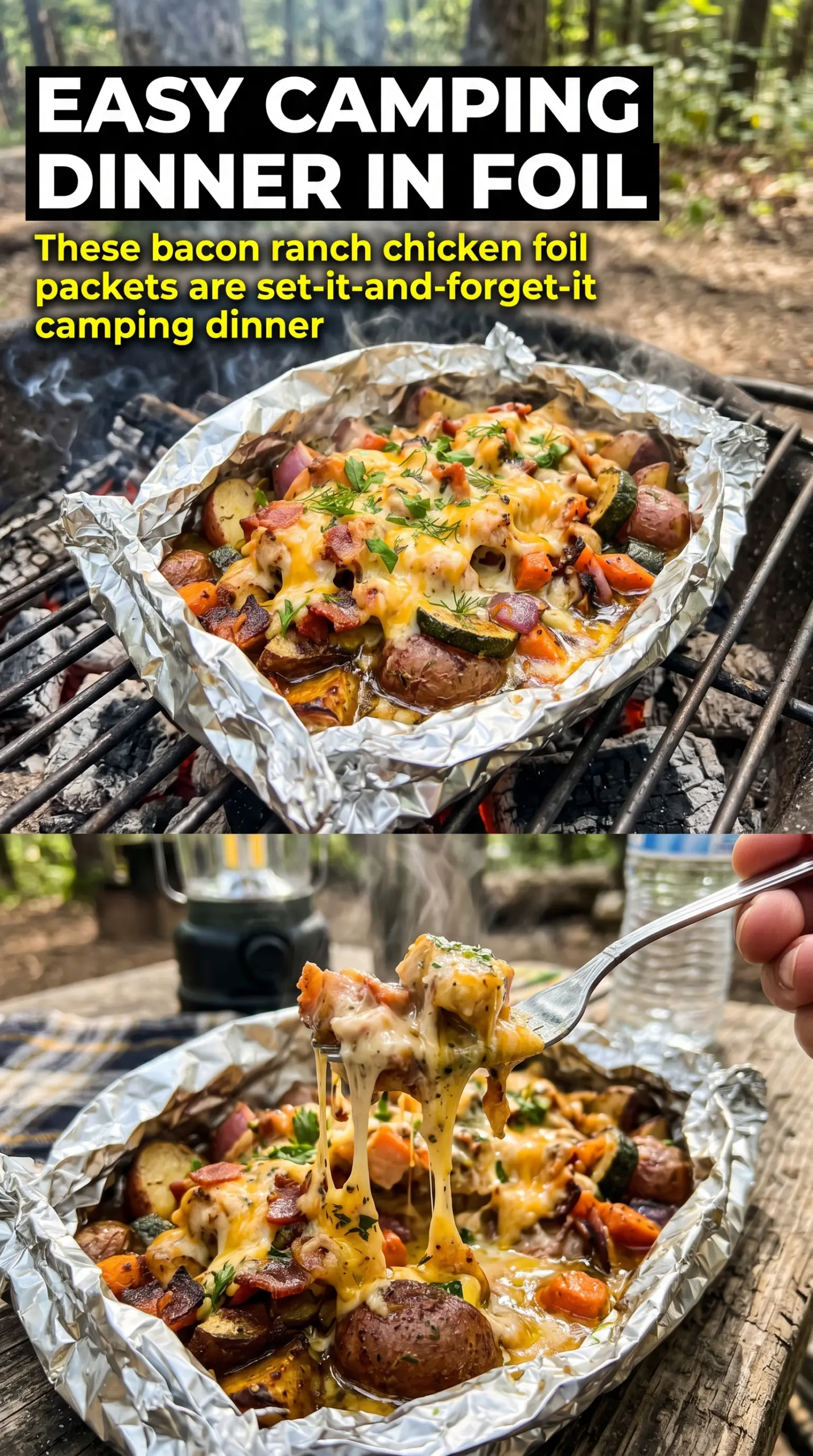
- Ranch seasoning mix — This seasons the chicken from the outside in and gives the potatoes and broccoli enough salt and herb flavor to carry the whole packet. Homemade ranch-style seasoning can work, but the packet mix is reliable because it already has the right salt level and a blend that stands up to heat.
- Bacon — Bacon is doing more than adding a smoky finish. As it cooks, the fat renders down and bastes the chicken and vegetables inside the foil. Use regular-cut bacon here; thick-cut bacon can stay chewy unless you give it extra time.
- Baby potatoes — Halved baby potatoes are the smart choice because they cook through at the same pace as the chicken. Larger chunks can still be firm when the chicken reaches temperature, so keep them small and even.
- Broccoli florets — Broccoli holds up well in foil packets because it softens without collapsing. Cut the florets into medium pieces so they don’t disappear under the bacon drippings before the chicken is done.
- Heavy-duty foil — This is not the place for flimsy foil. The packets need to survive turning, steaming, and the weight of the vegetables without splitting open. If all you have is standard foil, double it.
Building the Packets So Everything Finishes Together
Seasoning the Chicken First
Lay each chicken breast on its own sheet of foil and coat it with the ranch seasoning before anything else goes on top. That lets the seasoning stick to the meat instead of falling into the bottom of the packet. If the chicken breasts are uneven, lightly pound the thick end so the whole piece cooks at the same pace.
Wrapping With Bacon and Tucking in the Vegetables
Wrap each breast with two slices of bacon, then arrange the potatoes and broccoli around the chicken rather than under it. The vegetables need exposure to the hot steam and rendered fat, and putting them beneath the chicken can leave the potatoes undercooked. Keep the broccoli away from the direct center of the packet if you want it tender but still bright.
Sealing and Cooking Over Heat
Fold the foil into a tight sealed packet, but leave a little air space inside so the heat can circulate. Place the packets over medium campfire heat and cook for 20 to 25 minutes, depending on the size of the chicken breasts and how hot the fire is running. The safest check is internal temperature: the chicken needs to hit 165°F in the thickest part, and the potatoes should yield easily when pierced with a fork.
Finishing With Cheese
Open the packets carefully because the steam rushes out fast. Sprinkle the cheddar over the hot chicken and vegetables, then close the packet again for a minute or two until the cheese melts. If the cheese goes on too early, it can disappear into the juices instead of sitting on top where you want it.
How to Adapt These Packets for the Oven, the Grill, or a Dairy-Free Table
Oven-Baked Foil Packets
Bake the sealed packets on a sheet pan at 400°F for about 25 to 30 minutes. The oven gives you steadier heat than a campfire, so the potatoes usually cook a little more evenly. Keep the packets on the pan when you open them or you’ll lose the juices that make the cheese topping work.
Grill Packet Dinner
These packets work well on a grill set to medium heat. Put them over indirect heat so the foil doesn’t scorch before the chicken is cooked through. If your grill runs hot, start checking a few minutes early because potatoes can go from firm to soft quickly once they’re fully heated through.
Dairy-Free Version
Skip the cheddar and finish with chopped chives or a spoonful of dairy-free ranch-style drizzle after cooking. You’ll lose the creamy melt on top, but the bacon fat and ranch seasoning still give the packets plenty of richness. This swap keeps the texture intact without changing the cooking method.
Storage and Reheating
- Refrigerator: Store leftovers in an airtight container for up to 3 days. The potatoes soften a bit as they sit, but the flavor stays strong.
- Freezer: These freeze best without the broccoli. The chicken, bacon, and potatoes hold up for up to 2 months, but the broccoli can turn soft after thawing.
- Reheating: Reheat covered in a 350°F oven until hot, or warm gently in a skillet with a splash of water to bring back some steam. The common mistake is blasting them in the microwave, which tightens the chicken and makes the potatoes dry at the edges.
Questions I Get Asked About This Recipe
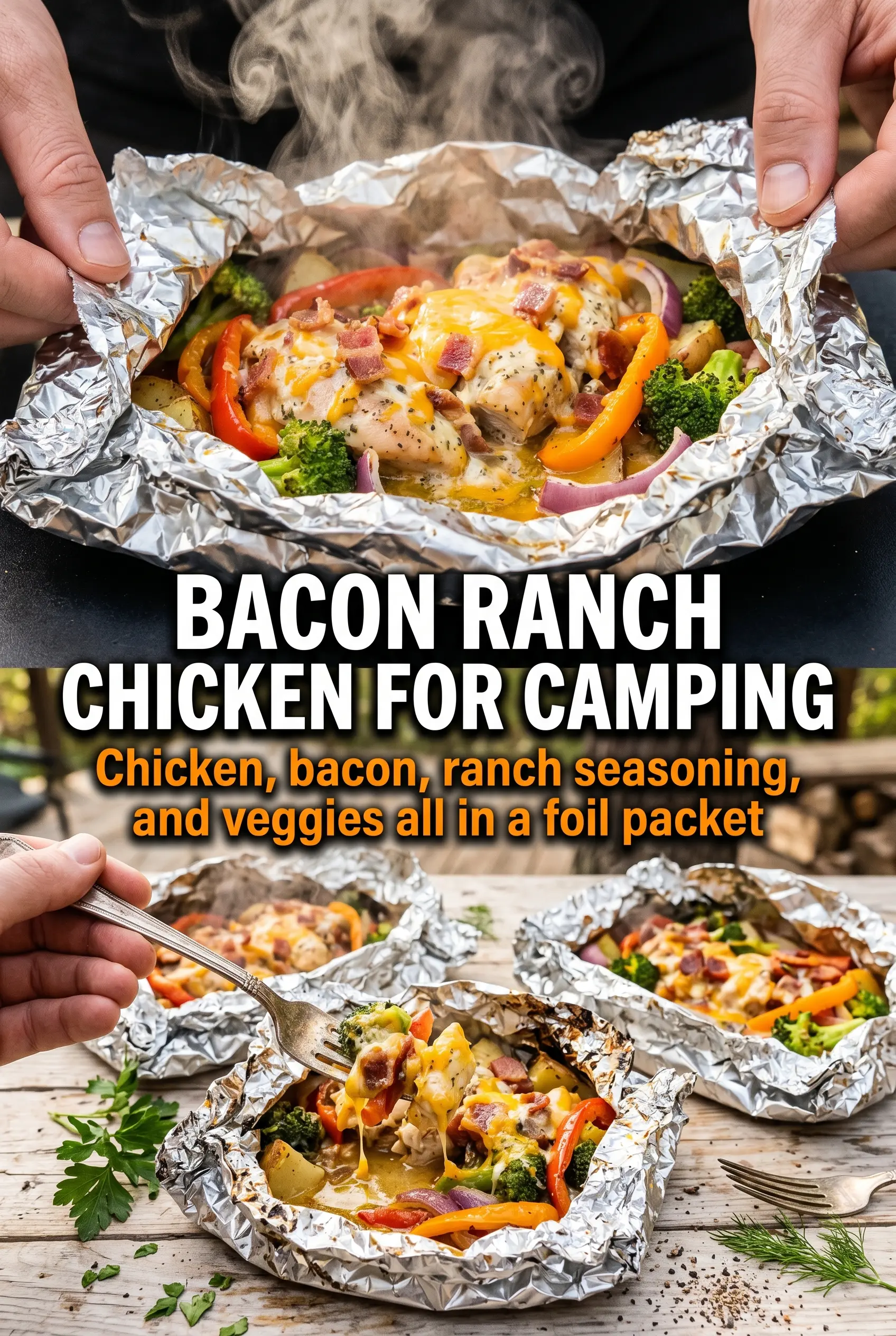
Bacon Ranch Chicken Foil Packets
Ingredients
Equipment
Method
- Place each chicken breast on a sheet of heavy-duty aluminum foil and sprinkle with the ranch seasoning mix.
- Wrap each breast with 2 slices of bacon, pressing lightly so the bacon stays in place.
- Surround the chicken with the halved baby potatoes and the broccoli florets in the foil so the fillings cook in the same steam.
- Fold the foil into sealed packets, crimping edges tightly to keep steam inside (visual cue: no gaps at the seams).
- Place packets on a campfire grate over medium heat for 20-25 minutes until the chicken reaches 165°F (visual cue: steam will billow when you lift a corner carefully).
- Open each packet and sprinkle shredded cheddar cheese over the hot chicken and vegetables.
- Reseal packets briefly just to melt the cheese, then serve immediately (visual cue: cheese turns glossy and fully melted).