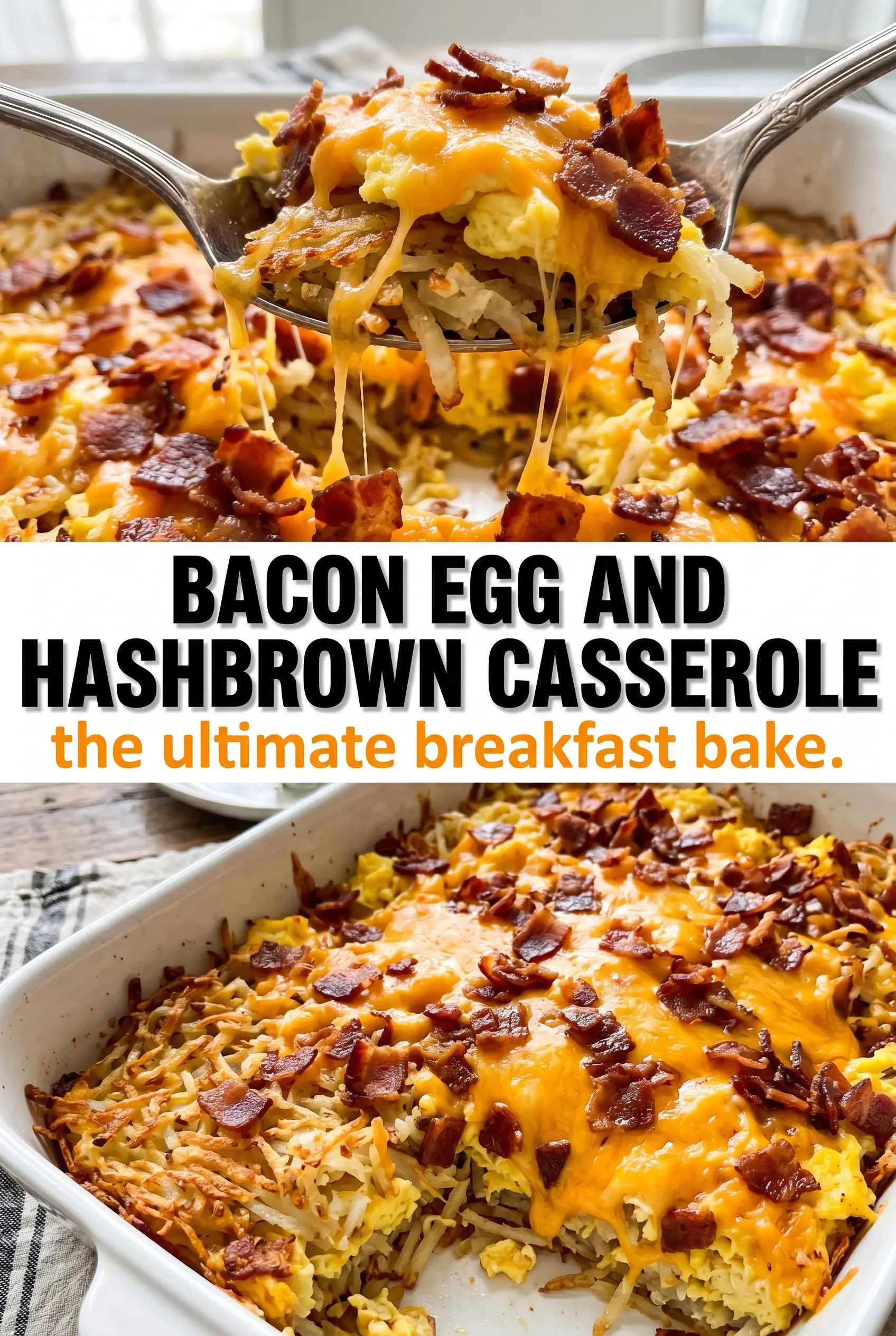
Bacon, egg, and hashbrown casserole bakes up with crisp edges, a tender middle, and a cheesy top that turns deeply golden in the oven. It’s the kind of breakfast bake that comes out of the pan in clean squares, with enough structure to serve neatly and enough richness to keep everyone going back for a second scoop.
What makes this version work is the balance between the potatoes and the custard. The thawed hash browns go in first so they can form a base instead of turning watery, and the egg mixture is seasoned before it hits the pan so every bite tastes deliberate, not bland. The cheddar does double duty here: some melts into the eggs for body, and the rest browns on top for that sharp, salty crust.
Below, I’ll walk through the part that matters most — getting the hash browns layered correctly so the casserole doesn’t turn soggy — plus a few smart swaps if you need to stretch it, lighten it up, or make it ahead for a busy morning.
The hash browns actually stayed crisp around the edges, and the eggs set up creamy instead of rubbery. I made it on Sunday and we reheated slices all week without it falling apart.
Save this bacon, egg, and hashbrown casserole for mornings when you want a crispy-edged breakfast bake with a cheesy center and almost no fuss.
The Part That Keeps the Bottom from Turning Soft
The biggest mistake with hashbrown casseroles is treating the potatoes like a stir-in instead of a base. Once they start releasing moisture, the eggs can’t set cleanly and the whole pan turns heavy. Pressing the thawed hash browns into an even layer gives them a chance to toast at the edges before the custard goes in, which is what keeps the casserole sliceable instead of slumping apart.
There’s another detail that matters here: don’t drown the potatoes in liquid before the cheese and eggs go in. The eggs should coat the bacon and seep down through the hash browns as they bake, not pool on top like a quiche filling. That layered structure is what gives you browned corners, a creamy middle, and enough stability to cut neat squares.
What Each Ingredient Is Doing in the Pan

- Frozen shredded hash browns — Thawed hash browns are the foundation, and thawing matters because frozen shards can steam the casserole instead of forming that baked edge. If yours still seem damp, spread them on a towel for a few minutes and blot them before layering.
- Bacon — Cook it until crisp before it goes into the dish. Soft bacon turns chewy in the oven; crisp bacon stays savory and gives you little salty bursts in every bite. Reserve a few whole strips for the top if you want the finished casserole to look like it belongs on a brunch table.
- Eggs and whole milk — This is the custard that binds everything together. Whole milk gives a softer set than low-fat milk, and that matters in a casserole that already has cheese and potatoes doing the heavy lifting. If you need to swap, half-and-half works too, but the texture will be richer.
- Sharp cheddar — Sharp cheddar cuts through the richness better than mild cheese, so the casserole tastes balanced instead of flat. Shred it yourself if you can; pre-shredded cheese melts a little less smoothly because of the anti-caking coating.
- Garlic powder and onion powder — These season the eggs in a way fresh onion and garlic can’t here. They spread evenly through the custard and keep the flavor from landing only in the top layer.
- Green onions — Add them at the end for freshness and a little bite. They wake up the whole dish and keep the top from tasting one-note.
Building the Layers So the Center Sets Cleanly
Pressing the Potato Base
Grease the baking dish well, then press the thawed hash browns into an even layer all the way to the corners. Don’t pack them so tightly that they turn dense, but don’t leave loose clumps either, because uneven potatoes bake unevenly. A level base gives the eggs something to settle into instead of sliding into puddles.
Mixing the Custard
Whisk the eggs, milk, garlic powder, onion powder, salt, and pepper until the mixture looks uniform and slightly frothy. That extra whisking helps the seasonings distribute evenly and keeps streaks of plain egg from showing up in the finished casserole. Stir in most of the cheddar before pouring so the cheese melts into the filling instead of sitting in a separate layer.
Baking Until the Center Just Sets
Bake uncovered until the top is deeply golden and the center no longer jiggles when you tap the dish. If the edges are browning faster than the middle sets, the oven is running hot or the dish is too shallow; keep going, but don’t cover it, or you’ll lose the crisp top. Let it rest a few minutes before slicing so the custard finishes setting and the squares hold their shape.
Ways to Adjust It Without Losing the Good Texture
Make-ahead breakfast casserole
Assemble the casserole the night before, cover it, and refrigerate it unbaked. In the morning, let it sit on the counter while the oven heats so the center isn’t ice-cold, then bake as directed. Cold casserole straight from the fridge takes longer to set in the middle and can overbrown on top before the eggs finish.
Dairy-free version
Use an unsweetened non-dairy milk with some body, like oat milk, and swap in a dairy-free shreddable cheese that melts well. The casserole will still set, but it won’t have quite the same richness or browned-cheese crust. Avoid thin almond milk if you can; it makes the custard looser.
Breakfast sausage instead of bacon
Cook and crumble breakfast sausage, then use it in the same amount as the bacon. You’ll get a softer, more evenly savory casserole with less crunch on top, so adding a few reserved sausage crumbles across the surface before baking helps the top look as hearty as the flavor tastes.
Storage and Reheating
- Refrigerator: Store leftovers covered for up to 4 days. The top softens a little, but the flavor stays great.
- Freezer: This freezes well in individual slices. Wrap tightly and freeze for up to 2 months, then thaw overnight in the fridge before reheating.
- Reheating: Warm slices in a 325°F oven or toaster oven until heated through. The microwave works in a pinch, but it softens the hash browns and takes away the crisp edges that make the casserole special.
Answers to the Questions Worth Asking
Bacon, Egg, and Hashbrown Casserole
Ingredients
Equipment
Method
- Preheat the oven to 375°F and grease a 9x13 dish.
- Press the thawed hash browns into an even layer across the bottom of the dish.
- Scatter the crumbled bacon over the hash browns.
- Whisk the eggs, whole milk, garlic powder, onion powder, salt, and black pepper, then stir in 1.5 cups of the shredded cheddar.
- Pour the egg mixture over the bacon-and-hash-brown layer so it’s evenly distributed.
- Top with the remaining cheddar and arrange a few whole bacon strips across the surface.
- Bake uncovered for 45–50 minutes at 375°F until the eggs are set and the top is deeply golden, then garnish with green onions.