Bacon-wrapped pork tenderloin with a brown sugar glaze hits that sweet spot between weeknight simple and special enough for company. The bacon turns crisp and salty, the glaze caramelizes into a glossy shell, and the pork stays juicy if you pull it at the right temperature instead of waiting for the center to look “done.” Slice it and you get that clean contrast of crackly bacon on the outside and tender pink meat underneath.
What makes this version work is the balance. Dijon keeps the brown sugar from turning flat, soy sauce brings in salt and depth, and smoked paprika adds just enough warmth to make the glaze taste cooked, not just sweet. The bacon needs to be wrapped snugly so it renders against the pork instead of shrinking away, and the tenderloins need a hot oven so the bacon can brown before the pork dries out.
Below, I’ll walk through the few spots where this recipe can go off track: how to keep the bacon in place, how to avoid a watery glaze, and the temperature cue that matters more than the clock. Those small details are what turn this from “good” into the kind of pork people ask about after dinner.
The bacon crisped up all the way around and the glaze stuck to it instead of sliding off. I pulled it at 145°F and the pork stayed juicy after the rest.
Save this bacon-brown sugar pork tenderloin for the night you want crispy bacon, juicy pork, and a caramelized glaze without a lot of work.
The Reason the Bacon Stays Crisp Instead of Going Soft
Most bacon-wrapped pork tenderloin recipes run into the same problem: the pork is cooked, but the bacon is pale and rubbery, or the bacon is crisp but the pork is already dry. The fix is a hot oven and a tight wrap. Pork tenderloin cooks fast, which gives the bacon enough time to render and brown without leaving the meat in the oven long enough to lose its juices.
The other detail that matters is the glaze. Brush some on before the bacon goes on, then the rest over the top. That first layer seasons the pork itself; the second layer helps the bacon caramelize. If you dump all the glaze on at the start, the sugar can slide off and pool in the pan instead of forming that sticky finish on the surface.
- High oven heat — 400°F gives the bacon a real chance to crisp before the tenderloin overcooks.
- Snug bacon wrapping — slightly overlapping slices help the bacon hold together as it shrinks.
- Two-stage glazing — half before wrapping, half after, so the pork and bacon both get coated.
- Rest time — five minutes is enough to keep the juices from running out when you slice.
What Each Ingredient Is Doing in the Glaze and Wrap
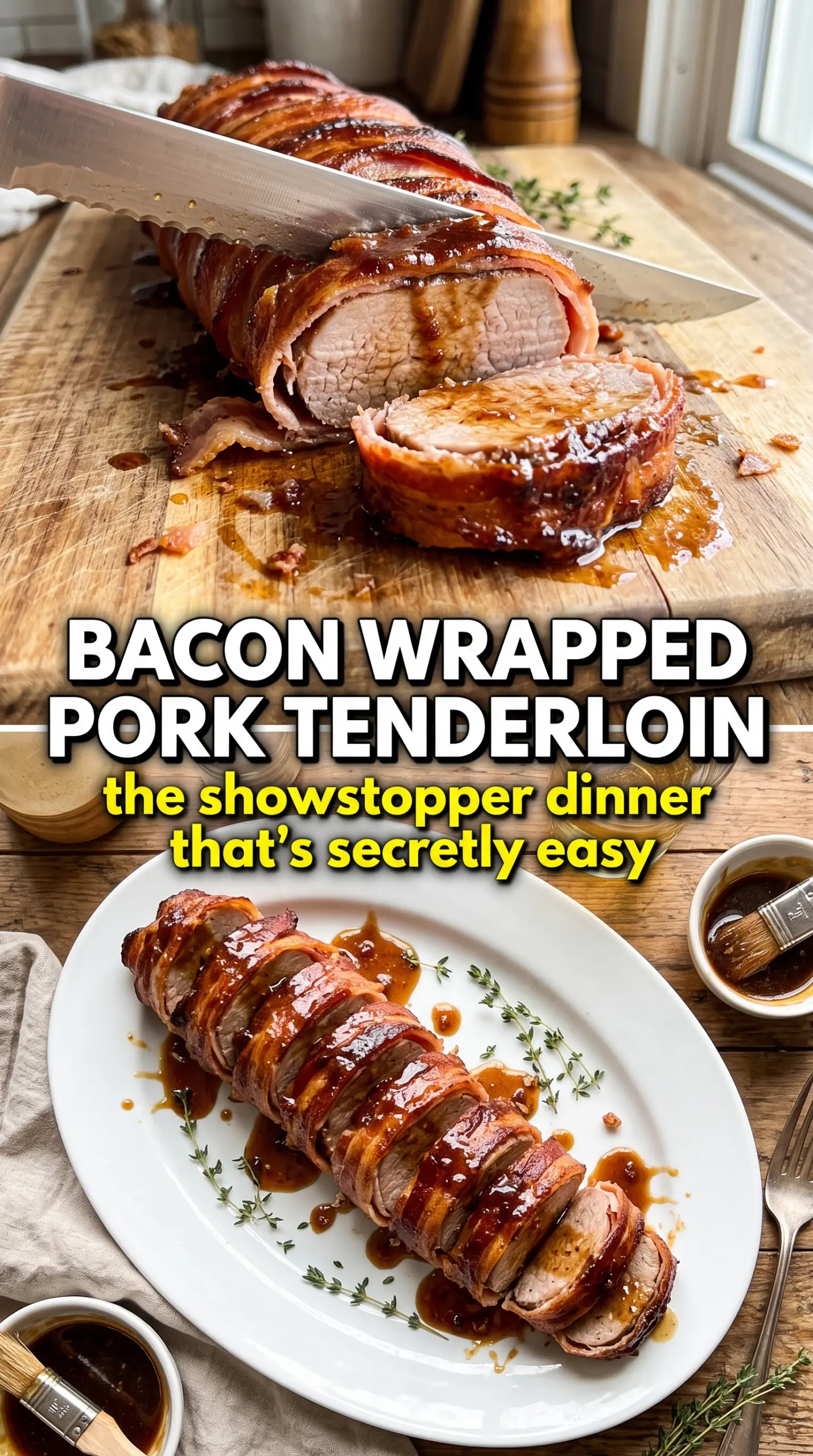
- Pork tenderloins — These are lean, tender cuts that cook quickly. Don’t swap in pork loin without adjusting time, because a thicker roast needs longer and the bacon can overbrown before the center is ready.
- Bacon — Regular-cut bacon works best here. Thick-cut bacon often needs more time than the pork can give it, so it stays chewy instead of crisp.
- Brown sugar — This is what gives the glaze its caramel edge. Light or dark brown sugar both work; dark brown sugar brings a deeper molasses note.
- Dijon mustard — It cuts the sweetness and helps the glaze cling. Yellow mustard won’t give the same sharpness, so Dijon is worth using if you have it.
- Soy sauce — This adds salt and a little umami depth. If you need gluten-free, use tamari in the same amount.
- Smoked paprika and garlic powder — Together they keep the glaze from tasting one-note. Fresh garlic isn’t the right swap here because it can burn in the oven.
How to Get Crispy Bacon and Juicy Pork at the Same Time
Mixing the Glaze First
Stir the brown sugar, Dijon, soy sauce, garlic powder, and smoked paprika until the sugar starts to dissolve and the mixture looks glossy. It won’t be completely smooth, and that’s fine. If you rush this and leave dry clumps behind, the glaze will apply unevenly and you’ll get patchy caramelization.
Seasoning and Coating the Pork
Season the tenderloins with salt and pepper before you brush on the glaze. That first seasoning layer matters because the bacon adds salt, but the pork itself still needs it. Brush on just half the glaze here so the meat picks up flavor without becoming slippery for the bacon.
Wrapping the Bacon Tight
Lay the bacon slices over the pork with a slight overlap and keep the seam side down when you place the tenderloin in the pan. The bacon should hug the meat, not sit loosely on top. If the strips are too far apart, they shrink into gaps and leave bare spots that cook faster than the rest.
Roasting to Temperature, Not to Time Alone
Roast until the bacon is deep golden and the thickest part of the pork reaches 145°F. Start checking near the 25-minute mark because tenderloins vary, and an extra few minutes can take the center from juicy to dry. Pulling it at 145°F and letting it rest is what keeps the slices rosy and tender.
Maple Dijon Bacon Pork
Swap the brown sugar for maple syrup and keep the Dijon in place. The glaze will taste a little less caramel-like and a little more rounded, and it may brown a touch faster because maple syrup contains more moisture than dry sugar.
Gluten-Free Version
Use tamari instead of soy sauce and check that your bacon is gluten-free. The texture stays the same, and you won’t lose the savory depth that soy sauce brings to the glaze.
Thicker Bacon, Longer Roast
Thick-cut bacon can work, but expect a longer cook and check the pork temperature carefully. The tradeoff is that the bacon may not crisp quite as evenly before the meat finishes, so this version is better for people who like a meatier, less shattery bacon shell.
Storage and Reheating
- Refrigerator: Store leftovers in an airtight container for up to 3 days. The bacon softens a bit in the fridge, but the pork stays tender.
- Freezer: Freeze sliced pork tenderloin for up to 2 months. Wrap tightly so the glaze doesn’t pick up freezer burn, and thaw in the refrigerator before reheating.
- Reheating: Warm slices in a 300°F oven, covered loosely with foil, until heated through. A microwave will make the bacon rubbery, so use it only if you’re heating a single quick portion.
Questions I Get Asked About This Recipe
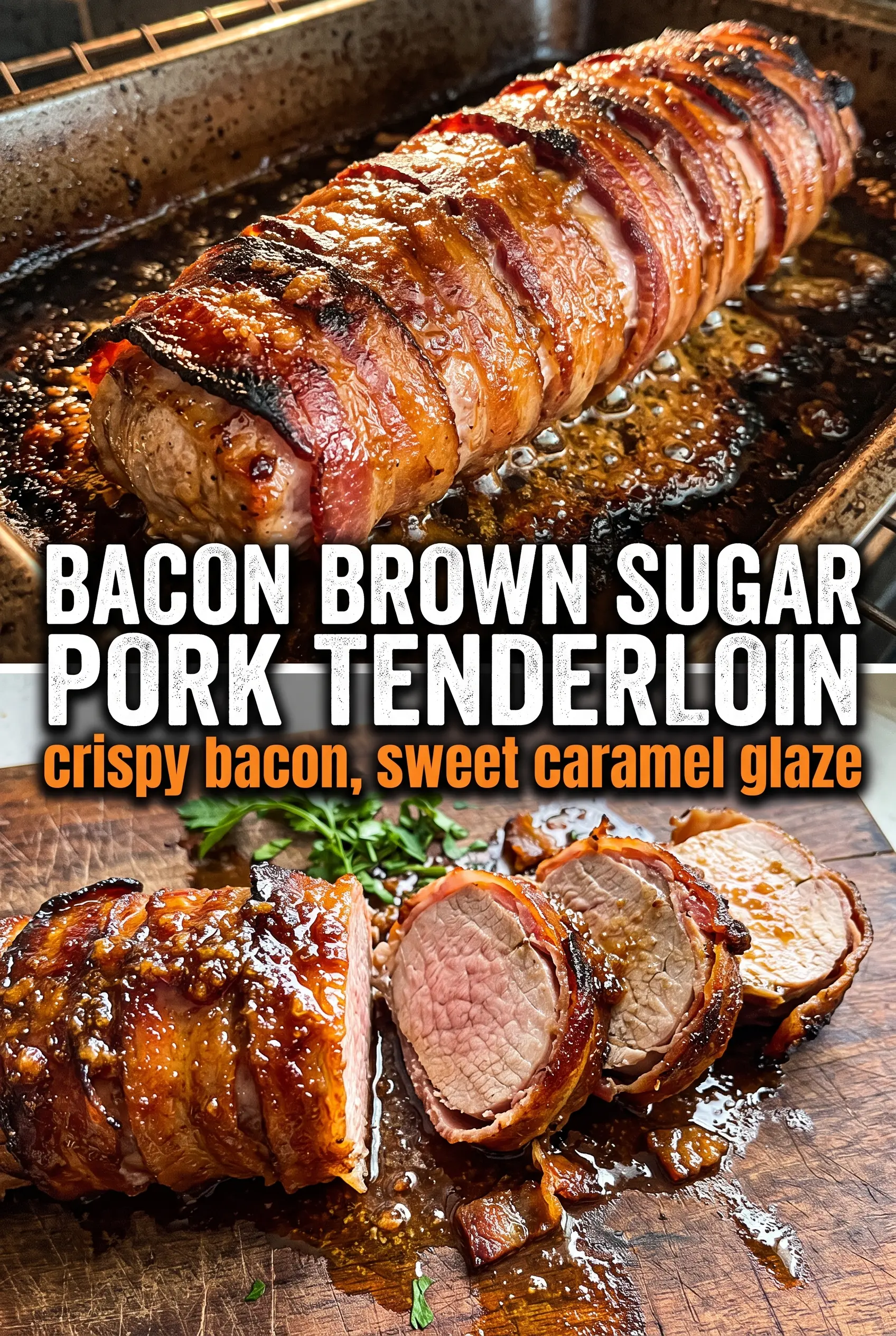
Bacon-Brown Sugar Pork Tenderloin
Ingredients
Equipment
Method
- Preheat oven to 400°F.
- Season pork tenderloins with salt and pepper.
- Mix brown sugar, Dijon mustard, soy sauce, garlic powder, and smoked paprika until smooth.
- Brush half of the glaze over the pork tenderloins.
- Wrap each tenderloin tightly in bacon strips, overlapping slightly, and secure the ends with toothpicks.
- Place in a roasting pan and brush the remaining glaze over the bacon.
- Roast for 25–30 minutes, until bacon is crispy and the internal temperature reaches 145°F, with the bacon visibly browned and the glaze glossy.
- Rest the pork for 5 minutes, until juices settle and the bacon shell firms up.
- Remove toothpicks and slice the tenderloin, showing pink interior with caramelized brown sugar glaze.