Autumn beef stew earns its place in the rotation because the broth turns glossy and deeply savory while the beef goes spoon-tender, and the vegetables hold just enough shape to keep every bowl interesting. The apple cider and maple syrup don’t make it sweet in a dessert-like way; they round out the browned beef, sage, and thyme so the whole pot tastes layered instead of heavy.
The key is building the flavor in stages. Tossing the beef with flour before browning gives the stew body without needing extra thickeners at the end, and scraping the pan after the cider goes in pulls up every browned bit that would otherwise stay stuck behind. The cranberries go in near the end so they soften and brighten the gravy without disappearing completely.
Below you’ll find the timing that matters most, the ingredient swaps worth knowing, and the one move that keeps the finished stew from tasting flat.
The gravy thickened up beautifully and the apple cider gave it this deep, savory-sweet finish. My parsnips stayed tender without turning to mush, and the cranberries in the last 10 minutes were such a good call.
Save this autumn beef stew for a one-pot dinner with tender chuck, maple-touched gravy, and sweet root vegetables.
The Browning Step That Keeps the Gravy Deep Instead of Flat
A good beef stew starts with color, not liquid. If the beef goes into the pot pale, the broth stays thin-tasting no matter how long it simmers. Browning in batches gives the meat time to sear instead of steam, and that crust is what turns the final gravy from brown water into something with real depth.
The other mistake is rushing the base after the meat comes out. Onion needs time to soften and pick up the browned bits, and the tomato paste needs a minute in the hot pan to lose its raw edge. Once the apple cider hits the pot, scrape hard. That is where the flavor lives.
What Each Ingredient Is Actually Doing in This Stew
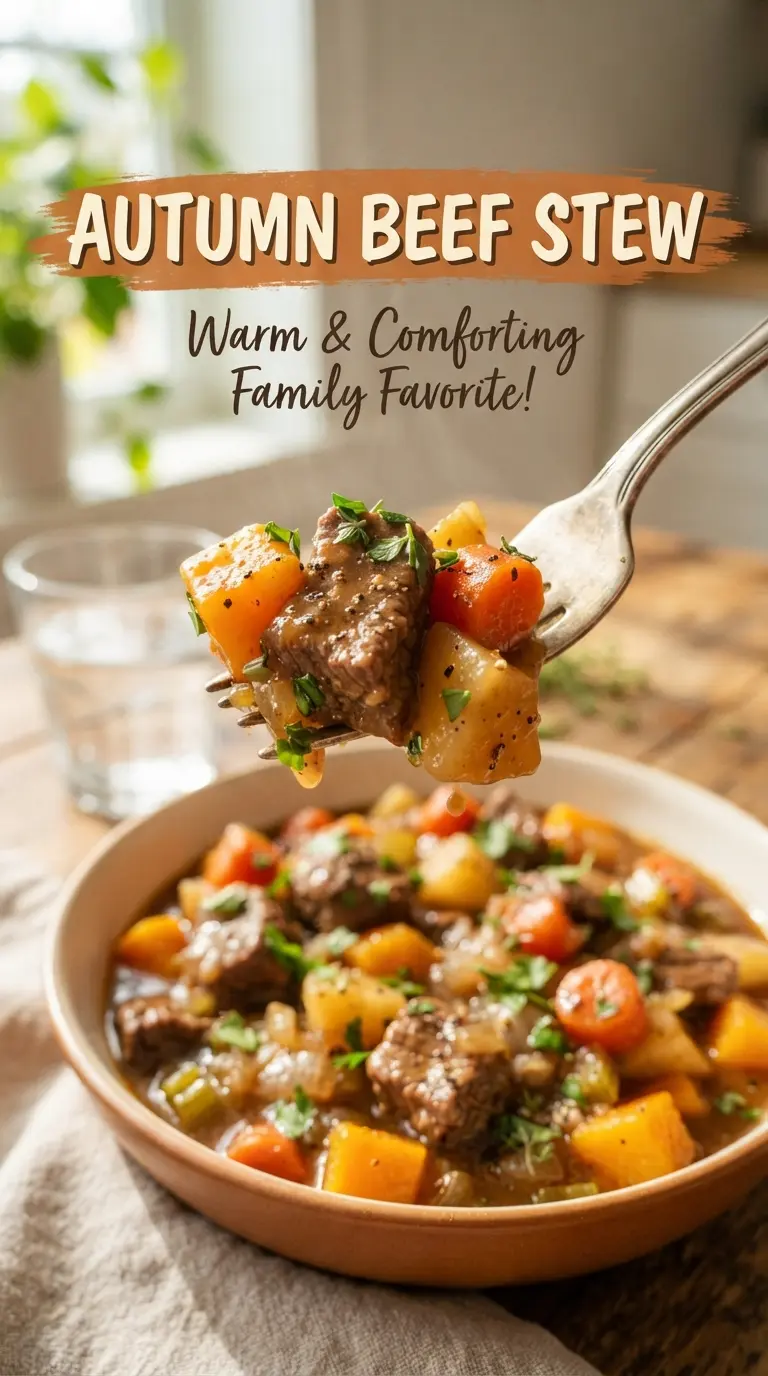
- Beef chuck — This is the cut that turns tender after a long simmer. Leaner stew meat can work, but it won’t give you the same silky, rich texture because it doesn’t have the same connective tissue to break down.
- Apple cider — It adds acidity and a round, fruity note that keeps the gravy from tasting heavy. Use the real stuff, not cider vinegar or spiced cider concentrate; you want sweetness and brightness, not a sharp punch.
- Maple syrup — Just enough to soften the cider and bring out the browned beef. Don’t add more unless you want a noticeably sweeter stew; this amount works because it disappears into the background.
- Butternut squash, parsnips, and carrots — These vegetables give the stew its autumn character and add natural sweetness. Cut them into even pieces so they finish at the same time; if the chunks are too small, they’ll collapse before the beef is ready.
- Dried cranberries — They finish the pot with little hits of tartness that wake everything up. Fresh cranberries would be harsher here, and raisins would push it too far into molasses-sweet territory.
- Flour — Tossed with the beef before browning, it lightly thickens the stew as it cooks. If you skip it, the broth will still taste good, but it will stay more like soup than stew.
Building the Pot in the Right Order
Season and Sear in Batches
Coat the beef with salt, pepper, and flour, then brown it in hot oil in small batches. The pan should hiss the moment the meat goes in; if it goes quiet, the pan is crowded and the beef is steaming instead of browning. Pull each batch as soon as it has a deep brown crust on at least two sides.
Softening the Aromatics
Cook the onion until it turns translucent and picks up a little color around the edges, then add the garlic and tomato paste for a short cook. The garlic should smell fragrant, not toasted or bitter. If the tomato paste sticks and darkens too fast, lower the heat; you want it to taste cooked and rich, not scorched.
Deglazing and Simmering Low
Pour in the apple cider and scrape the bottom until the pot looks clean. Add the broth, maple syrup, sage, thyme, and beef, then bring it to a gentle simmer before covering. A hard boil will tighten the meat and make the broth cloudy, so keep the heat low enough that you see small bubbles moving lazily across the surface.
Finishing the Vegetables and Cranberries
Stir in the squash, parsnips, and carrots for the last 45 minutes so they stay intact. They should be tender enough to cut with a spoon but not broken down into mush. Add the cranberries during the final 10 minutes so they soften and plump without dissolving into the gravy.
How to Adapt This Stew Without Losing the Good Part
Make It Gluten-Free
Swap the all-purpose flour for a gluten-free flour blend that’s meant for 1:1 baking, or skip the flour and stir in a cornstarch slurry near the end. The stew will still be rich, but the gravy will have a slightly cleaner finish and a little less body from the start.
Use Red Wine Instead of Apple Cider
If you want a deeper, more savory stew, replace the cider with dry red wine and keep the maple syrup at the same amount. The result is less sweet and more classic braised-beef tasting, but you lose the bright fruit note that makes this version stand out.
Swap the Root Vegetables
Turnips, sweet potatoes, or peeled potatoes can stand in for the parsnips or squash. Potatoes make the stew heartier and more familiar, while sweet potatoes push it sweeter and softer, so add them in larger chunks if you don’t want them to fade into the broth.
Make It Dairy-Free and Naturally Comforting
This stew is already dairy-free as written, which is one reason it’s such an easy crowd-pleaser. If you want a richer finish without cream, let it rest off the heat for 10 minutes before serving so the gravy settles and tastes fuller.
Storage and Reheating
- Refrigerator: Store for up to 4 days. The flavor gets even better on day two, and the gravy thickens as it chills.
- Freezer: It freezes well for up to 3 months. Cool it completely, portion it into airtight containers, and leave a little room for expansion.
- Reheating: Warm it gently on the stove over low heat with a splash of broth if needed. Don’t boil it hard or the beef can tighten up and the vegetables can fall apart.
Questions I Get Asked About This Stew
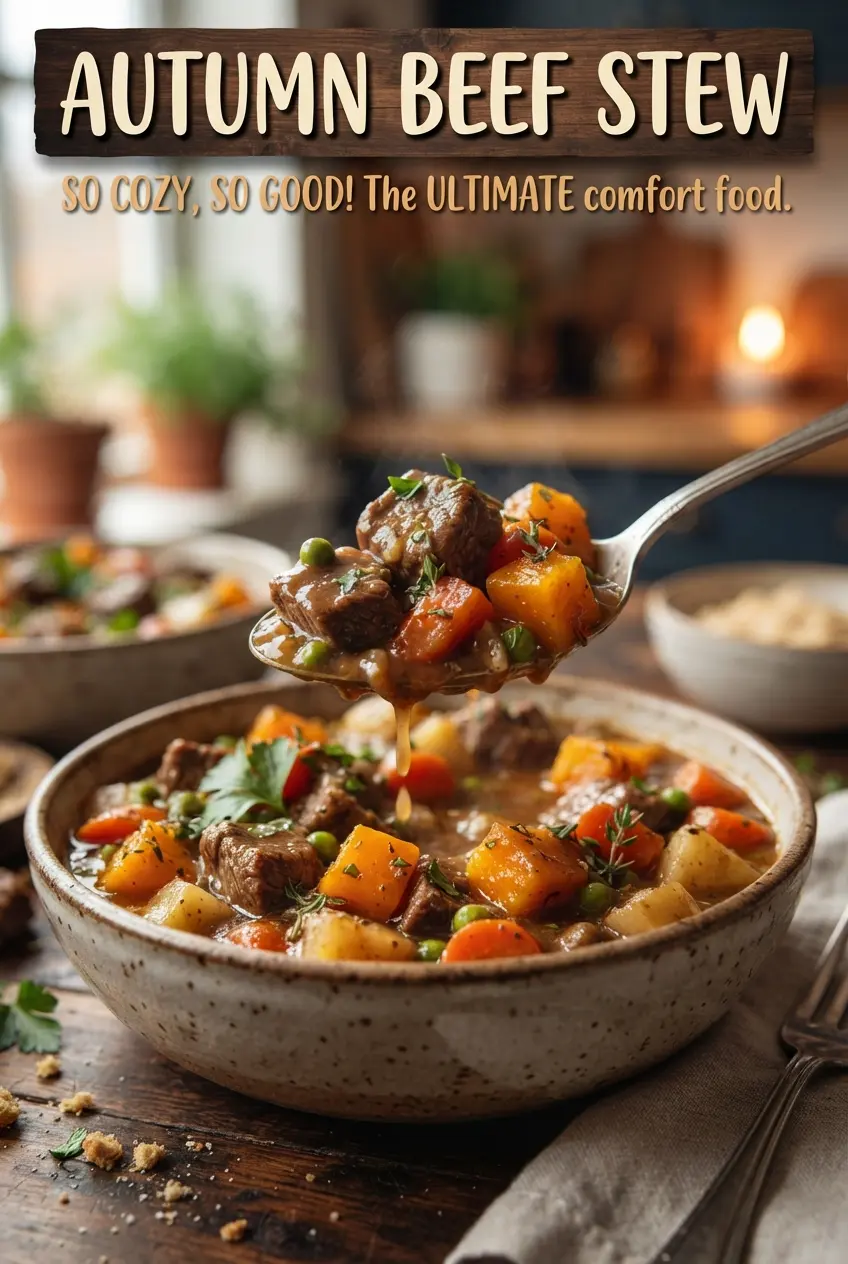
Autumn Beef Stew
Ingredients
Equipment
Method
- Season the beef with salt and black pepper, then toss with the all-purpose flour until evenly coated. Visual cue: the cubes should look lightly dusted, not wet or clumpy.
- Heat the olive oil in a Dutch oven and brown the beef in batches over medium-high heat. Cook 6-8 minutes total, turning as needed until deep golden on the outside.
- Add the onion to the pot and cook for 5 minutes until softened. Visual cue: the onion should look translucent at the edges.
- Stir in the garlic and tomato paste and cook for 1 minute. Visual cue: the tomato paste should darken slightly and smell fragrant.
- Pour in the apple cider and scrape the bottom of the pot to release browned bits. Cook 2 minutes, stirring, until the mixture reduces slightly.
- Add the beef broth, maple syrup, fresh sage, fresh thyme leaves, and the browned beef. Bring to a simmer over medium-high heat.
- Cover and simmer for 1 3/4 hours (105 minutes). Visual cue: the beef should be fork-tender when you press a cube.
- Stir in the butternut squash, parsnips, and carrots, then simmer for 45 minutes until tender. Visual cue: the squash should pierce easily with a fork.
- Stir in the dried cranberries and simmer for 10 minutes. Visual cue: they should look plumped and glossy in the maple-touched gravy.
- Serve the stew hot. Visual cue: the gravy should coat the beef and vegetables.