Thinly sliced ribeye, caramelized onions, and melted cheese on a hot hoagie roll is the kind of sandwich that disappears fast. The griddle gives you the browned edges, the soft onions, and the kind of even heat that turns a quick steak cook into something with real sandwich shop character. When everything is built right, the roll stays sturdy enough to hold the filling without going soggy, and every bite has a little beef, a little onion, and plenty of cheese.
This version works because the vegetables get their head start and the steak stays on the griddle just long enough to sear and stay juicy. Ribeye gives you enough fat for flavor and tenderness, and slicing it thin means it cooks in minutes instead of turning leathery. The rolls get toasted in the same space where the sandwich was built, so they pick up flavor instead of just serving as a holder.
Below, I’m walking through the part that matters most: getting the steak hot enough for color without overcooking it, plus the small finishing move that keeps the whole sandwich from falling apart the second you pick it up.
The steak stayed tender, the onions got sweet without burning, and the cheese melted right over everything instead of sliding off. We made these on the Blackstone for game night and there wasn’t a crumb left.
Save this Blackstone Philly cheesesteak for the nights when you want caramelized onions, melty cheese, and steak on a toasted roll.
The Key to a Real Cheesesteak Is Not Overcrowding the Griddle
The biggest mistake people make with a cheesesteak on a flat top is piling everything together at once. That drops the heat fast, and instead of browning the steak, you end up steaming it in its own juices. The onions and peppers need their own stretch of time first so they can soften and caramelize before the steak goes down.
Once the steak hits the griddle, keep it moving with the spatulas and chop it into smaller pieces as it cooks. Thin slices cook fast, and that fast cook is what keeps ribeye tender. If you leave it in big clumps, the outside overcooks before the inside is done.
- Hot griddle, not smoking chaos — medium-high heat gives you browning without burning the onions before they soften.
- Steak in a thin layer — spread it out so the surface can sear instead of steaming.
- Chopping while it cooks — smaller pieces pick up more flavor and fit into the roll better.
What Each Ingredient Is Doing in the Sandwich
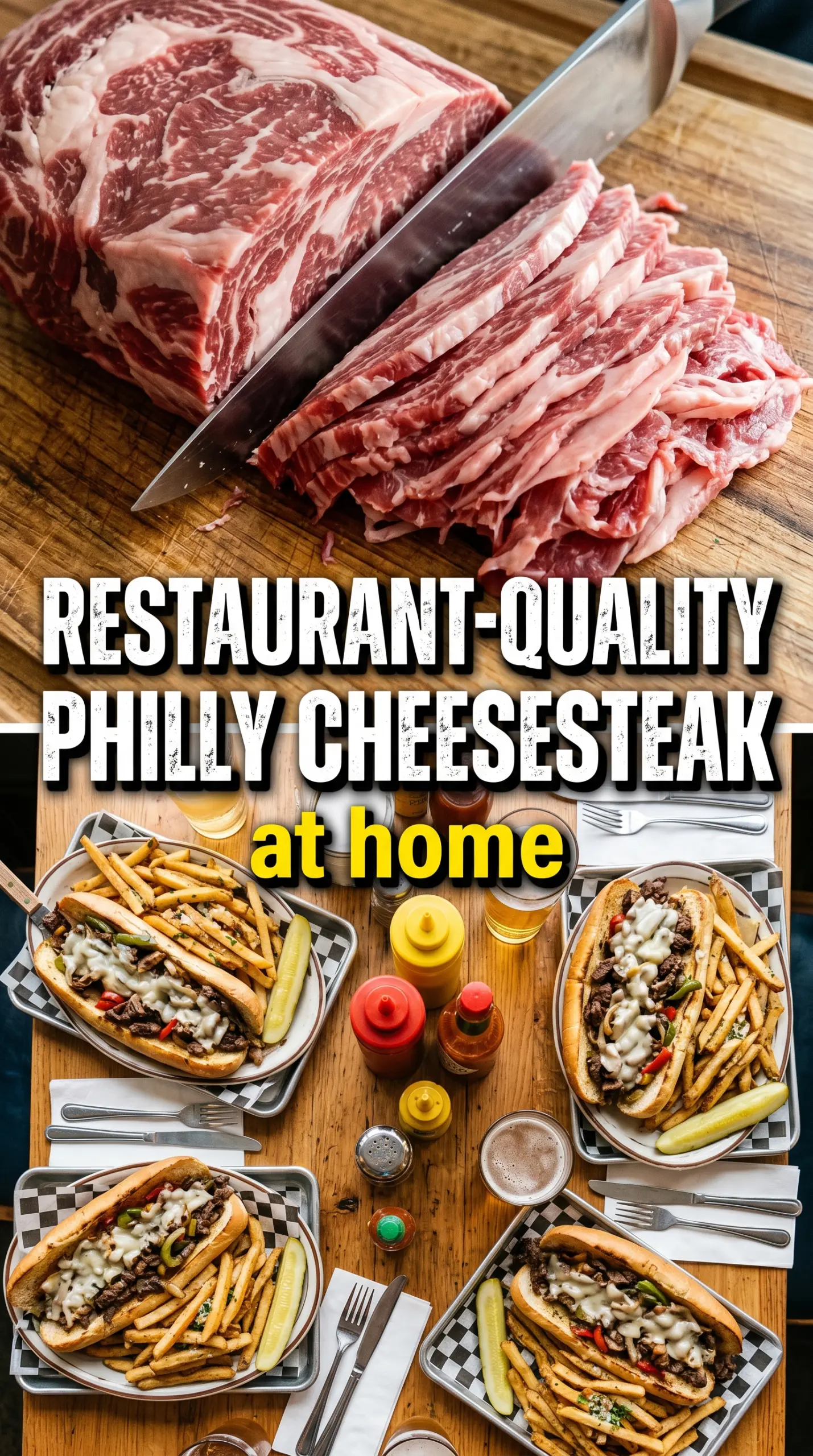
- Ribeye steak — this is the heart of the sandwich. Ribeye has enough marbling to stay juicy on high heat, and that fat carries the beef flavor through every bite. If you swap it, use another well-marbled cut and slice it as thin as you can.
- Onions and green bell peppers — the onions bring sweetness and body, while the peppers add that classic cheesesteak bite. Slicing them evenly matters because uneven pieces cook at different rates, leaving some limp and others still crisp.
- Provolone or Cheese Whiz — provolone gives you a smoother, milder melt, while Cheese Whiz gives the sandwich that old-school, salty finish. Either one works; just add it while the steak is still hot so it melts across the meat instead of sitting on top in slices.
- Hoagie rolls — the roll needs enough structure to hold the filling without collapsing. A soft roll with a light toast is ideal; too crusty and it fights the bite, too soft and it gets soggy fast.
- Butter for toasting — this gives the inside of the roll flavor and helps it crisp on the griddle. A dry roll can work, but it won’t have the same rich finish.
Building the Filling So the Roll Holds Together
Caramelizing the Vegetables First
Start with the onions and peppers on the hot griddle and give them time to soften before you worry about the steak. You want the onions turning golden and sweet, with the peppers softened but still holding some shape. If they brown too fast, the heat is too high and the sugars are scorching before the vegetables can collapse into that soft, savory layer you want.
Searing the Steak Fast
Add the thinly sliced ribeye to the hottest open spot on the griddle and season it right away with salt and pepper. Don’t crowd it into a thick pile; spread it out so the meat can hit the surface and brown. As soon as it loses its raw red color and starts picking up browned edges, chop it into smaller pieces and keep cooking only until just done.
Melting the Cheese and Toasting the Rolls
Divide the meat into four portions and top each pile with cheese while it’s still on the heat. That direct contact is what gets the melt going quickly. Move the steak into the toasted rolls as soon as the cheese softens, then use the griddle again for the buttered buns until the cut sides are golden. If you toast them too hard, they’ll crack when you load them up.
Serving the Sandwich Before It Loses Heat
These need to be eaten right away while the cheese is still gooey and the roll is warm. Build each sandwich in the order it was cooked so the filling stays hot, then serve immediately. If you let the meat sit while you toast the bread, the cheese sets up and the whole sandwich turns clumsy instead of juicy.
How to Adapt This Philly Cheesesteak Without Losing the Point
Cheese Whiz Version
Swap the provolone for warmed Cheese Whiz if you want a more classic diner-style finish. It melts instantly and coats the meat differently, giving you a richer, saltier bite with less of the mild dairy note from provolone.
Gluten-Free Serving Option
Use sturdy gluten-free hoagie rolls if you need to keep the sandwich handheld. Toast them well so they hold up to the juicy filling, because softer gluten-free bread tends to break down faster once the meat and vegetables go in.
No Bell Peppers
You can leave out the peppers if you prefer a more onion-forward sandwich. The cheesesteak still works because the real backbone is the seared beef, caramelized onions, and melted cheese; the peppers just add a little sweetness and color.
Storage and Reheating
- Refrigerator: Store the meat, onions, peppers, and rolls separately for up to 3 days. The filling stays good, but the bread gets soggy if it’s assembled ahead.
- Freezer: The cooked steak and vegetables freeze well for up to 2 months. Cool them completely first, then pack tightly in a freezer bag with the air pressed out.
- Reheating: Reheat the filling in a skillet or on the griddle over medium heat until hot. Don’t microwave it if you want the steak to stay pleasant; that usually makes the meat rubbery and the vegetables watery.
Answers to the Questions Worth Asking
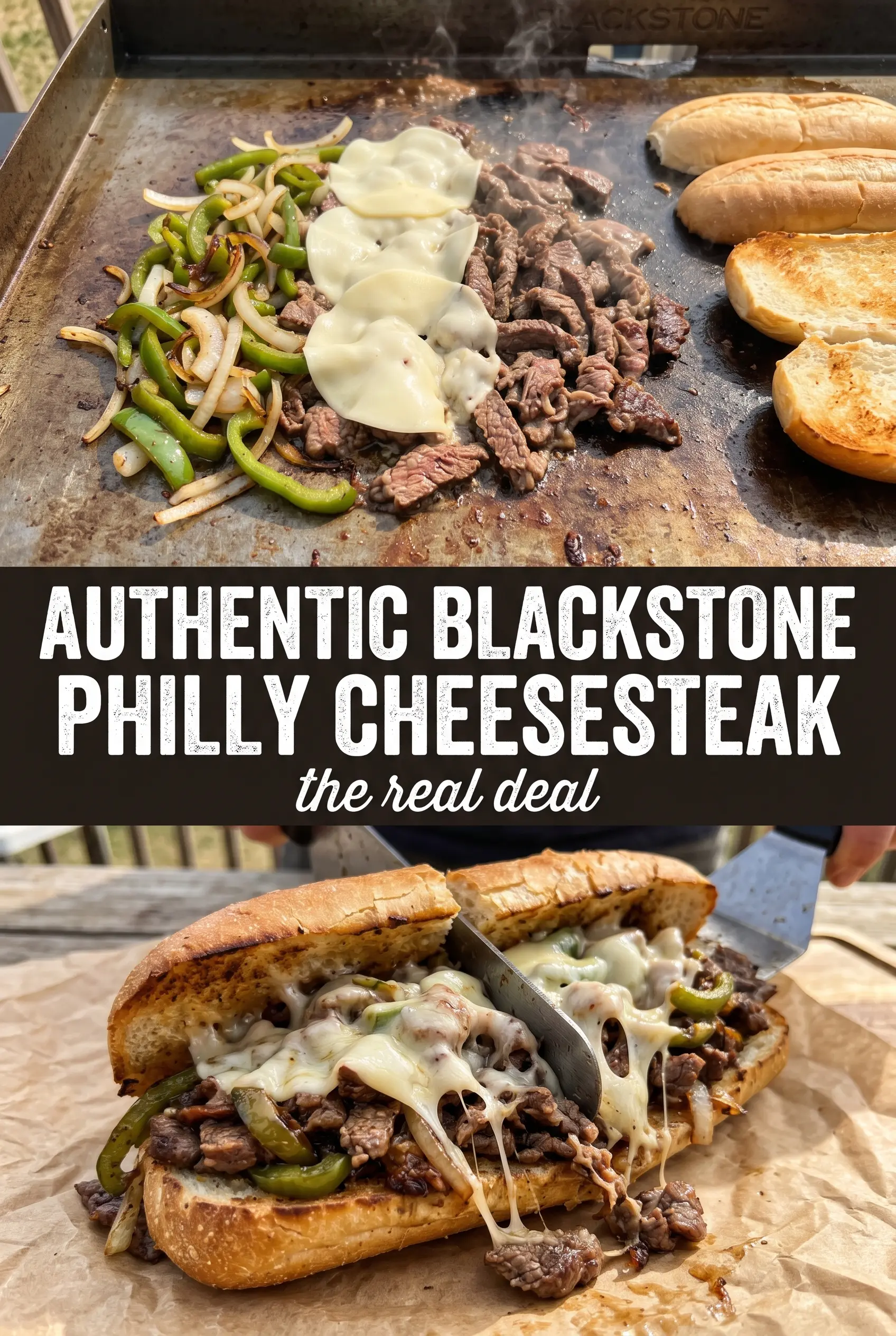
Authentic Blackstone Philly Cheesesteak
Ingredients
Equipment
Method
- Heat a Blackstone griddle to medium-high heat and add the oil, letting it shimmer. Add the onions and green bell peppers and cook, stirring occasionally, until caramelized, about 8-10 minutes, then move them to the side.
- Season the thinly sliced ribeye with salt and pepper to taste. Cook the steak on the hot griddle for 3-4 minutes, chopping with spatulas as it cooks, until browned.
- Divide the cooked steak into 4 portions and top each portion with provolone cheese so it melts over the hot steak. Butter the hoagie rolls and toast them on the griddle until golden.
- Scoop each steak portion with the caramelized onions and peppers into a toasted roll. Serve immediately while the cheese is fully melted.