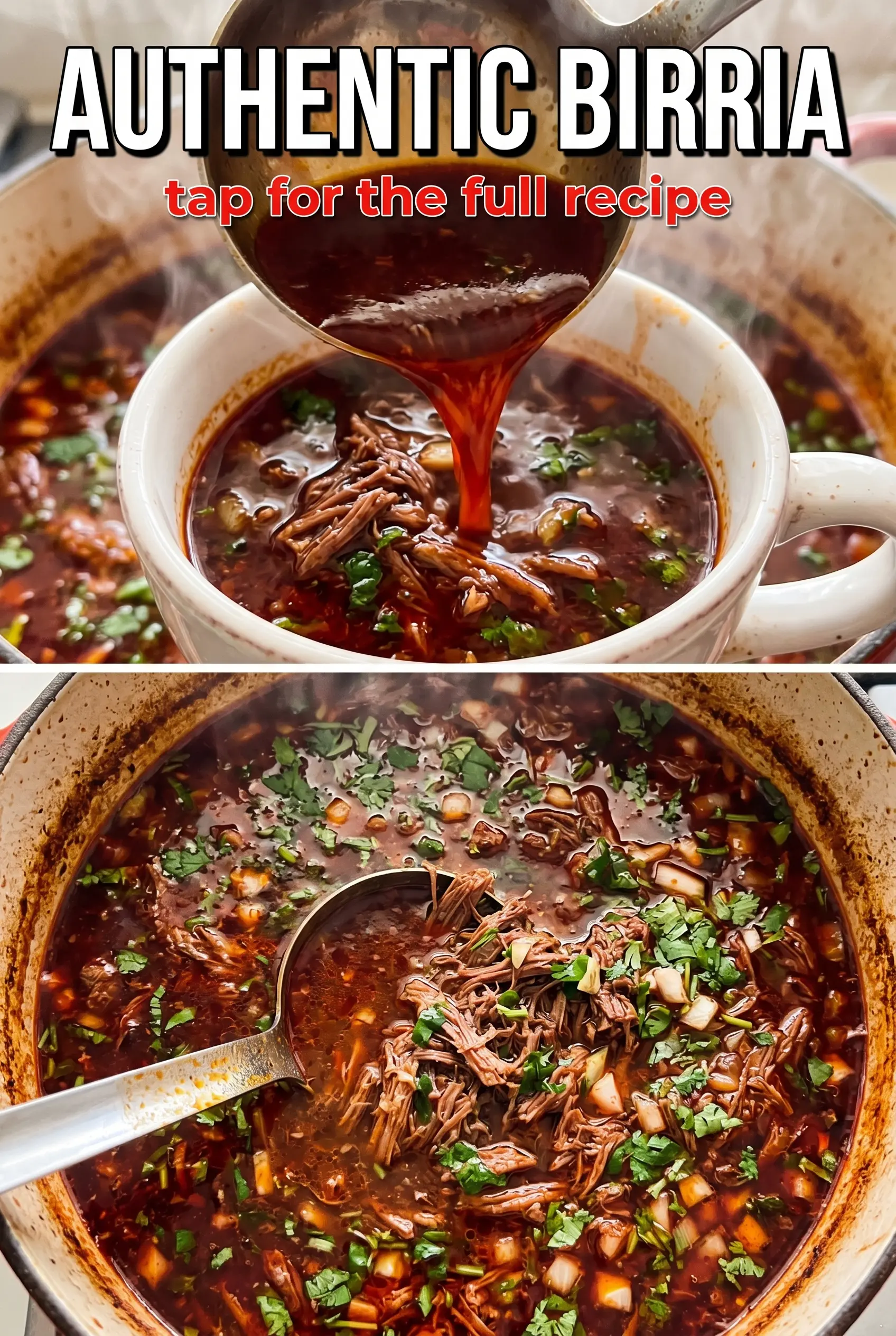
Birria earns its place on the table by giving you two things at once: deeply seasoned shredded beef and a red, fragrant consomé that tastes like it simmered all day because it did. The meat turns tender enough to pull apart with a spoon, and the broth picks up the chiles, cinnamon, garlic, and beef in a way that makes every bite feel complete. Serve it as tacos, and you get crisp, dipped tortillas with charred edges. Serve it as stew, and you get a bowl that’s rich enough to stand on its own.
The key is building the chile base before the beef ever goes in. Toasting the dried chiles wakes up their oils, and straining the blended sauce keeps the finished consomé smooth instead of gritty. I also cook the sauce for a few minutes in oil first, which takes the raw edge off the chiles and gives the broth a deeper, rounder taste. That small step makes the whole pot taste finished instead of assembled.
Below you’ll find the parts that matter most: how to keep the sauce from tasting thin, which ingredient gives birria its signature color, and the easiest way to turn one pot into either tacos or stew without changing the cooking method.
The consomé turned out silky and the chiles didn’t taste bitter at all. I dipped the tortillas like you suggested and the tacos got that crisp edge without falling apart.
Save this birria recipe for rich consomé, tender shredded beef, and tacos with crisp, dipped tortillas.
Why the Chile Sauce Needs to Be Strained Before It Hits the Pot
Birria gets its signature body from the chiles, but those chiles also carry skins and tiny bits that can make the broth feel dusty if you skip the strain. A fine mesh sieve gives you a smoother consomé and a cleaner-looking sauce, which matters here because the broth is part of the final serving. If the blender leaves a few stubborn flecks behind, don’t force them through. A spoon helps push out the liquid while keeping the rough bits out of the pot.
Cooking the blended sauce in oil before adding the broth does two jobs. It deepens the flavor and helps the chile paste lose that raw, sharp edge that can show up in rushed versions. If the sauce ever tastes thin, the problem is usually not the broth amount alone; it’s that the chile base didn’t get enough time in the pan first.
What Each Ingredient Is Actually Doing in This Pot
- Guajillo chiles — These bring the bright red color and the clean chile flavor that makes birria taste like birria. They’re worth finding because they give the broth its backbone without making it too hot.
- Ancho chiles — Anchos add a deeper, raisin-like sweetness and round out the sauce. If you replace them, use another mild dried chile, but the broth will lose some of its warmth and depth.
- Chipotle chiles — These add smoke and a little heat. Two is enough to notice without turning the broth harsh; if you want a gentler pot, use one.
- Beef chuck roast — Chuck is the right cut here because it has enough fat and connective tissue to become silky after a long simmer. Leaner beef turns dry before the broth gets rich.
- Tomato paste — This thickens the consomé and gives the sauce a dark, cooked sweetness. Let it cook with the chile base so it loses the tinny taste canned paste can have.
- Apple cider vinegar — The vinegar sharpens the sauce and helps the spice mixture taste bright instead of heavy. Don’t add more than listed or it starts to dominate the broth.
- Cinnamon stick — Use the stick, not ground cinnamon. It perfumes the broth without making it gritty or dessert-like.
Building the Consomé Before the Meat Goes In
Toast, Soak, and Blend the Chiles
Set the dried chiles in a dry skillet for about 2 minutes, just until they smell toasted and a little nutty. If they darken too much, they turn bitter fast, so pull them as soon as they become fragrant. Soak them in hot water until they soften, then blend them with the onion, garlic, cumin, oregano, and vinegar until the mixture looks smooth and thick. Strain it before moving on; that one step keeps the final broth velvety instead of grainy.
Cook the Chile Base Until It Darkens
Warm the olive oil over medium heat and pour in the strained sauce. It should sizzle lightly and smell deeper within a few minutes. Stir often so the paste doesn’t catch on the bottom; if it starts sticking, the heat is too high. After about 5 minutes, the sauce should look a shade darker and taste less raw, which is the signal to add the broth, tomato paste, bay leaves, and cinnamon.
Simmer the Beef Until It Falls Apart
Bring the pot to a boil, add the beef chunks, then lower the heat to a gentle simmer. You want a lazy bubble, not a hard boil, because aggressive heat tightens the meat before it has time to soften. Covering the pot isn’t necessary here; leaving it uncovered lets the broth reduce a little and concentrates the flavor. After 90 to 120 minutes, the beef should shred easily with two forks and the consomé should taste full and layered, not watery.
Choose Taco Night or Stew Night at the Finish
For tacos, shred the beef and dip the tortillas in the consomé before they hit the pan. That coating gives the tortillas color and helps them crisp at the edges while staying flexible enough to fold. For stew, ladle the meat and broth straight into bowls and finish with lime, onion, and cilantro. If the broth seems too fatty on top, spoon off a little, but leave enough for the rich mouthfeel birria is known for.
Three Practical Ways to Work This Birria Into Your Kitchen
For a milder pot
Cut the chipotle chiles down to one or leave them out entirely. The broth will lose some smoke, but the guajillo and ancho chiles still give you a deep red consomé with plenty of body.
For gluten-free serving
The birria itself is naturally gluten-free as written, as long as your broth is certified gluten-free. Serve it with corn tortillas instead of flour tortillas so the tacos stay true to the dish.
For a brothier stew
Add an extra cup of broth and let the pot simmer uncovered for the full time. That gives you more consomé for bowls, though the sauce will taste a little lighter than the taco version.
Storage and Reheating
- Refrigerator: Store the beef and consomé in an airtight container for up to 4 days. The broth often tastes even better the next day after the spices settle.
- Freezer: This freezes well for up to 3 months. Cool it completely first, then freeze the meat and broth together in portioned containers for easier thawing.
- Reheating: Warm it gently on the stove over medium-low heat until hot. Don’t boil it hard, or the beef can dry out and the broth can taste a little flat.
Questions I Get Asked About This Recipe
Authentic Birria (Consomé) for Tacos or Stew
Ingredients
Equipment
Method
- Toast the dried guajillo chiles, ancho chiles, and chipotle chiles in a dry skillet over medium heat until fragrant, about 2 minutes, watching closely so they don’t burn.
- Soak the toasted chiles in hot water for 10 minutes, then drain them thoroughly.
- Blend the drained chiles with the halved onion, crushed garlic, cumin, oregano, and apple cider vinegar until smooth, then strain through a fine mesh sieve to get a silky sauce.
- Heat the olive oil in a large Dutch oven over medium heat.
- Cook the strained chile sauce in the pot for 5 minutes, stirring until it darkens slightly and smells toasted.
- Add the beef broth, tomato paste, bay leaves, and cinnamon stick, then bring to a boil.
- Add the beef chuck roast chunks and return the pot to a boil.
- Reduce heat to low and simmer uncovered for 90-120 minutes, until the beef is fall-apart tender, skimming if needed.
- Season the consomé with salt and pepper to taste.
- For tacos, shred the tender meat and dip corn tortillas in the consomé, then fill with meat.
- Top the tacos with diced onion and cilantro and serve with lime wedges.
- For stew, ladle meat and consomé into bowls and serve with lime wedges. Add diced onion and cilantro if you like.