Apple cider beef stew hits that sweet spot between deep, slow-cooked comfort and a sauce with enough brightness to keep every spoonful moving. The beef turns tender after a long simmer, the cider cooks down into a glossy gravy, and the apples don’t disappear completely — they soften just enough to give the stew little bursts of tart-sweet flavor against the rich broth. It’s the kind of pot that tastes even better on the second day, when the cinnamon, thyme, and beef have settled in together.
The trick here is balance. Browning the beef in batches gives you the base flavor the stew needs, and the flour on the meat helps thicken the broth without making it gummy. The apple cider vinegar matters too; it keeps the stew from tasting flat or candy-sweet once the cider reduces. Add the apples near the end so they stay intact instead of melting into the pot.
Below you’ll find the timing that keeps the carrots and sweet potatoes from turning to mush, plus a few smart swaps if you want to adjust the sweetness or make it fit what’s already in your pantry.
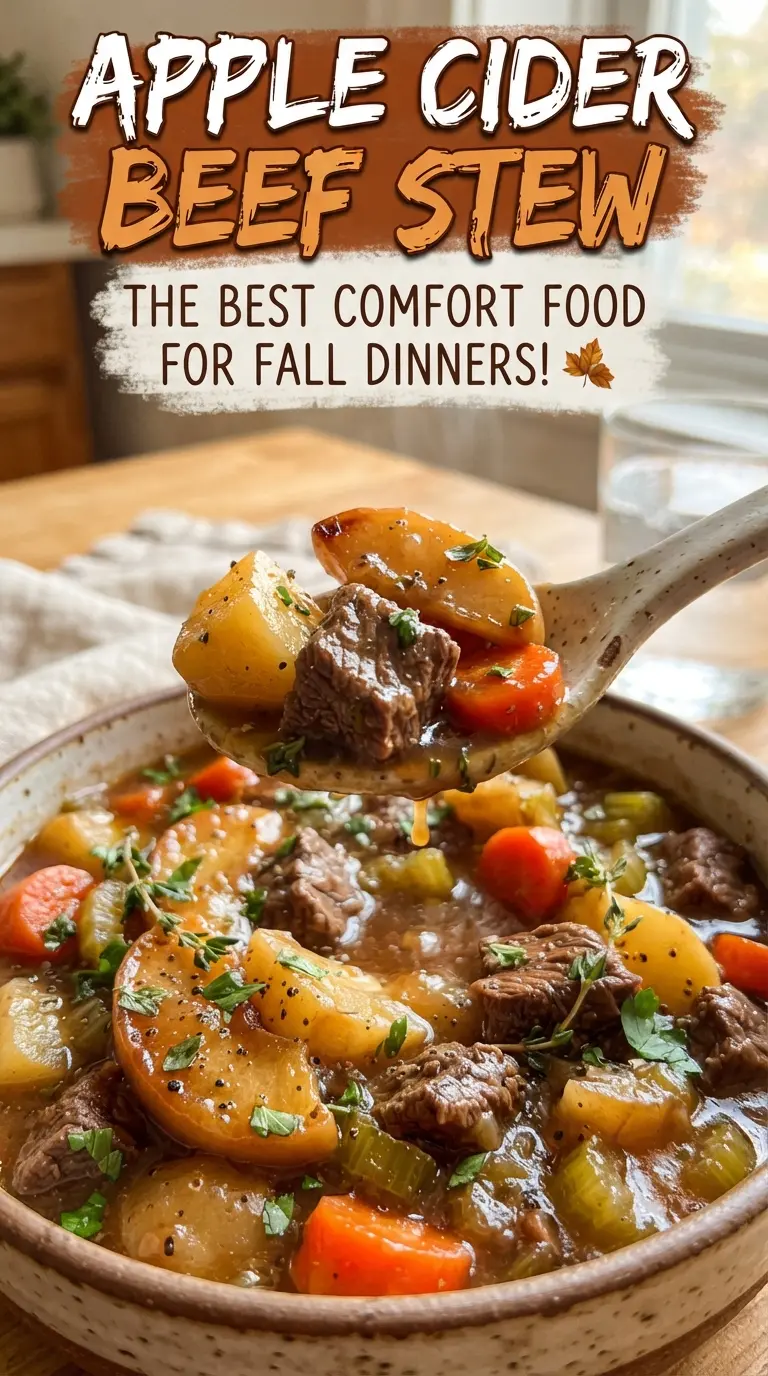
The cider gravy came out glossy and rich, and the apple chunks held their shape instead of turning to mush. I served it with crusty bread and there wasn’t a spoonful left.
Like this apple cider beef stew? Save it for a cozy dinner with tender beef, sweet potatoes, and a cider-kissed gravy.
The Step That Keeps the Stew from Tasting Flat
The biggest mistake with cider stew is treating the cider like a background note. It isn’t. Cider brings sweetness, acidity, and fruit flavor all at once, which means it can either make the stew taste layered or push it toward dessert if the rest of the pot doesn’t keep up. That’s why the browned beef, tomato paste, vinegar, and thyme all matter here; they give the cider somewhere to land.
Scraping the bottom of the pot after you add the cider is part of the flavor, not a cleanup task. Those browned bits dissolve into the liquid and give the stew its darker, rounder taste. If the pot looks dry or the fond starts to scorch, lower the heat before adding the broth. Burnt fond tastes bitter, and once that happens, there’s no fixing it.
- Browning the beef well gives the stew its backbone. Pale meat means pale stew.
- Tomato paste adds depth and color, not tomato flavor. Let it cook for a minute so it loses the raw edge.
- Apple cider vinegar keeps the final broth from tasting heavy. It sharpens the sweetness without making the stew sour.
- Dried thyme and bay pull the cider into savory territory instead of letting it read as a fall drink.
What the Apples, Cider, and Sweet Potatoes Are Each Doing
- Beef chuck is the right cut because it has enough connective tissue to turn tender after the long simmer. Leaner beef dries out before the stew has the body it needs.
- Apple cider should be the real, cloudy kind if you can get it. Clear cider still works, but it tastes thinner and less apple-forward after cooking.
- Sweet potatoes bring body and natural sweetness. If you swap in Yukon gold potatoes, the stew will taste less sweet and a little more classic and earthy.
- Firm apples need to hold their shape. Honeycrisp, Braeburn, or Granny Smith all work better than soft varieties, which collapse before the pot is done.
- Flour on the beef helps the broth thicken as it simmers. It also gives the meat a little crust when it hits the pan, which adds flavor right from the start.
Building the Pot in the Right Order
Seasoning and Browning the Beef
Toss the beef with salt, pepper, and flour until every piece is lightly coated. Brown it in batches in hot oil so the pieces actually sear instead of steam; if you crowd the pan, the meat will gray out and the stew loses that deep roasted flavor. Don’t chase a perfect crust on every side, but do wait for the meat to release cleanly before turning it. Transfer each batch out as it browns so the pan stays hot.
Cooking Down the Onion Base
The onion needs time to soften and pick up the browned bits left behind by the beef. Add the garlic and tomato paste only after the onion has lost its raw bite, then cook them for about a minute until the paste darkens slightly and smells sweet, not sharp. If the garlic starts to brown hard, the heat is too high and the pot will taste bitter. Lower it before you add the liquid.
Simmering the Beef Until It Softens
Once the cider and broth go in, bring the pot up to a gentle simmer and cover it. You want small bubbles around the edges, not a hard boil, because boiling toughens chuck instead of relaxing the fibers. This first long simmer is where the stew develops its body, so give it the full time and stir only occasionally. If the liquid drops too low, add a splash of broth, not water.
Adding the Vegetables and Apples at the End
Sweet potatoes and carrots need less time than the beef, and the apples need even less. Add the vegetables after the meat is tender, then fold in the apple chunks near the end so they stay recognizable. If you add them too early, the apples disappear and the sweet potatoes turn mealy before the beef is ready. The stew is done when the carrots are tender, the potatoes cut cleanly, and the broth clings to the spoon.
How to Adapt This Stew Without Losing What Makes It Good
Make It Without Gluten
Swap the all-purpose flour for a gluten-free flour blend or skip it and thicken the finished stew with a cornstarch slurry. You’ll lose a little of the early crust on the beef, but the stew still turns silky if you simmer it uncovered for the last few minutes.
Use Potatoes Instead of Sweet Potatoes
Yukon gold or red potatoes give you a more savory, classic beef stew feel and cut some of the sweetness. Add them in the same stage as the sweet potatoes, but expect a slightly lighter broth and a less autumn-forward flavor.
Lean Into the Apple Flavor
If you want a more pronounced cider note, add an extra splash of cider vinegar right at the end and use a tart apple like Granny Smith. That keeps the stew bright instead of sweet and makes the apple flavor read cleanly against the beef.
Storage and Reheating
- Refrigerator: Keeps for 4 days in a covered container. The broth thickens as it chills, and the apples soften a bit more by day two.
- Freezer: Freezes well for up to 3 months. Cool it completely first, then pack it without filling the container to the top so the broth has room to expand.
- Reheating: Reheat gently on the stove over low heat until steaming. A hard boil will make the beef stringy and can break up the apples and sweet potatoes.
Questions I Get Asked About This Recipe

Apple Cider Beef Stew
Ingredients
Equipment
Method
- Season the beef chuck with salt and black pepper, then toss with all-purpose flour until evenly coated.
- Heat olive oil in a Dutch oven over medium-high heat and brown the beef in batches, letting each batch develop deep color before transferring to a plate.
- In the same Dutch oven, cook diced onion for 5 minutes until softened.
- Add minced garlic and tomato paste, stirring for 1 minute to toast and darken slightly.
- Pour in apple cider and scrape the bottom of the pot to lift the browned bits.
- Add beef broth, apple cider vinegar, dried thyme, ground cinnamon, and bay leaves, then add the browned beef back in.
- Cover the Dutch oven and simmer for 1 1/2 hours until the beef is tender and the sauce thickens.
- Add the cubed sweet potato and sliced carrots, then simmer for 30 minutes until the vegetables are nearly tender.
- Stir in the apple chunks and simmer for 15 minutes more until the apples soften but still hold their shape.
- Remove the bay leaves and serve the stew hot with the glossy cider gravy coating the beef and vegetables.