Deep, glossy beef stew starts with a hard sear and ends with meat that barely needs a fork. The sauce turns rich and dark from the browned bits on the bottom of the pot, the wine, and the slow simmer that gives the beef time to soften without turning stringy. This version has the kind of steady, old-school payoff that makes a pot disappear fast, especially with torn bread for dragging through the sauce.
The onions cook down in the same pot after the beef, which means they pick up all that fond instead of starting from scratch. A little flour cooks onto the meat before the liquid goes in, helping the broth thicken naturally as it simmers. Burgundy brings the right kind of depth here: enough acidity to lift the stew, enough body to stay rounded after two hours on the stove. The bouquet garni matters too; it perfumes the pot without leaving stray herb bits floating through the finished sauce.
Below, you’ll find the exact cues that tell you when the beef has browned enough, when the sauce is ready to thicken, and how to keep the stew from tasting flat at the end. There’s also a simple storage note and a few smart swaps for when you want the same slow-braised comfort with a different setup.
The wine and flour made the sauce come out thick and silky, and the beef was fall-apart tender after two hours. I served it with crusty bread and my husband went back for seconds.
Save this Burgundy-braised beef stew for the night you want deep flavor, a glossy sauce, and barely tender beef.
The Browning Stage Is Where This Stew Gets Its Depth
The biggest mistake with beef stew is crowding the pot and rushing the sear. If the beef goes in too close together, it steams and turns gray instead of picking up the dark crust that gives the finished sauce its backbone. Work in batches and let each side sit until it releases on its own; if it sticks, it isn’t ready yet.
The flour goes in after the beef returns to the pot, not before. That keeps it from scorching on the bottom and lets it cook in the fat and meat juices for a few minutes before the liquid goes in. You want the pot bottom to stay brown, not black, because those browned bits dissolve into the wine and stock instead of turning bitter.
What the Wine, Onions, and Bouquet Garni Are Doing Here
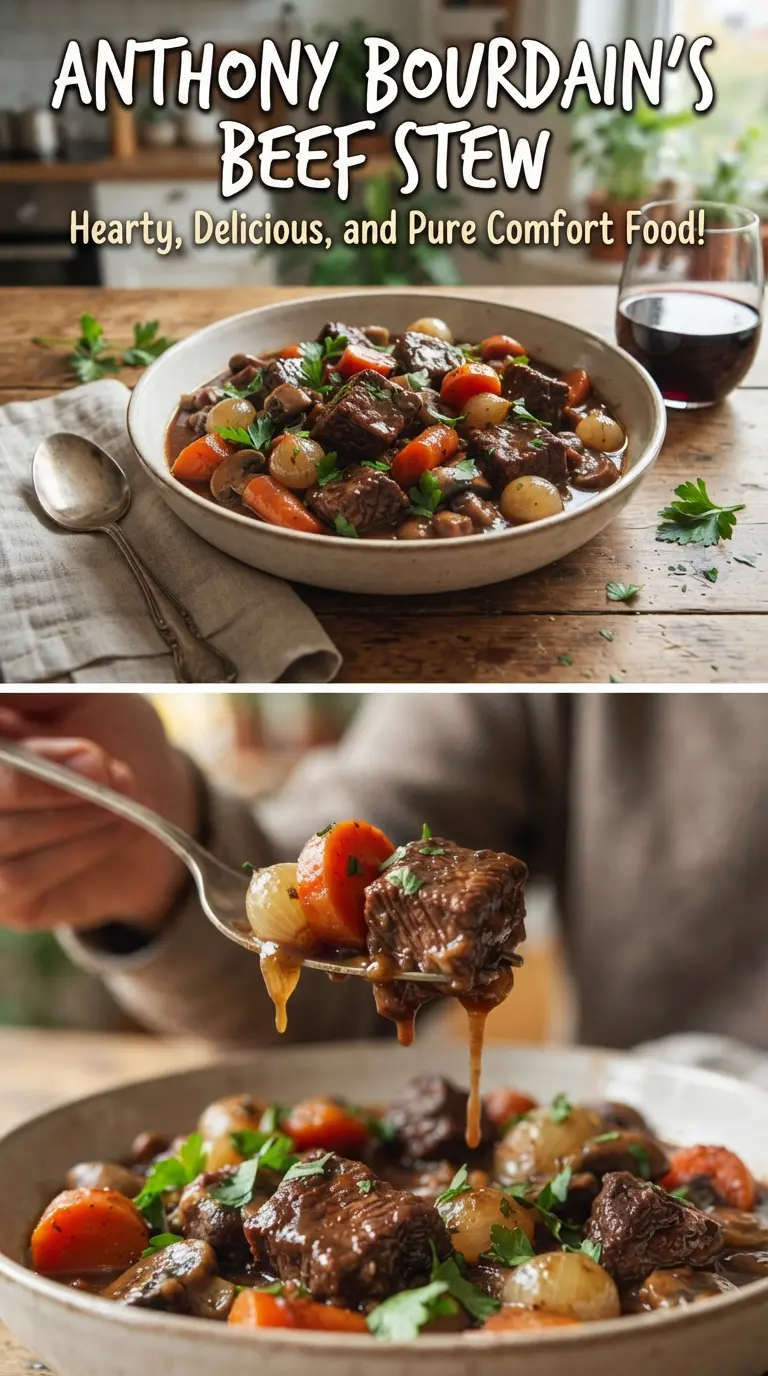
- Beef chuck — This cut has enough connective tissue to turn silky over a long simmer. Leaner beef will dry out before the sauce has time to deepen.
- Red Burgundy wine — This is the flavor driver, not just a liquid. A dry Pinot Noir-style red works well here if Burgundy isn’t available; avoid anything sweet or heavily oaked, which can make the stew taste heavy.
- Onions — Thin slices melt into the sauce and build body. They need the full 10 minutes so they soften and pick up color before the liquid goes in.
- Bouquet garni — Whole herbs perfume the stew without muddying the sauce. Tie them tightly so you can lift them out cleanly at the end.
- Stock or water — Stock adds extra savor, but water works because the browned beef, onions, and wine carry most of the flavor. If you use water, salt the stew only after it has simmered a while so you don’t overshoot.
How to Build the Sauce So It Stays Glossy
Getting the Beef Properly Browned
Season the beef first, then sear it in very hot oil in batches. The surface should look deep brown, not just tan, and the pot should collect a dark fond that clings to the bottom. If the heat is too low, the meat leaks juices and you lose both color and flavor. Set the beef aside as soon as each batch is browned so the pan stays hot and active.
Cooking the Onions in the Same Pot
The onions go into the same pot after the beef comes out. They should soften, turn golden, and start to dissolve at the edges while you scrape up the stuck bits. That step matters because it turns the leftover searing flavor into part of the stew instead of leaving it behind on the pan. If the pot looks dry, the onions need a little more time before the flour goes in.
Simmering Until the Sauce Coats the Spoon
Once the wine, carrots, garlic, bouquet garni, and liquid go in, keep the heat low enough for only small bubbles around the edge. A hard boil tightens the beef and makes the sauce greasy instead of glossy. After about two hours, the meat should yield easily when pressed and the sauce should cling lightly to a spoon. If it still looks thin, uncover the pot for the last 15 minutes and let steam escape.
Use a different dry red wine
A dry Pinot Noir, Côtes du Rhône, or Cabernet all work if Burgundy isn’t on hand. Choose something you’d actually drink, because the wine flavor stays in the finished stew instead of cooking off completely.
Make it gluten-free
Skip the all-purpose flour and thicken the stew by uncovering it for the last 20 to 30 minutes of simmering. The sauce will be a touch less velvety, but the flavor stays full and the beef braises the same way.
Add mushrooms for a deeper braise
Brown sliced mushrooms after the onions and before the flour if you want more earthiness. They add another layer of savor and make the pot feel even heartier, though they will loosen the sauce slightly until the simmer reduces it again.
Storage and Reheating
- Refrigerator: Keeps for 4 days. The flavor deepens overnight and the sauce thickens as it chills.
- Freezer: Freezes well for up to 3 months in airtight containers. Thaw overnight in the refrigerator before reheating.
- Reheating: Warm gently on the stove over low heat with a splash of water or stock. A fast boil can toughen the beef and separate the sauce.
Questions I Get Asked About This Recipe
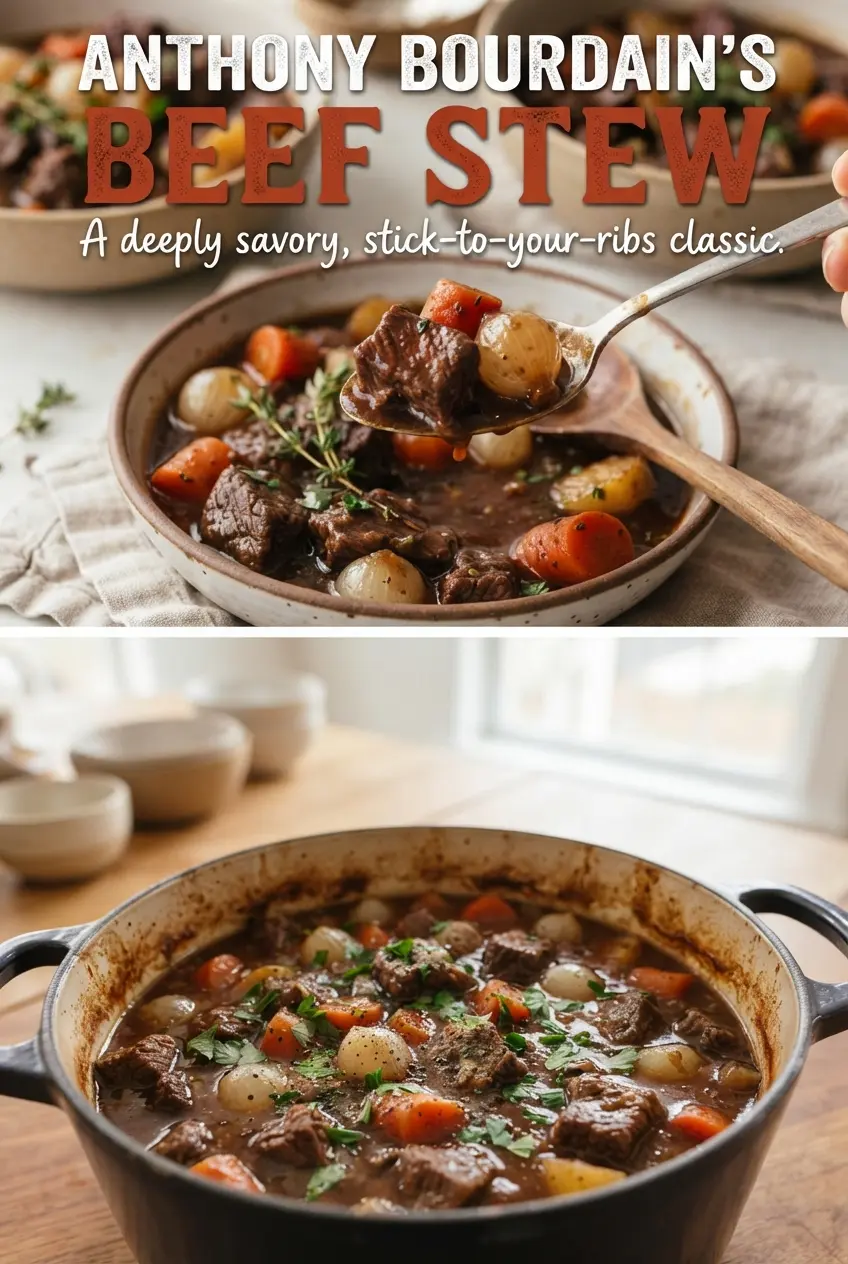
Anthony Bourdains Beef Stew
Ingredients
Equipment
Method
- Season the beef with salt and black pepper, then sear in very hot olive oil in batches until deeply browned, about 6 to 8 minutes per batch. Transfer to a plate as soon as you see a dark crust forming.
- Cook the thinly sliced onions in the same Dutch oven until soft and golden, about 10 minutes, scraping up any browned bits. Cook over medium heat until they look translucent and slightly caramelized.
- Return the browned beef to the pot, sprinkle over the all-purpose flour, and stir until browned, 3 to 4 minutes. Keep stirring so the flour cooks and no dry streaks remain.
- Pour in the red Burgundy wine and scrape the bottom of the Dutch oven to lift browned fond. Simmer just until the wine looks slightly reduced, about 3 to 5 minutes.
- Add the carrots, garlic clove, bouquet garni, and enough water or beef stock to just cover the beef. Bring to a gentle simmer so bubbles rise slowly around the edges, about 5 minutes.
- Simmer gently, partly covered, until the beef is very tender and the sauce is thick, about 2 hours. Look for a slow bubble and a glossy coating that clings to the meat.
- Remove the bouquet garni and finish with chopped fresh parsley. Stir in off the heat just until the parsley turns bright green, about 1 to 2 minutes.