A well-built American flag charcuterie board lands for the same reason a good party platter always does: it looks dramatic when it hits the table, but every bite is immediately familiar. The red, white, and blue pattern gives you structure, and that structure keeps the board from turning into a random pile of meat and cheese halfway through the party. When the rows are tight and the colors stay distinct, the whole thing reads cleanly from across the room and still eats beautifully up close.
The trick is using ingredients that hold their shape. Blueberries pack into the canton without bleeding into the other sections, rolled salami gives you the look of little stars without needing anything fussy, and sliced cheese or mozzarella balls build the white stripes fast. Pepperoni and prosciutto bring enough contrast to keep the red rows bold, while strawberries soften the saltier elements and help fill the board so it feels abundant instead of sparse.
Below, I’ll walk through how to keep the flag crisp, what to swap if your board size or ingredient list changes, and how to keep the layout looking sharp until the first guest grabs a cracker.
The flag stayed crisp for the whole party, and I loved how the rolled salami made the blue corner look finished without any extra work. The blueberries didn’t slide around, and the cheese rows held their shape even after sitting out.
Like this patriotic charcuterie board? Save it to Pinterest for the next Fourth of July party, potluck, or cookout where you want a flag platter that looks polished and feeds a crowd.
How to Keep the Flag Pattern Crisp Instead of Slumping Into a Pile
The biggest mistake with a flag board is treating it like a salad. Once the sections get loose, the design disappears and the board starts looking busy instead of intentional. Tight packing is what keeps the colors separated, especially in the blueberry canton and the pepperoni rows. You want every ingredient placed in a direction that supports the stripe it belongs to, not drifting into the next section.
Board size matters here more than most people expect. A board that’s too small forces the ingredients to overlap, which blurs the flag shape; a board that’s too large makes the pattern look thin and unfinished. Start by mapping the canton in the upper left, then build outward in rows so the width stays consistent from top to bottom. That rhythm is what gives the board its polished look.
What Each Ingredient Is Doing in This Board
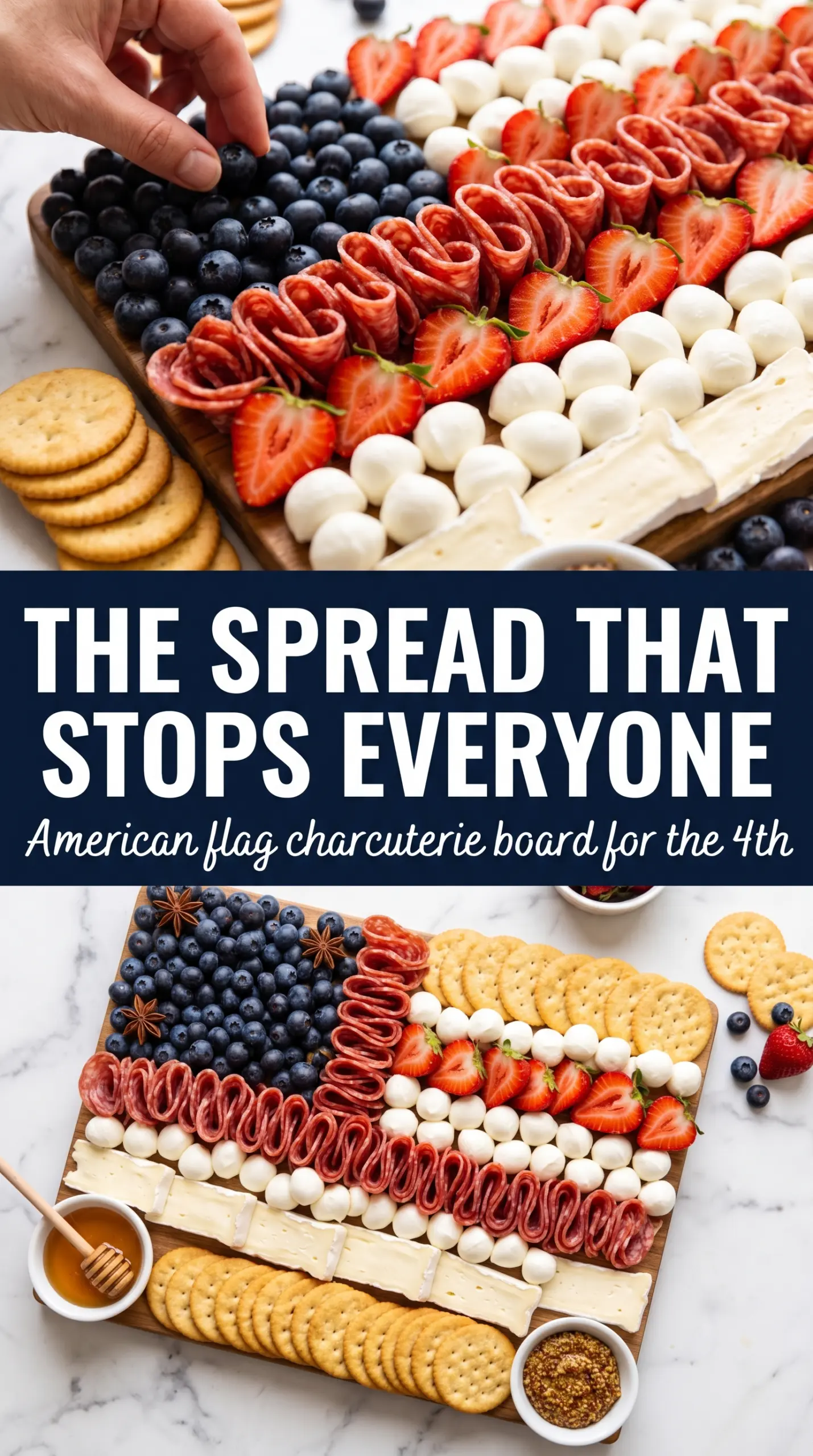
- Pepperoni — This gives you the strongest red stripe because the slices lay flat and hold their color. If your slices cup heavily, warm them for a few seconds between paper towels so they relax before arranging.
- Salami — Rolled salami creates the “star” effect in the canton and adds height without breaking the layout. Thin slices work best because they curl neatly; thick-cut salami tends to fight the shape.
- Prosciutto — Use this to reinforce the red stripes where pepperoni leaves gaps. It’s softer and more delicate, so tuck it in folds instead of laying it flat or it will look messy fast.
- Fresh mozzarella and white cheddar or provolone — These build the white stripes and give the board contrast. Mozzarella balls feel lighter and more casual, while sliced provolone or cheddar creates cleaner lines; both work, but sliced cheese gives the most defined flag shape.
- Blueberries — Packed tightly, they make the canton look full and give you the right navy-blue field without bleeding moisture into the other ingredients. Rinse and dry them well so the board stays neat.
- Strawberries — These help fill out the red stripes and keep the board from looking meat-heavy. Halved berries are easier to fit into narrow gaps than whole berries, and they bring a fresh bite alongside the saltier cheeses.
- Rosemary sprigs — This is the finishing touch that makes the board feel complete. Use them at the corners and along the edges, not scattered everywhere, or they’ll compete with the flag pattern.
Building the Flag One Section at a Time
Marking the Canton First
Set the board on a flat surface and mentally divide off the upper left corner before you place anything else. Fill that rectangle tightly with blueberries so the shape reads as a solid block of color. Leave no open wood showing in that section, because gaps make the canton look unfinished and draw the eye away from the stripes.
Creating the Star Effect
Roll the salami slices and tuck them into the center of the blueberry section. They don’t need to be perfectly uniform; they need to look full and slightly dimensional, like little textured stars against the blue background. If the rolls keep unspooling, make them a touch tighter and place the seam side down.
Laying the Stripes
Start at the top right and work across the full width of the board in alternating red and white rows. Pepperoni gives you the boldest red line, then the white cheese or mozzarella stripe follows underneath. Keep the rows parallel and dense, because loose spacing is what makes the flag pattern drift.
Filling the Gaps and Framing the Board
Use prosciutto folds and strawberry halves to patch any thin spots in the red stripes. Then tuck rosemary sprigs around the corners and outer edges so the board looks finished without stealing attention from the flag. Add crackers around the perimeter at the very end; if you place them too early, they get in the way while you’re building the pattern.
How to Adapt This Flag Board for Different Crowds
Make It Fully Gluten-Free
The board itself is naturally gluten-free, so the only change is the crackers you serve alongside it. Use certified gluten-free crackers or crisp vegetable dippers, and keep them in a separate bowl so the board stays safe for guests who need it.
Swap in a More Vegetarian Center
If you want a vegetarian version, replace the pepperoni and salami with rows of red grapes, cherry tomatoes, and roasted red peppers. You’ll lose the cured-meat richness, but you gain a brighter, fresher board that still holds the flag design well.
Build a Smaller Board Without Losing the Shape
For a smaller crowd, keep the same ratio of blue canton to striped field, but tighten the rows and reduce the amount of perimeter crackers. The board will look fuller if you scale down the width evenly instead of cutting off one section and leaving the rest oversized.
Storage and Make-Ahead Timing
- Refrigerator: Store the components separately for up to 2 days. Once assembled, the board is best served the same day because the berries and cheese can release moisture.
- Freezer: Don’t freeze this board. The fruit and cheeses won’t thaw with the same texture, and the layout will collapse.
- Reheating: Not applicable. If the cheese has been chilled, let it sit out for 20 to 30 minutes before serving so the flavors open up and the board doesn’t eat cold and tight.
Answers to the Questions Worth Asking
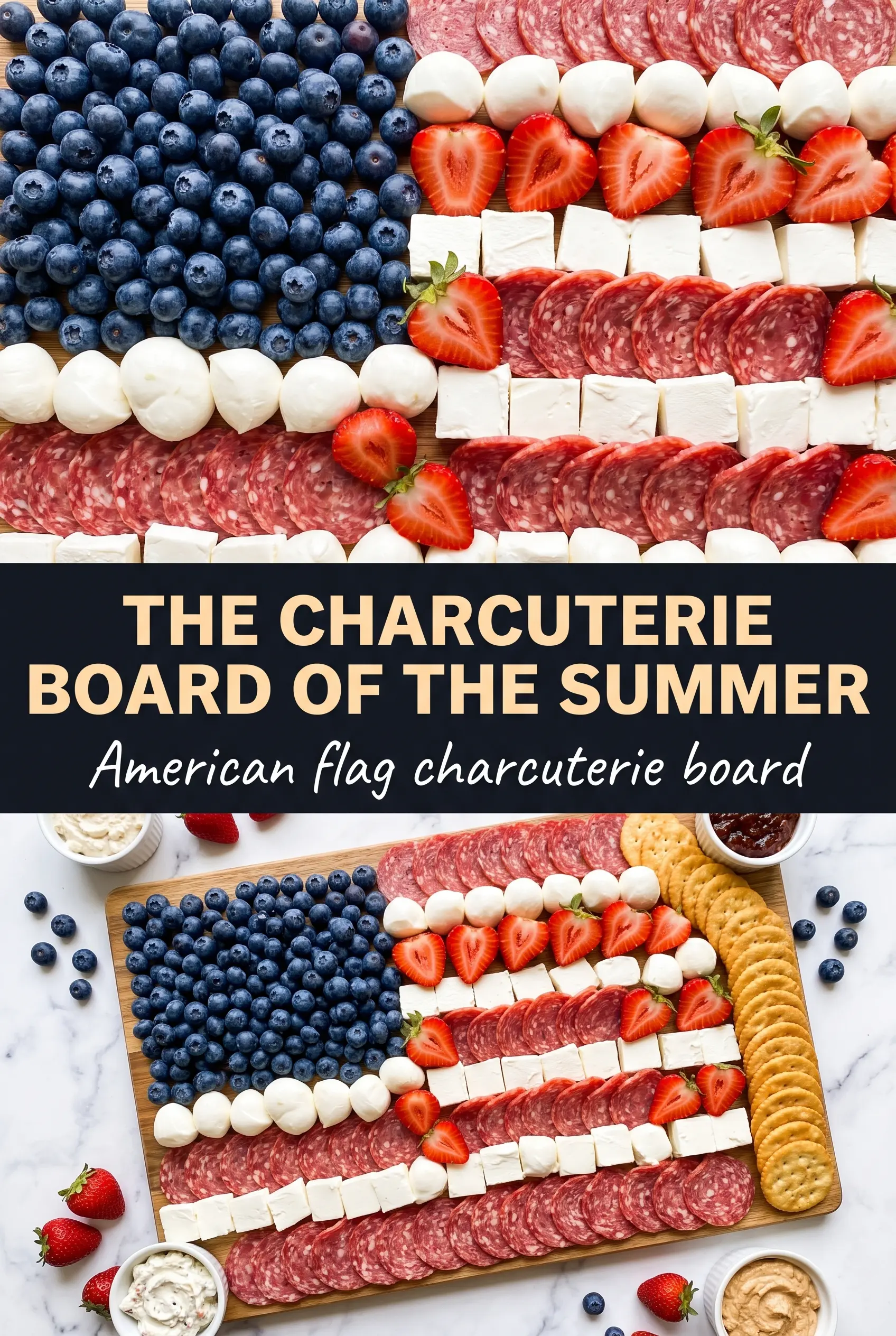
American Flag Charcuterie Board
Ingredients
Equipment
Method
- Use a large rectangular wooden board or serving tray and mentally divide the upper left into a canton rectangle.
- Fill the canton with blueberries packed tightly together, then tuck rolled salami pieces in the center to resemble stars.
- Starting from the top right of the board, create a red stripe by layering pepperoni slices in a clean row across the full width of the board.
- Create the white stripes using rows of sliced white cheddar or mozzarella balls, alternating with the red stripes down the full board.
- Add prosciutto folds or strawberry halves to reinforce the red stripes and fill any gaps.
- Tuck rosemary sprigs at the corners and edges.
- Then arrange crackers around the perimeter and serve.