Rich, nutty, and deeply savory, African beef stew turns a handful of pantry ingredients into a bowl that eats like it’s been simmering all afternoon. The peanut-tomato broth clings to each piece of beef, the sweet potato softens just enough to round out the heat, and the spinach disappears into the sauce without losing its fresh finish. It’s the kind of stew that gets even better as it sits, which is one of the reasons it earns a repeat spot in my kitchen.
The trick here is building the base in layers. Browning the beef first gives you the dark, meaty notes the broth needs, and the tomato paste has to cook for a minute or two so it loses that raw edge before the liquid goes in. The peanut butter goes in after the long simmer, not at the beginning, so it blends into the stew instead of clumping or scorching on the bottom of the pot.
Below, I’ve laid out the parts that matter most: how to keep the beef tender, why the peanut broth tastes balanced instead of heavy, and what to change if you want to adjust the heat or make it ahead for the week.
The peanut sauce turned out silky and the beef was fall-apart tender right on time. I added the spinach at the end like you said and it stayed bright instead of getting mushy.
Save this African Beef Stew for a peanut-tomato bowl that comes out rich, tender, and perfect over rice.
The Reason the Peanut Sauce Stays Smooth Instead of Going Grainy
The biggest mistake in peanut stews is adding the peanut butter too early or over too much heat. Peanut butter thickens fast, and if it sits on the bottom of a boiling pot, it can seize into little oily pockets instead of melting cleanly into the broth. Here, the stew simmers long enough to tenderize the beef first, then the peanut butter gets whisked in after that hard work is done.
That order keeps the sauce balanced. The tomatoes bring acidity, the broth gives it body, and the peanut butter rounds everything out without making the stew taste heavy. If your sauce looks split for a moment after stirring in the peanut butter, keep the heat low and whisk patiently; it usually comes back together once the stew settles into a gentle simmer.
What Each Ingredient Is Actually Doing in This Stew
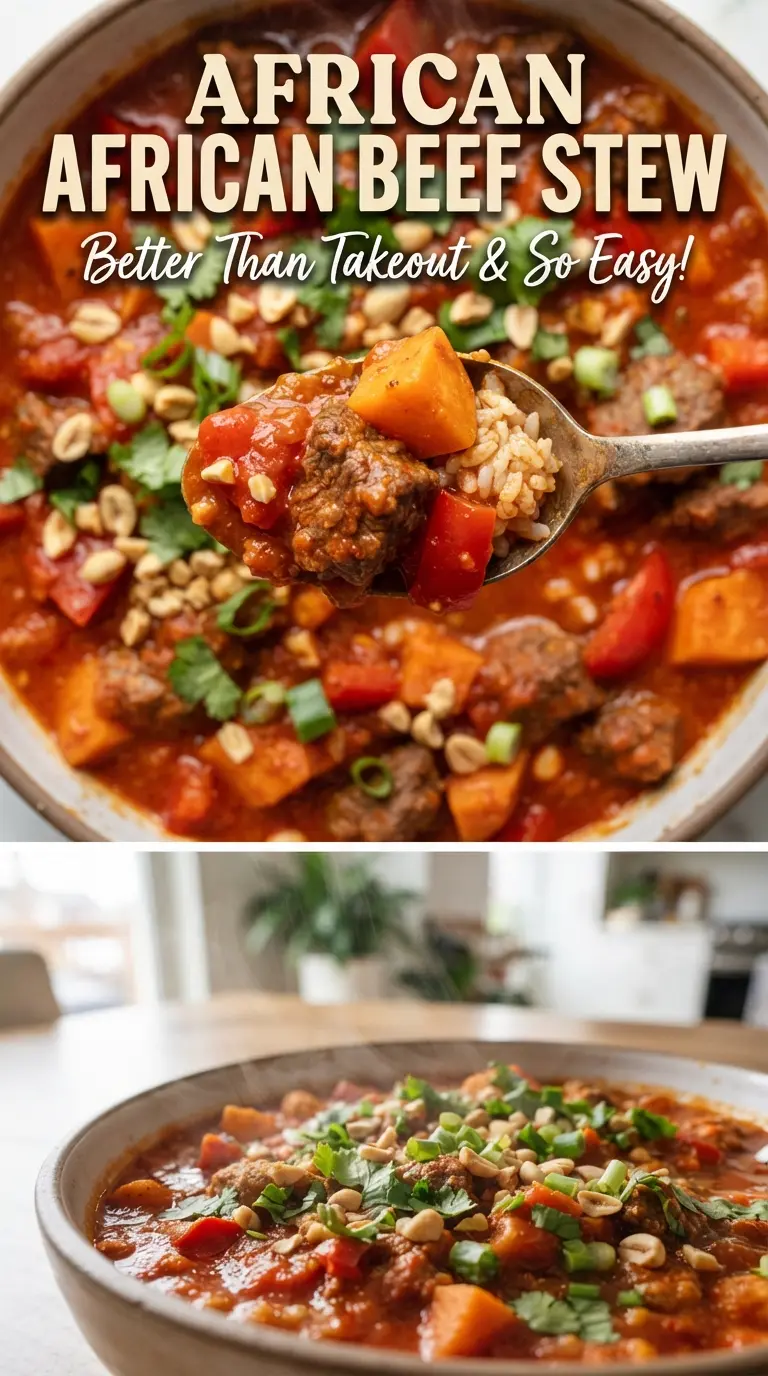
- Beef chuck — This cut has enough connective tissue to turn tender during the long simmer. Leaner beef will dry out before the sauce is finished. If chuck isn’t available, use stew meat from the shoulder and trim away any large hard fat, but don’t switch to sirloin unless you’re willing to lose that slow-cooked texture.
- Tomato paste and crushed tomatoes — Tomato paste deepens the stew fast, especially when it cooks with the onions, garlic, and ginger before the liquid goes in. That short frying time removes the raw, sharp edge and gives the sauce a darker, more concentrated base.
- Natural peanut butter — Use a plain peanut butter with no sugar if you can. The peanut flavor should taste toasty and savory, not like dessert. If the only option you have is a salted, lightly sweetened jar, it will still work, but the stew will finish softer and a little less earthy.
- Sweet potato — It adds body and a gentle sweetness that balances the chile and tomato. Cut it into even cubes so it softens at the same pace throughout the pot instead of half dissolving while the other half stays firm.
- Scotch bonnet or habanero — This is where the stew gets its heat, but it’s optional for a reason. If you want the flavor without the burn, use half the pepper or leave it out entirely; the stew will still taste complete because the ginger, cumin, and peanut bring plenty of personality.
Building the Stew in the Right Order
Browning the Beef First
Season the beef before it hits the pan, then brown it in batches so the pieces can actually color instead of steaming. You’re looking for deep brown patches on the outside, not a gray surface with a little moisture around the edges. If the pan looks crowded, pull some meat out and give the rest room; overcrowding is the fastest way to lose that rich browned flavor.
Cooking the Aromatics Until They Smell Sweet
Once the beef is out, cook the onion until it softens and turns translucent, then add the garlic, ginger, pepper, and tomato paste. The tomato paste should darken a shade and stick lightly to the pan before you pour in the tomatoes and broth. That little bit of toasting is what makes the sauce taste cooked instead of flat.
Letting the Beef Go Low and Slow
After the liquid goes in, keep the pot at a gentle simmer and cover it partway so the beef can tenderize without the sauce reducing too fast. A full boil makes the meat tough and can leave the broth cloudy and aggressive. After about 1 1/4 hours, the beef should be starting to give when you press it with a spoon.
Finishing with Peanut Butter, Sweet Potato, and Spinach
Whisk the peanut butter with a ladleful of hot broth if it’s stiff, then stir it into the pot until the sauce looks smooth and unified. Add the sweet potato next so it can cook through without turning to mash, then finish with the spinach just until it wilts. If the stew thickens more than you want, loosen it with a splash of broth before serving.
How to Adjust This Stew Without Losing What Makes It Work
Make it milder without flattening the flavor
Leave out the scotch bonnet or habanero and lean on the ginger, cumin, and coriander instead. The stew will lose the sharp heat, but it will still have plenty of warmth and depth from the peanut-tomato base.
Swap the beef for a vegetarian version
Use cubed mushrooms and chickpeas instead of beef, and cut the simmer time down to just long enough for the sweet potato to turn tender. You’ll lose the meaty richness of chuck, but the peanut sauce still carries the dish and makes the bowl feel complete.
Make it gluten-free as written
This stew is naturally gluten-free as long as your broth is certified gluten-free. Serve it with plain rice, and you’ve got a full meal that doesn’t need any extra changes.
Storage and Reheating
- Refrigerator: Keeps well for 4 days. The sauce thickens in the fridge and the flavors get even more rounded.
- Freezer: Freezes well for up to 3 months. Cool it completely first, then pack it in airtight containers. The sweet potato softens a bit after thawing, but the stew still reheats nicely.
- Reheating: Warm it gently on the stove over low heat with a splash of broth or water. High heat can make the peanut sauce look oily before it has time to smooth back out.
Questions I Get Asked About This Stew
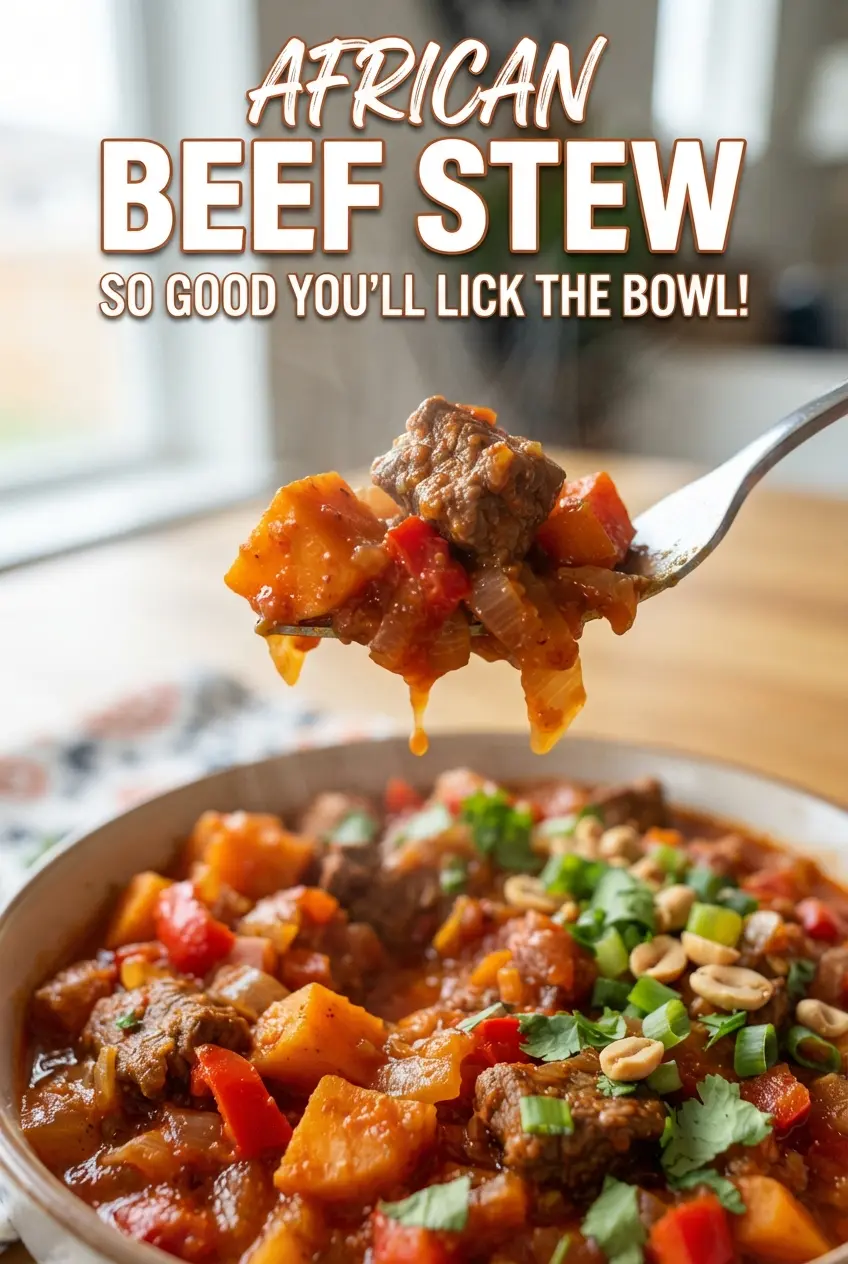
African Beef Stew
Ingredients
Equipment
Method
- Season the beef with salt and black pepper. Heat the vegetable oil in a Dutch oven over medium-high heat and brown the beef in batches until well browned.
- Transfer browned beef to a plate while you repeat with remaining batches. Return all beef to the pot so the fond stays for flavor.
- Add the diced onion to the hot Dutch oven and cook for 4 minutes, stirring as needed. Add the minced garlic, grated ginger, pepper, and tomato paste and cook for 2 minutes until fragrant.
- Stir in the crushed tomatoes, beef broth, ground cumin, and ground coriander, then add the beef. Cover and simmer for 1 1/4 hours, keeping the sauce at a steady simmer.
- Whisk in the natural peanut butter until the sauce is smooth. Add the cubed sweet potato, then keep covered and simmer until the sweet potato starts to soften.
- Simmer for 30-35 minutes, stirring occasionally, until the beef and sweet potato are tender. Stir in the baby spinach and cook until wilted.
- Serve the stew over white rice. Top with chopped roasted peanuts and fresh cilantro.