Golden, puffy breakfast casserole with crisp edges and a soft, custardy middle is one of those dishes that disappears fast and never leaves much behind except an empty pan. This version keeps the ingredient list down to the four things that matter most: bread, sausage, eggs, and cheese. The bread soaks up the egg mixture and bakes into something tender instead of soggy, while the sausage brings enough salt and savor to carry the whole dish.
The trick is in the layering and the soak. Cubed bread on the bottom gives the eggs somewhere to settle, and pressing it down once the custard goes in helps every piece absorb some of that richness. Sharp cheddar matters here because it cuts through the eggs and sausage instead of fading into the background. If the casserole ever comes out watery, it usually means the bread wasn’t given enough time to drink in the custard or the bake was cut short before the center set.
Below, you’ll find the one detail that keeps this casserole from turning heavy, plus a few smart ways to adapt it when you need to feed a different crowd or work with what you’ve got in the fridge.
I let it sit for a few minutes before baking, and the bread soaked up the eggs perfectly without turning mushy. The top came out golden and the sausage flavor was in every bite.
Save this sausage breakfast casserole for mornings when you need a golden, hearty bake with just four main ingredients.
The Detail That Keeps the Casserole from Turning Soggy
The biggest mistake with a breakfast casserole is rushing the soak. Bread cubes need a minute to absorb the egg mixture before the pan goes into the oven, or you’ll end up with dry spots on top and a wet layer underneath. Pressing the bread down after pouring helps it take on the custard evenly, which is what gives you that unified, sliceable texture instead of a loose scramble.
Another place people go wrong is baking until the top looks done instead of checking the center. The surface can be deeply golden while the middle still jiggles in a loose, undercooked way. Pull it when the center is set and the pan feels firm when nudged; carryover heat finishes the job as it rests.
What the Bread, Sausage, Eggs, and Cheese Each Bring to the Pan

- Bread — This is the structure. Slightly stale bread works best because it soaks up the custard without collapsing. White, sourdough, brioche, or sandwich bread all work; just avoid very wet or very dense bread unless you want a heavier result.
- Breakfast sausage — This carries the seasoning, so use one you actually like. A mild sausage keeps the casserole balanced, while a hot sausage brings more bite. Cook it first and crumble it well so every bite gets small, even bits instead of greasy chunks.
- Eggs and milk — These make the custard. Whole milk gives a softer, richer set than skim milk, which can bake up a little tighter and less tender. If you need a dairy-free swap, unsweetened plain oat milk is the closest stand-in, though the final bake will be a touch less rich.
- Sharp cheddar — Sharp cheese matters because it stays present after baking. Mild cheddar melts fine, but it gets swallowed by the eggs. Shred it yourself if you can; pre-shredded cheese works, but it doesn’t melt as smoothly because of the coating on the shreds.
Getting the Custard, Bake, and Slice Right
Building the Base
Grease the dish well, then spread the bread cubes in an even layer so every corner gets some custard. Scatter the sausage over the top before you pour, not after; that keeps it distributed instead of sinking into one heavy layer. Once the egg mixture goes in, press the bread down gently with a spatula or the back of a spoon until it starts to absorb the liquid.
Baking to a Clean Set
Top the casserole with the remaining cheese and bake until the top is deeply golden and the center no longer sloshes when you move the pan. If the edges brown fast before the middle is done, lay a loose piece of foil over the top for the last stretch of baking. The casserole should look puffed, but not wet, in the center when it comes out.
Letting It Rest Before Cutting
Give it 10 minutes before slicing. That rest time lets the custard finish setting, which is the difference between tidy squares and a pan that runs apart on the plate. If you cut too soon, the eggs haven’t had time to firm up and the casserole will look softer than it should.
How to Adapt This Casserole When You Need a Different Kind of Morning
Use gluten-free bread without changing the method
Swap in a sturdy gluten-free sandwich bread or loaf cut into cubes. Softer gluten-free breads can break down too fast, so use one with enough structure to hold the custard. The texture will be a little more delicate, but the casserole still slices well if you give it the full resting time.
Make it dairy-free with one careful swap
Use unsweetened plain oat milk and a good melting dairy-free cheddar-style shreds. The casserole will still be savory and sliceable, but it won’t have quite the same rich finish as the original. Skip watery nut milks here; they don’t give the custard the same body.
Switch the sausage for bacon or ham
Cook bacon until crisp and crumble it, or dice ham into small pieces and use it in place of the sausage. Bacon gives a smokier, saltier casserole, while ham makes it a little leaner and milder. Both work, but neither gives quite the same seasoned, breakfast-sausage depth.
Add vegetables without watering it down
If you want onions, peppers, or spinach, cook off the moisture first. Raw vegetables release liquid in the oven, and that can make the center loose instead of custardy. Keep the amount modest so the casserole still tastes like the simple bake it is.
Storage and Reheating
- Refrigerator: Store leftovers covered for up to 4 days. The bread softens a bit more as it sits, but the flavor stays good.
- Freezer: It freezes well in squares. Wrap individual portions tightly and freeze for up to 2 months, then thaw in the fridge before reheating.
- Reheating: Warm covered in a 325°F oven until heated through, or microwave smaller pieces in short bursts. The usual mistake is blasting it too long, which turns the eggs rubbery and makes the cheese separate.
Questions I Get Asked About This Recipe
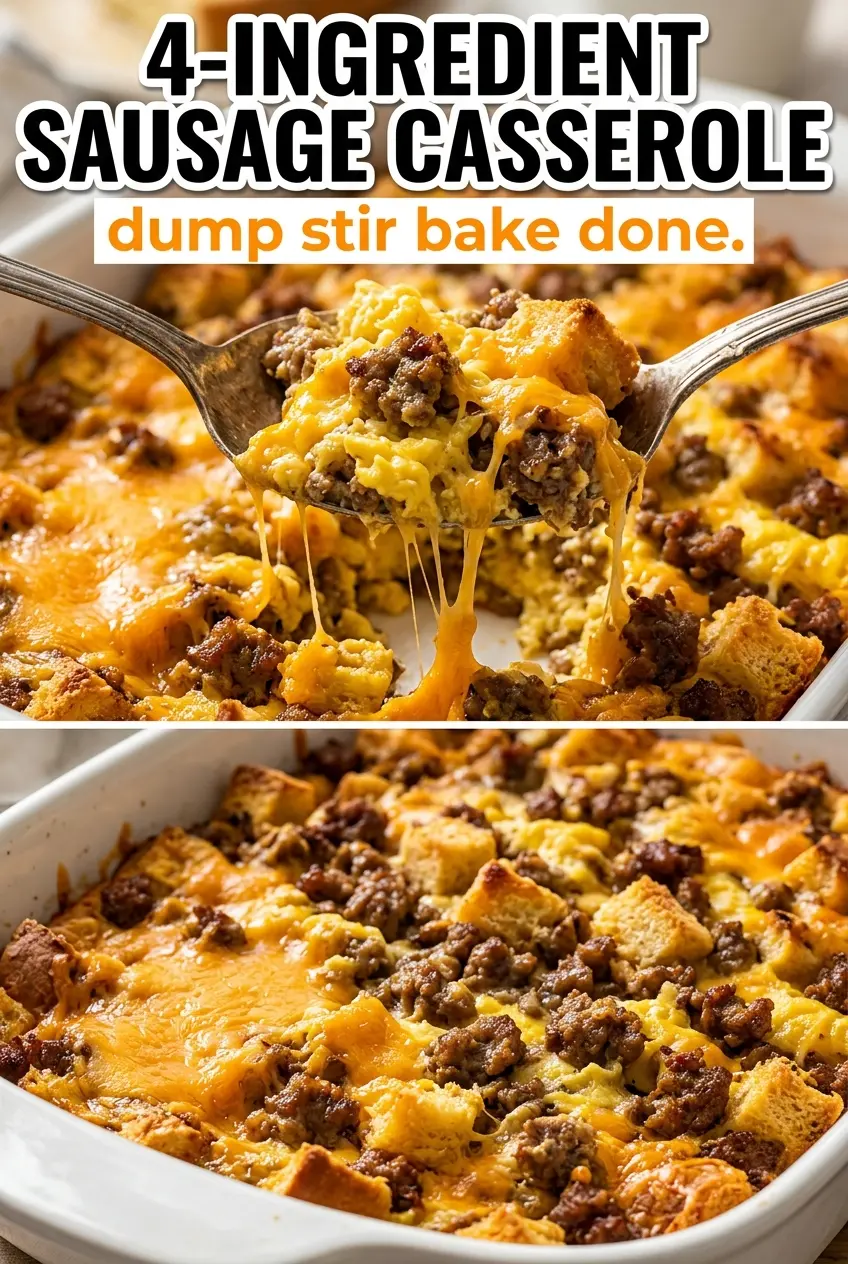
4-Ingredient Sausage Breakfast Casserole
Ingredients
Equipment
Method
- Preheat the oven to 375°F and grease a 9x13 dish.
- Spread the bread cubes evenly in the bottom of the greased dish.
- Scatter the cooked sausage crumbles over the bread.
- Whisk the eggs and milk together with salt and black pepper, then stir in 1.5 cups of the shredded cheddar.
- Pour the egg mixture over the bread and sausage, pressing the bread down to soak, then top with the remaining cheese (you should see a complete cheese layer on top).
- Bake at 375°F for 40–45 minutes until completely set and golden, with the center no longer jiggly when gently shaken.