Jammy cranberry sauce sets up with a glossy spoonable texture that lands somewhere between fresh fruit compote and old-fashioned preserves. The berries burst just enough to thicken the pot naturally, and the finished sauce holds its shape on the plate instead of running into a puddle. It’s the kind of side dish that wakes up everything around it, from roast turkey to leftover sandwiches.
The trick is simple: dissolve the sugar first, then add the cranberries and let them simmer until most of the berries have popped. That keeps the texture clean and the sweetness even, instead of ending up with gritty sugar or a thin syrup. Cooling matters just as much as cooking here, because cranberry sauce always thickens as it chills.
Below you’ll find the timing that keeps the sauce from turning loose, plus a few easy ways to adjust it if you want it sweeter, brighter, or ahead of schedule.
The sauce thickened into that perfect jammy texture once it cooled, and the tart-sweet balance was spot on with our roast turkey.
This jammy 3 ingredient cranberry sauce is the one to bookmark for the holidays when you want glossy, spoonable results without extra steps.
The Part That Makes Cranberry Sauce Turn Glossy Instead of Watery
The difference between cranberry sauce that clings to a spoon and cranberry sauce that slides into a pool comes down to two things: dissolving the sugar completely before the berries go in, and giving the sauce time to cool. If the sugar stays grainy, the berries can overcook before the syrup is fully unified. If you stop cooking too soon, the sauce looks thin in the pan and then sets up better after it’s chilled.
Cranberries bring their own pectin, which is why this sauce thickens without cornstarch or gelatin. That means the simmer needs to be lively enough to burst the berries, but not so aggressive that the liquid cooks away before the fruit breaks down. You’re looking for a pot full of berries that have popped open and a syrup that lightly coats the back of a spoon.
What Each Ingredient Is Actually Doing in This 3 Ingredient Cranberry Sauce
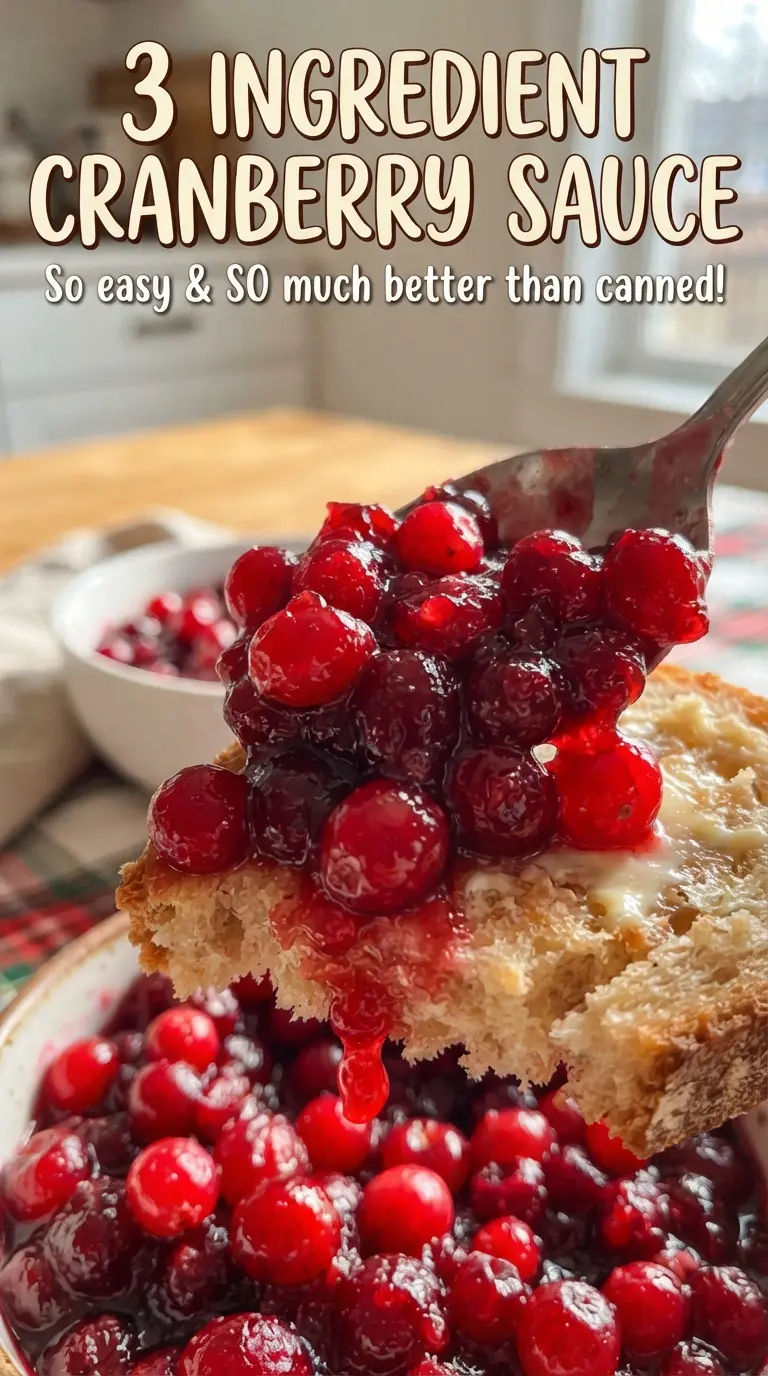
- Fresh cranberries — These are the engine of the whole recipe. As they heat, they burst and release pectin, which gives the sauce its body. Frozen cranberries also work straight from the freezer; don’t thaw them first or they’ll turn softer before the syrup has time to thicken.
- Granulated sugar — Sugar does more than sweeten here. It balances the sharp cranberry bite and helps the sauce set into that glossy, jammy texture. Brown sugar will work in a pinch, but it adds a deeper molasses note and mutes the bright, clean cranberry flavor.
- Water — This is the base that turns into syrup once the sugar dissolves. Use the full amount at the start so the berries have enough liquid to cook evenly. If you cut it back, the sugar can caramelize too fast before the cranberries burst.
Cooking the Berries Until the Sauce Thickens on Its Own
Dissolving the Syrup First
Bring the water and sugar to a full boil and stir until the granules disappear. This step matters because undissolved sugar can leave the sauce a little sandy, and it also makes it harder to judge the final thickness later. Once the liquid turns clear and bubbles steadily, the base is ready for the cranberries.
Letting the Cranberries Burst
Add the cranberries and return the pot to a boil, then lower the heat to a steady simmer. You’ll hear the berries pop as they split open, and that’s exactly what you want. Stir occasionally so the bottom doesn’t scorch, but don’t overwork it — too much stirring breaks the berries down unevenly and can make the texture muddy instead of jammy.
Cooling for the Final Set
Pull the pan from the heat when most of the berries have burst and the liquid looks slightly loose. The sauce thickens a lot as it cools, and it thickens even more after chilling in the refrigerator. If it still seems thin while hot, that doesn’t mean it failed; it usually means it just needs time to set.
Make It a Little Sweeter or a Little Sharper
If you like a softer tartness, add another 2 to 3 tablespoons of sugar while the water heats. If you want more cranberry bite, hold back 2 tablespoons and taste once the sauce cools a bit. The flavor always reads sharper when warm, so don’t judge it straight from the pot.
Using Frozen Cranberries
Frozen cranberries work without any changes, and they’re often just as good as fresh. Add them straight to the boiling syrup and expect the mixture to take a minute or two longer to come back up to a simmer. The texture ends up the same once it chills.
Making It Ahead for the Holiday Table
This sauce is even better after a full night in the fridge because the flavors settle and the texture firms up. Make it 2 to 3 days ahead if you want one less thing to do on serving day. A quick stir before serving brings back the glossy look.
Storage and Reheating
- Refrigerator: Keeps for up to 10 days in a covered container. It will thicken as it chills.
- Freezer: Freezes well for up to 2 months. Thaw overnight in the refrigerator and stir well before serving.
- Reheating: Cranberry sauce is best served chilled or at room temperature, but if you want it warm, heat it gently over low heat. High heat can make it loosen too much and splatter as the berries soften again.
Answers to the Questions Worth Asking
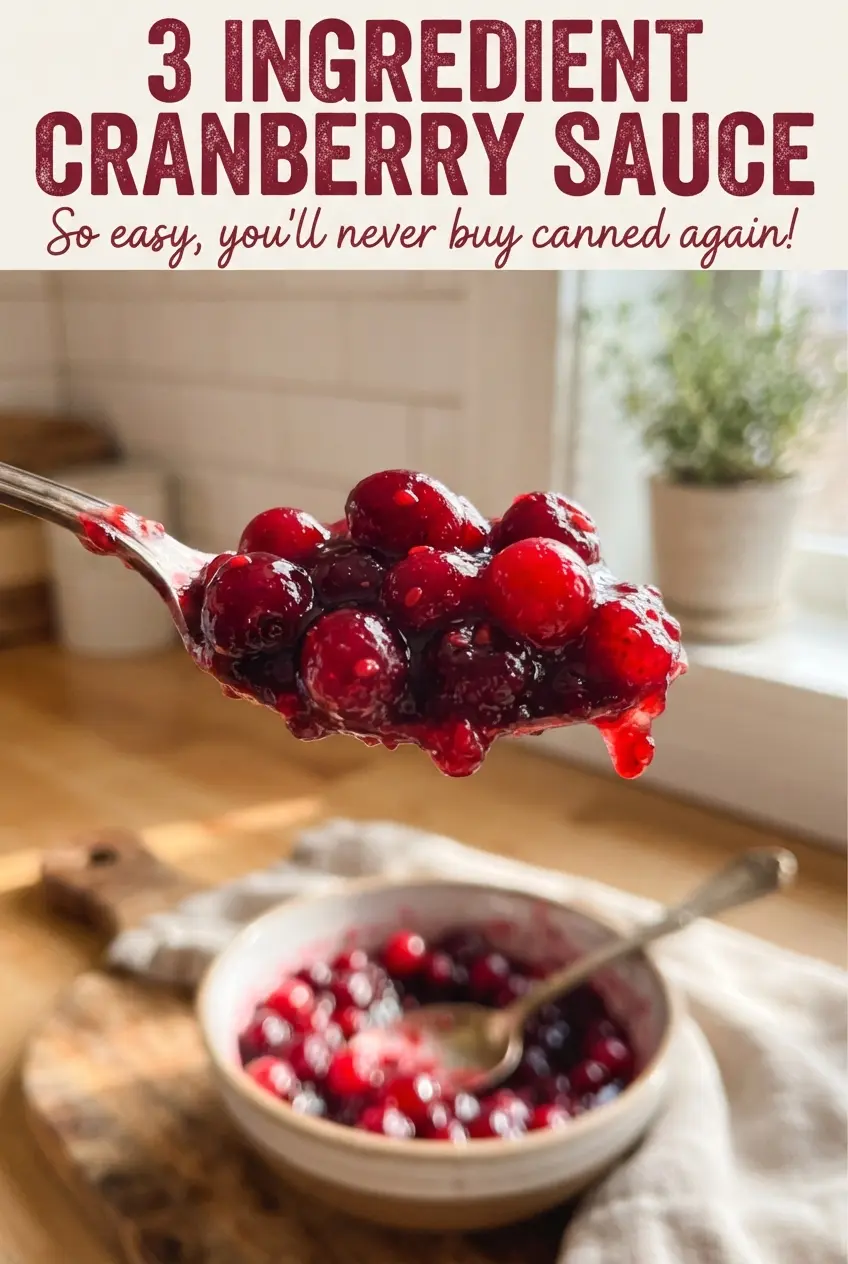
3 Ingredient Cranberry Sauce
Ingredients
Equipment
Method
- In a saucepan, bring granulated sugar and water to a boil over medium-high heat, stirring until the sugar dissolves.
- Add fresh cranberries and return the mixture to a boil, then keep it bubbling to start breaking down the berries.
- Reduce the heat to maintain a gentle simmer and cook 10 minutes, stirring occasionally, until the berries burst and the sauce looks thick and ruby.
- Remove the saucepan from the heat and cool completely at room temperature so the sauce thickens as it cools.
- Chill until serving, using the set-up from cooling and refrigeration for a spoonable, jammy texture.