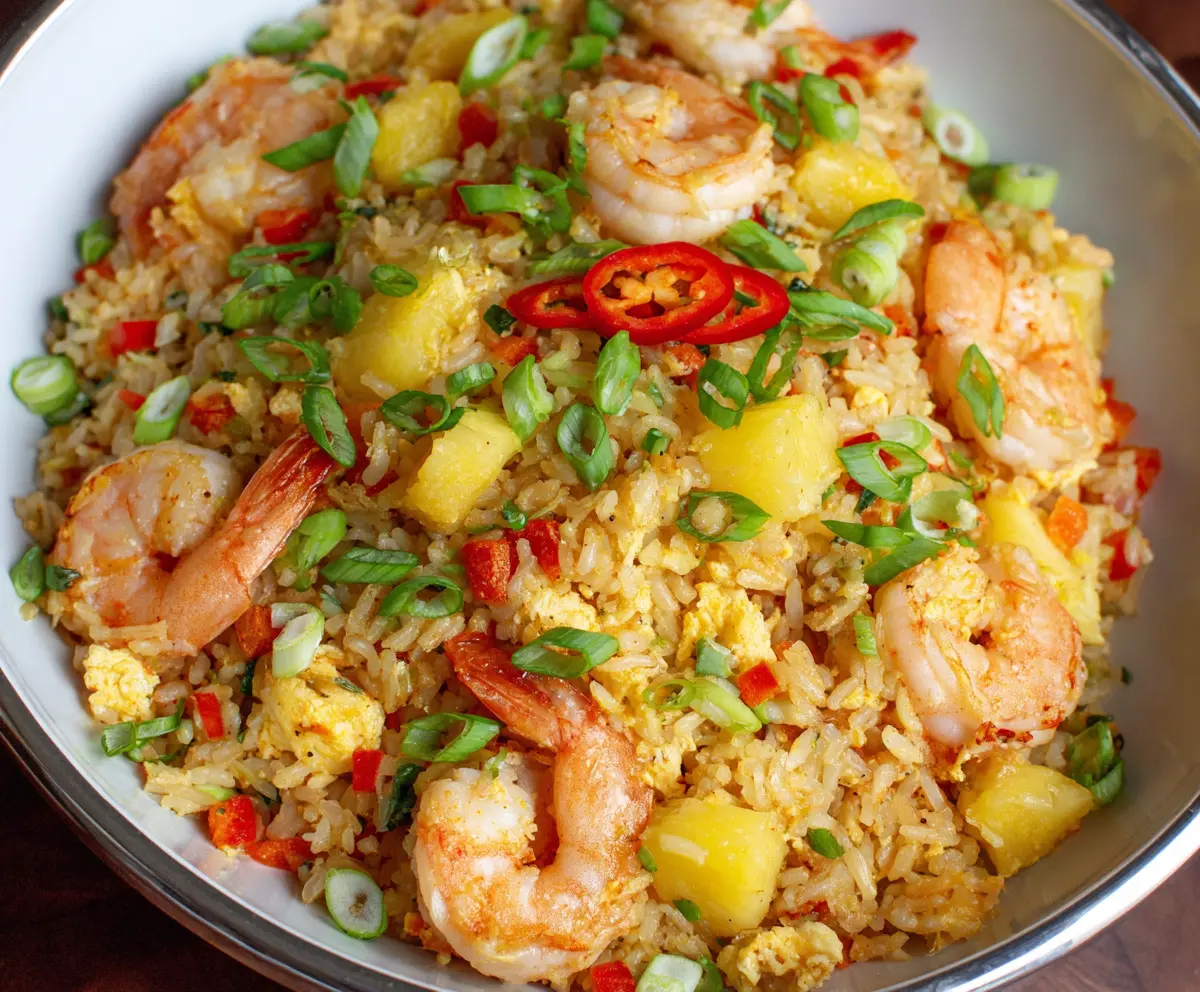
Pineapple Shrimp Fried Rice is a fun and colorful dish that combines tasty shrimp, sweet pineapple, and fluffy rice, all cooked together. It’s a delightful mix of flavors that makes your taste buds sing!
This meal is great for using up leftover rice, and who doesn’t love a little sweetness with their shrimp? I like to toss in some veggies for extra crunch. It’s always a hit at my table!
Key Ingredients & Substitutions
Rice: Day-old jasmine rice is perfect here, as it’s drier and won’t get mushy. If you don’t have jasmine, any long-grain rice works well. You can even use brown rice for a healthier option!
Shrimp: Large shrimp give a nice bite. You can substitute with cooked chicken or tofu for a different protein. If you’re allergic to shellfish, use cubes of firm tofu or your favorite meat instead.
Pineapple: Fresh pineapple adds a sweet zing, but canned pineapple chunks can work too—just drain them well. For a twist, you might try mango for a slightly different flavor.
Eggs: They give this dish richness, but you could skip them or use scrambled tofu for a vegan option. Alternatively, add more veggies for added texture.
Vegetables: The red bell pepper gives color and crunch. Feel free to swap in peas, carrots, or any leftover mixed vegetables. Just remember to adjust cooking times for harder veggies!
How Do I Achieve the Best Stir-Fry Technique?
Stir-frying is key to making delicious fried rice! Here are some tips for success:
- **High Heat:** Always cook on medium-high heat to get that nice sear and flavor.
- **Prep Ahead:** Have all ingredients prepped and ready to go before starting. Stir-frying is quick, and you’ll want everything at your fingertips.
- **Cook in Batches:** If your pan isn’t large, don’t crowd it. Cook shrimp or veggies in batches to prevent steaming.
- **Keep It Moving:** Stir constantly to distribute heat evenly and prevent sticking. Use a spatula to push the ingredients around the pan effectively.
- **Taste as You Go:** Adjust flavors as needed while cooking. Don’t be afraid to add more soy sauce or some fresh pepper for heat.
With these tips and ingredient suggestions, you’re set to make a delightful Pineapple Shrimp Fried Rice! Enjoy creating this dish that brings together refreshing and savory flavors!
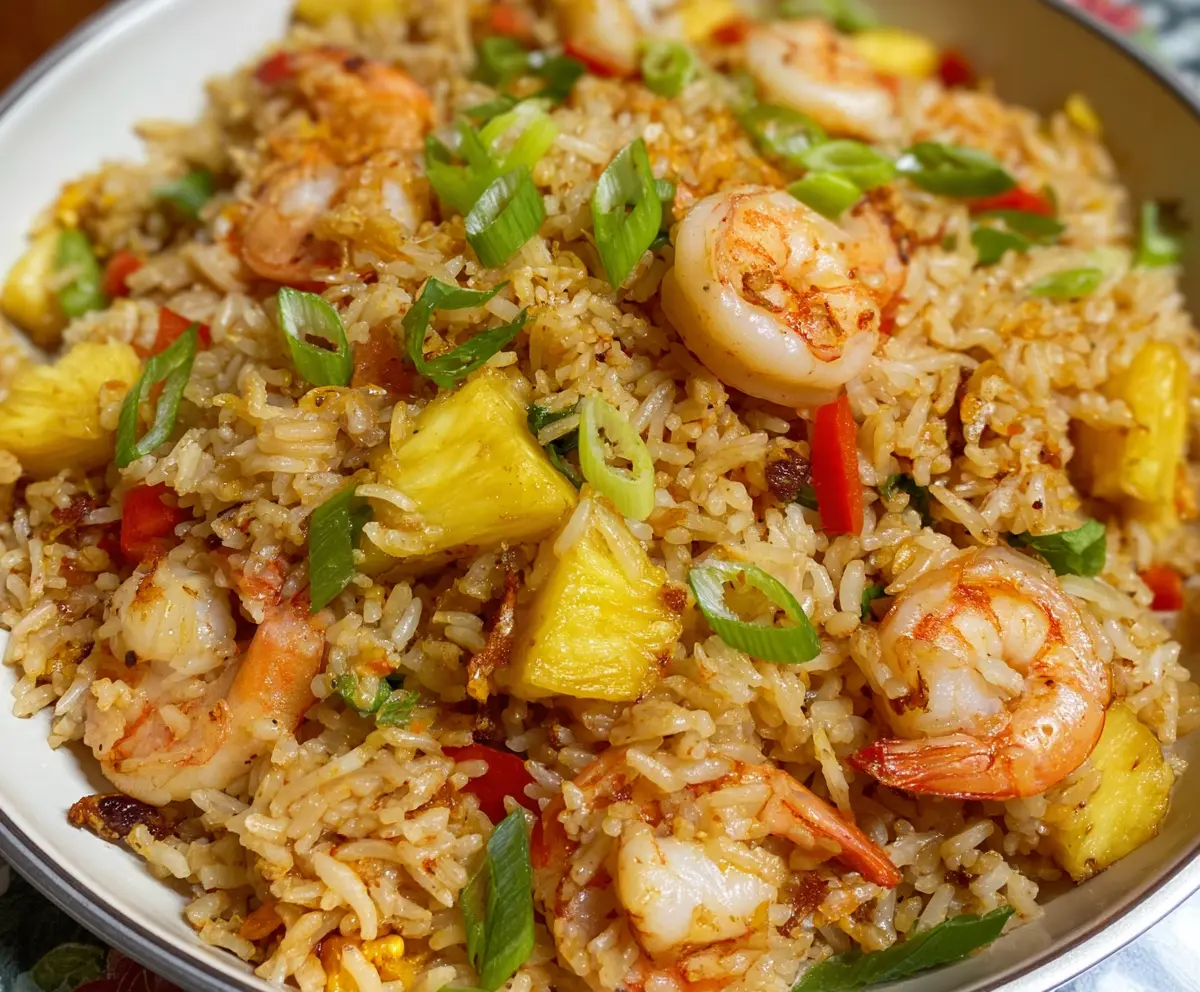
Pineapple Shrimp Fried Rice
Ingredients You’ll Need:
Main Ingredients:
- 2 cups cooked jasmine rice (preferably day-old)
- 12 large shrimp, peeled and deveined
- 1 cup fresh pineapple chunks
- 2 eggs, lightly beaten
- 1/2 cup diced red bell pepper
- 3 green onions, thinly sliced (separate white and green parts)
- 2 cloves garlic, minced
Seasoning and Oil:
- 2 tbsp vegetable oil (or other neutral oil)
- 2 tbsp soy sauce
- 1 tbsp fish sauce (optional, for extra umami)
- 1/2 tsp ground white pepper (or black pepper)
- Salt to taste
For Garnish:
- 1 small red chili, thinly sliced (for garnish and mild heat)
How Much Time Will You Need?
Prepare to spend about 10 minutes prep time and another 10 minutes cooking. In just around 20 minutes, you’ll have a delicious Pineapple Shrimp Fried Rice ready to enjoy!
Step-by-Step Instructions:
1. Cook the Shrimp:
Start by heating 1 tablespoon of oil in a large skillet or wok over medium-high heat. When the oil is hot, add the shrimp. Cook them for about 2 minutes per side until they’re pink and opaque. Once done, remove the shrimp from the pan and set them aside.
2. Sauté the Vegetables:
In the same pan, add the remaining 1 tablespoon of oil. Toss in the minced garlic and diced red bell pepper and sauté for about 1 minute until you can smell the wonderful aroma. This step adds lots of flavor!
3. Incorporate Green Onions:
Next, add the white parts of the sliced green onions to the pan. Stir-fry them briefly with the other vegetables to let their flavor shine through.
4. Scramble the Eggs:
Now, push the veggies to one side of the pan. Pour the beaten eggs into the empty space and gently scramble them until fully cooked. Mix them into the veggies afterwards.
5. Stir in the Rice:
Toss in the cooked rice, breaking up any clumps with the back of your spatula. Stir everything together so the rice gets mixed well with the veggies and eggs.
6. Add Pineapple and Shrimp:
Stir in the pineapple chunks and the cooked shrimp you set aside. Be gentle while combining, so you don’t break the shrimp.
7. Season the Dish:
Now, it’s time to flavor your delicious creation! Pour in the soy sauce, add fish sauce if you like, sprinkle in the white pepper, and season with salt to your taste. Toss everything together until it’s all heated through and evenly coated.
8. Final Touches:
Remove the pan from heat and stir in the green parts of the sliced green onions for that vibrant finish.
9. Serve and Enjoy!
Your Pineapple Shrimp Fried Rice is ready to be served! Transfer it to a serving dish and top with thinly sliced red chili for a pop of color and a hint of spicy flavor. Enjoy this sweet and savory meal that’s sure to please!
Can I Use Frozen Shrimp for This Recipe?
Absolutely! Just make sure to thaw them completely before cooking. You can thaw shrimp by placing them in the fridge overnight or by running cold water over them in a sealed bag for about 10-15 minutes. Pat them dry to ensure they sauté nicely!
Can I Make This Recipe Vegan?
Yes! To make it vegan, simply replace the shrimp with cubed tofu or more vegetables like edamame or bell peppers. Skip the eggs or use a scrambled tofu mixture as an egg substitute. You can also replace the fish sauce with extra soy sauce or a splash of mushroom sauce for umami flavor.
How to Store Leftovers?
Store any leftovers in an airtight container in the fridge for up to 3 days. To reheat, simply warm in a skillet over medium heat or in the microwave until heated through. If the rice seems dry, add a splash of water or soy sauce while reheating.
Can I Add Extra Vegetables?
Definitely! Feel free to add your favorite vegetables like peas, carrots, or snap peas. Just make sure to adjust the cooking time slightly, as harder vegetables may need a bit longer to become tender.