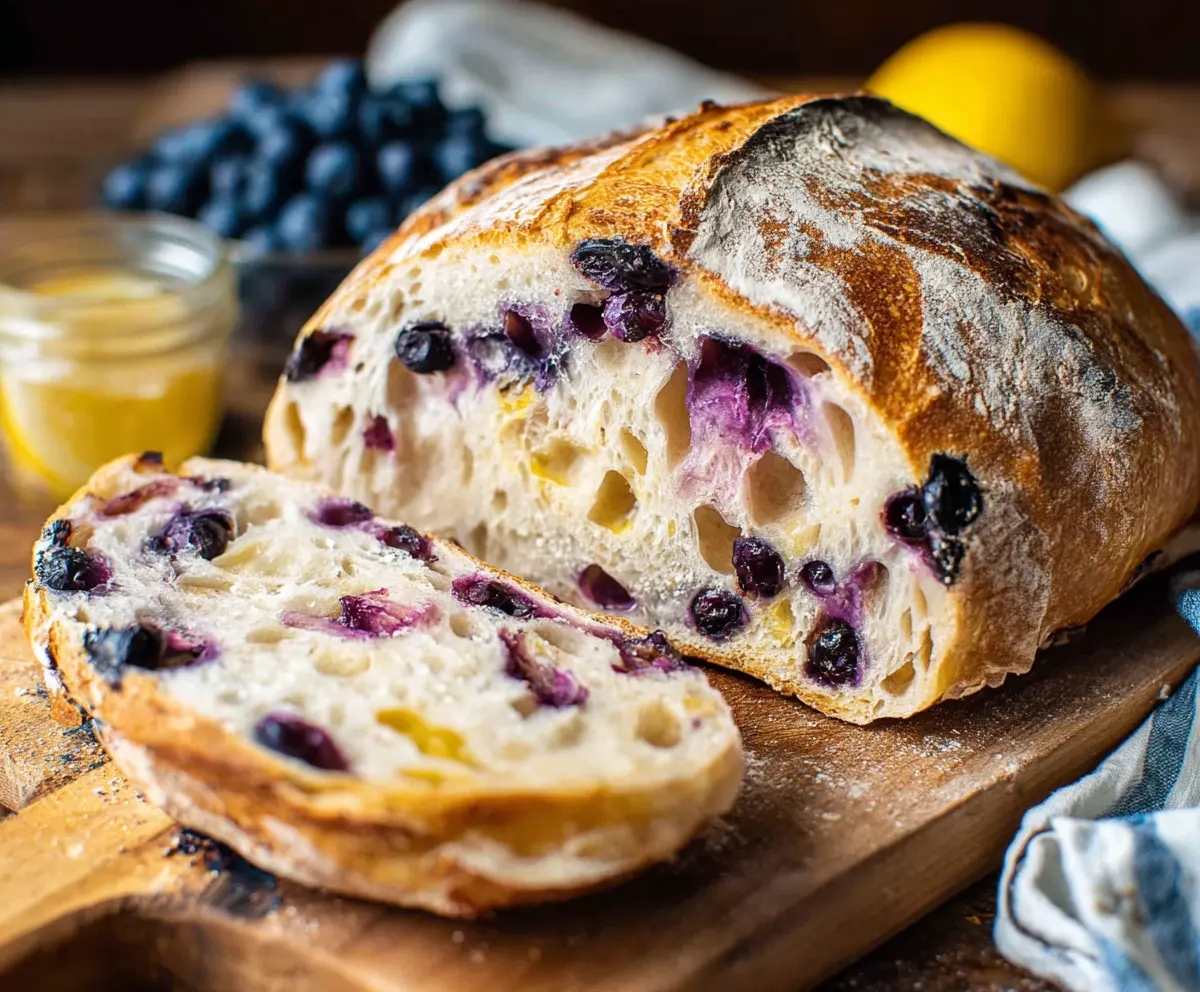
This blueberry lemon sourdough bread is a sweet and tangy delight! With fresh blueberries and a hint of lemon, it’s perfect for breakfast or a snack.
Baking this bread fills your kitchen with an amazing aroma. I love to enjoy it warm, maybe with a little butter on top. It’s like a hug in a loaf! 😊
Key Ingredients & Substitutions
Bread Flour: Using bread flour gives this sourdough its nice structure. If you only have all-purpose flour, you can use that, but the bread may be a bit softer.
Sourdough Starter: A 100% hydration starter works best. If you don’t have one, you can replace it with commercial yeast (about 1-2 teaspoons), but the flavor will differ.
Lemon Zest: Fresh lemon zest brightens the flavor. If you’re out of lemons, orange zest is a tasty substitute too!
Blueberries: Fresh blueberries are perfect, but if you’re using frozen, make sure they’re thawed and drained to avoid excess moisture in the dough.
Sugar: This is optional, but it helps enhance sweetness. If watching sugar intake, you can skip it and rely on the natural sweetness of the blueberries.
How Do You Mix the Dough Properly?
Mixing the dough well at the start sets the foundation for your bread. Here’s how to do it:
- In a large mixing bowl, combine the bread flour and lukewarm water using a wooden spoon or your hands. Don’t worry about lumps; just mix until it forms a shaggy mass.
- Cover the bowl with a cloth or plastic wrap and let it rest for 30-45 minutes. This autolyse step helps hydrate the flour, making dough easier to work with later.
This initial resting phase is key to developing gluten, giving your bread a better texture!
What’s the Best Way to Shape the Dough?
Shaping the dough is essential for creating a beautiful loaf. Here’s a simple method:
- Lightly flour your work surface to prevent sticking.
- Gently turn the dough out onto the surface. Use your hands and the sides of the dough to create tension by folding the outer edges to the center.
- Flip the dough over so the seam is on the bottom.
- With a bench scraper or your hands, shape it into a round ball by tucking the edges under.
This shaping process helps the dough rise better and gives you a nice round loaf!
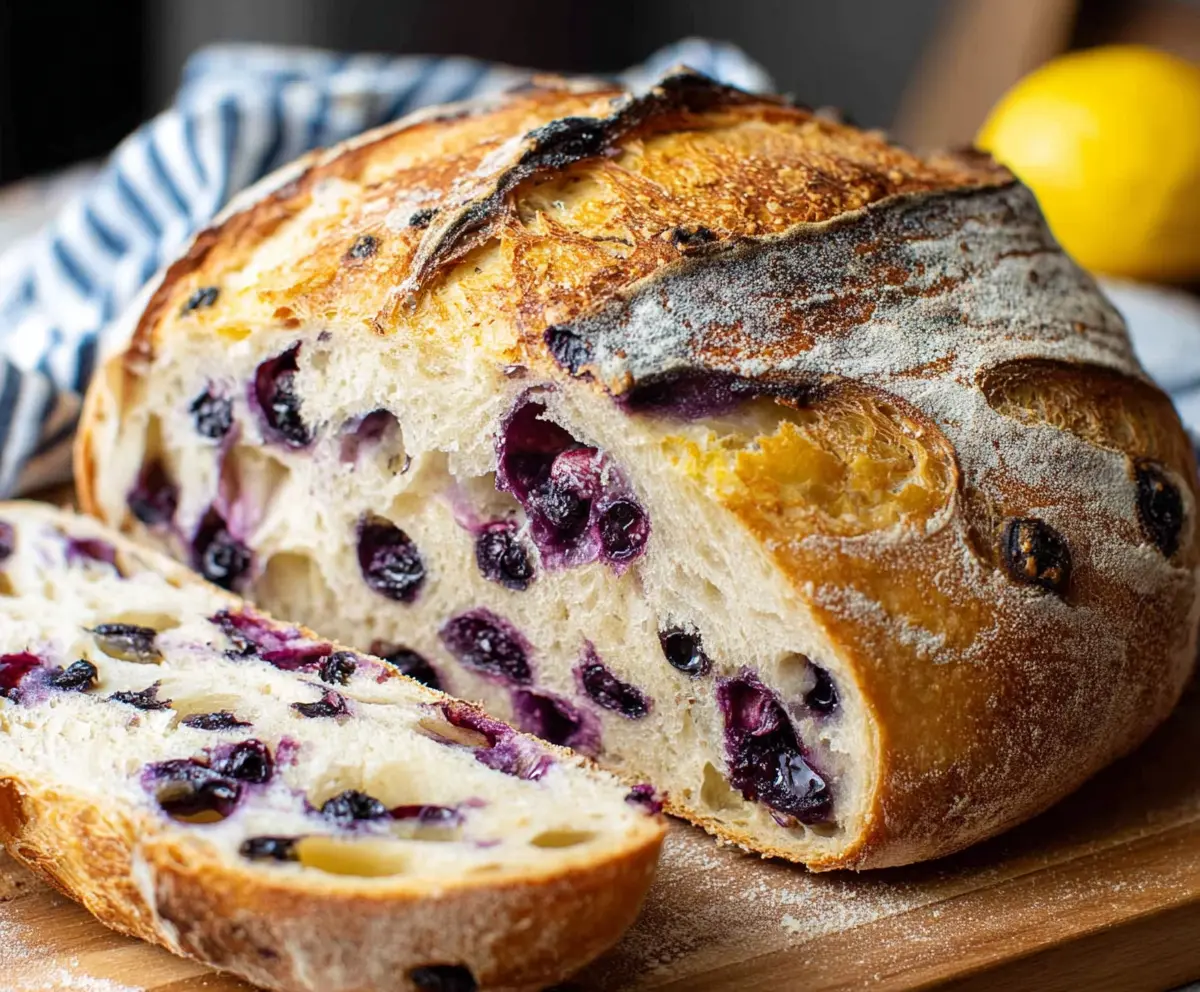
Blueberry Lemon Sourdough Bread
Ingredients You’ll Need:
- 500g (about 4 cups) bread flour
- 100g (about 1/2 cup) active sourdough starter (100% hydration)
- 325ml (1 1/3 cup) water, lukewarm
- 10g (2 tsp) salt
- Zest of 1 lemon (about 1-2 tbsp)
- 150g fresh blueberries (or frozen, thawed and drained)
- 1 tbsp sugar (optional, to enhance sweetness)
How Much Time Will You Need?
This delightful bread will take about 30 minutes of active preparation time and approximately 12-16 hours overall (including proofing in the fridge overnight). Plan ahead for some time to let the dough ferment and rise, but once it’s all set, it’s a straightforward process!
Step-by-Step Instructions:
1. Mixing:
In a large bowl, combine the bread flour and lukewarm water. Stir until they’re just mixed and form a shaggy dough. Cover the bowl with a cloth or plastic wrap and let it sit for 30 to 45 minutes; this step is called autolyse and helps the dough hydrate properly.
2. Add Starter and Salt:
After resting, add in your active sourdough starter, salt, lemon zest, and sugar (if you chose to include it). Mix everything together well until all the ingredients are fully incorporated into a cohesive dough.
3. Bulk Fermentation:
Cover the bowl again and allow the dough to ferment at room temperature for about 4-5 hours. Every 30 minutes for the first two hours, perform 3-4 sets of stretch and folds. To do this, wet your hands, grab one side of the dough, stretch it up, and fold it over itself. Repeat this for all sides of the dough to develop gluten for texture.
4. Add Blueberries:
After your stretch and folds are done, gently add the blueberries to the dough. Carefully fold them in, trying not to crush them, ensuring they are evenly distributed throughout the dough.
5. Shape the Dough:
Once the bulk fermentation is done, turn your dough out onto a lightly floured surface. Shape it into a tight round boule or oval loaf by tucking the edges into the center and creating surface tension.
6. Proof:
Place the shaped dough seam-side up in a well-floured banneton or in a bowl lined with a floured towel. Cover it and let it proof in the refrigerator overnight or for 8-12 hours. This slow fermentation adds to the flavor and texture of the bread.
7. Preheat Oven:
When you’re ready to bake, preheat your oven to 230°C (450°F). Place a Dutch oven or baking stone inside for at least 30 minutes to ensure it’s really hot.
8. Bake:
Gently transfer the proofed dough onto a piece of parchment paper. Use a sharp knife or blade to score the top of the dough. Place the parchment with the dough into the hot Dutch oven, cover it, and bake for 20 minutes. Then, remove the lid and continue baking for another 20-25 minutes, or until the bread is deeply golden and the crust is crispy.
9. Cool:
After baking, carefully remove the bread from the oven and let it cool completely on a wire rack before slicing. This cooling process helps set the texture of the bread.
Your blueberry lemon sourdough bread will have a wonderful light and airy crumb, filled with juicy blueberries and the refreshing aroma of lemon. Enjoy it fresh or toasted with a little butter!
Can I Use Frozen Blueberries Instead of Fresh?
Yes, you can! Just make sure to thaw and drain them first to avoid excess moisture in the dough. Gently fold them in to keep them intact.
What If My Dough Seems Too Sticky?
If your dough is too sticky to handle, try adding a bit more flour—just a tablespoon at a time until it’s manageable. Remember, it’s okay for it to be slightly tacky, as this enhances the final texture!
How Should I Store the Bread After Baking?
Once cooled, store any leftover bread in an airtight container at room temperature for up to 3 days. For longer storage, slice the bread, wrap it in plastic, and freeze it for up to 3 months.
Can I Make This Bread Without a Dutch Oven?
Absolutely! If you don’t have a Dutch oven, you can bake it on a baking stone or sheet. Just place a small pan with water on the lowest rack of your oven to create steam while baking for a nice crust.