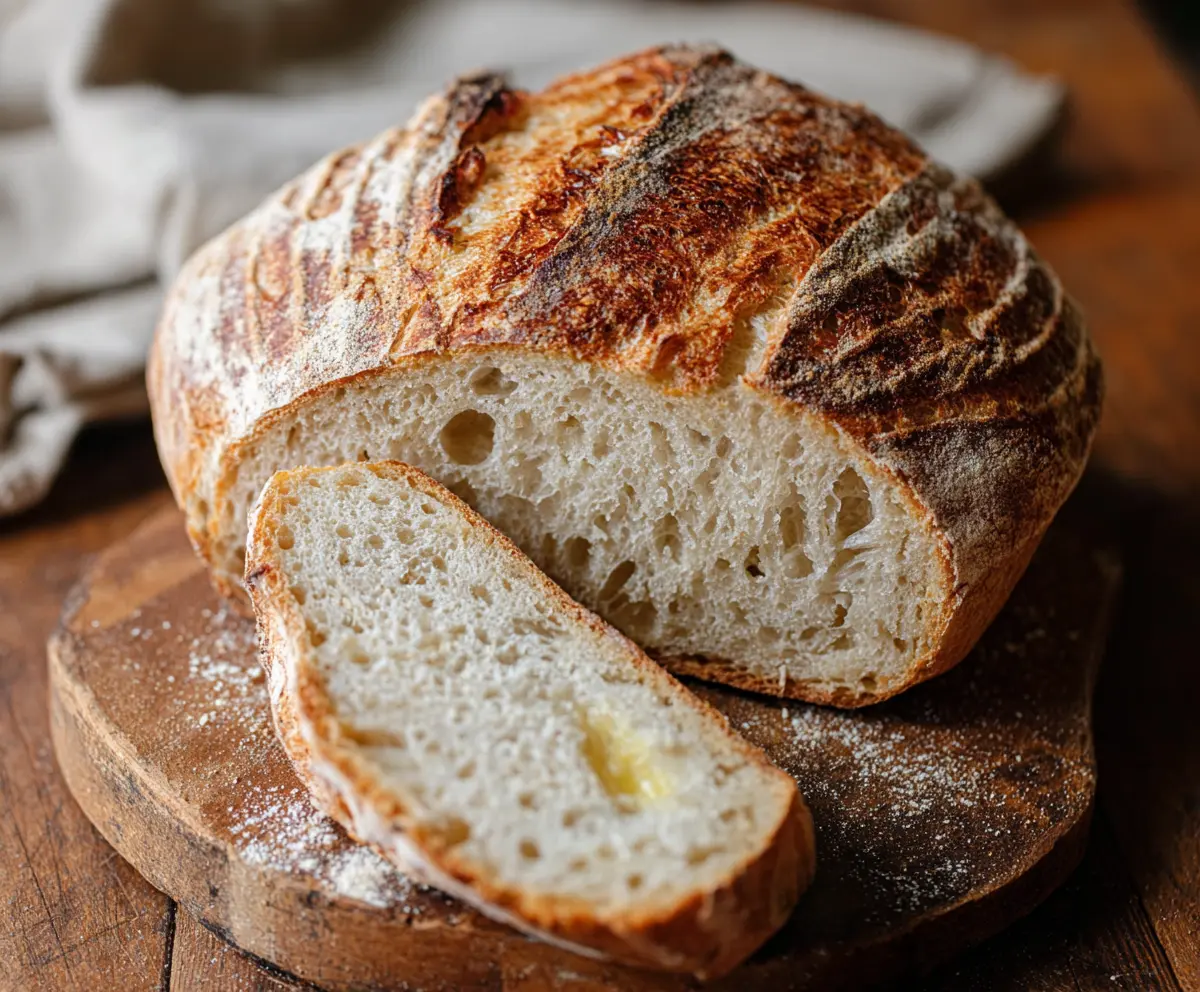
This artisan sourdough bread is crusty on the outside and soft on the inside. It’s made with just flour, water, salt, and a little love from wild yeast!
Baking this bread fills the house with a warm, cozy smell that makes everyone feel at home. I love to enjoy a slice with butter or use it for sandwiches—so tasty! 😊
Key Ingredients & Substitutions
Bread Flour: Opt for unbleached bread flour for the best results. It has a higher protein content, which helps give the bread its chewy texture. If unavailable, all-purpose flour can work, but you might miss some of that lovely chewiness.
Water: Lukewarm water activates the starter better than cold water. You can use filtered water if your tap water has a strong taste or smell, as it can affect the flavor of your bread.
Sourdough Starter: Use a well-fed and bubbly starter for the best rise. If you’re short on time, a quick substitute is using commercial yeast, about 1 teaspoon mixed into the water, but the flavor will differ.
Salt: Salt enhances the flavor and controls yeast activity. Some people like using sea salt for its texture and taste. Avoid iodized salt as it can affect fermentation.
How Do I Get My Dough to Rise Perfectly?
The fermentation process is crucial for a great rise. Start by allowing the dough to rest after mixing. This is called autolyse and helps develop gluten. After adding the starter and salt, let the dough ferment for about 4-6 hours at room temperature. This gives it time to grow and flavor.
- During the first 2 hours, perform stretch and folds every 30 minutes. This helps to strengthen the gluten without kneading.
- When shaping the dough into a boule, be gentle. Tighten it by pulling the edges inward without deflating too much of the air.
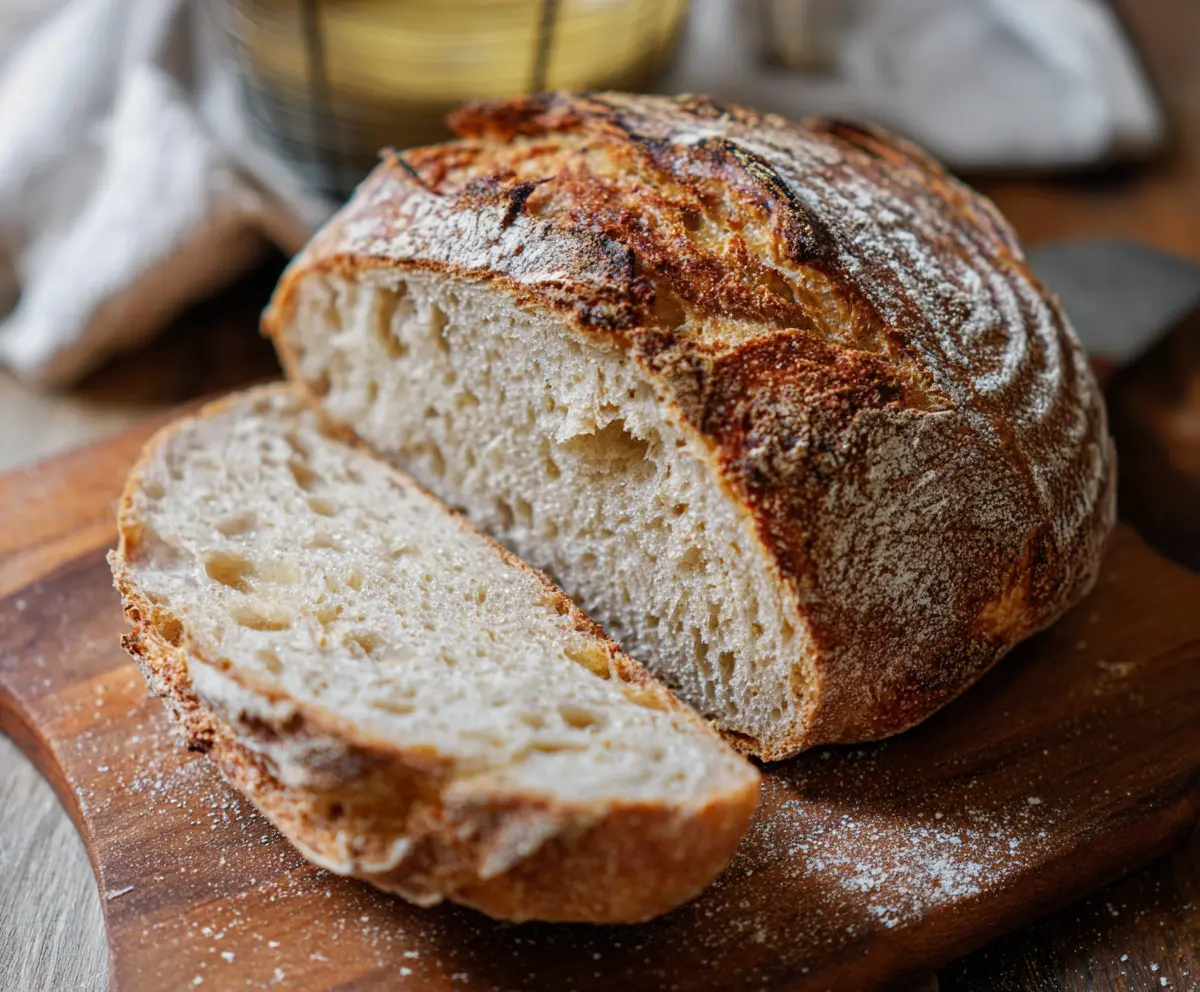
How to Make Artisan Sourdough Bread
Ingredients You’ll Need:
For the Dough:
- 500g bread flour (preferably unbleached)
- 350g water (lukewarm)
- 100g active sourdough starter (fed and bubbly)
- 10g salt
How Much Time Will You Need?
This recipe requires about 30-45 minutes for preparation and 12-16 hours for fermentation (including overnight proofing in the refrigerator). So, while it takes a bit of time, the hands-on work is minimal, and the end result is well worth the wait!
Step-by-Step Instructions:
1. Mixing the Dough:
In a large mixing bowl, combine the bread flour and lukewarm water. Use your hands or a spoon to mix them until they form a shaggy dough. Once mixed, cover the bowl with a damp towel and let it rest for 30-45 minutes. This resting period, called autolyse, helps develop gluten in the dough.
2. Incorporating the Starter:
After the rest, it’s time to add your active sourdough starter to the dough. Mix it in thoroughly until everything is well combined. This is where the magic of sourdough begins—your starter will help the dough rise and develop flavor!
3. Adding Salt:
Sprinkle the salt over the dough. To mix it in, gently fold the dough over itself several times, ensuring the salt is evenly distributed. This step is important as it enhances flavor and controls the fermentation process.
4. Fermenting the Dough:
Cover the bowl again and let the dough ferment at room temperature for about 4-6 hours. During the first 2 hours, every 30 minutes, perform a series of stretch and folds: wet your hand, grab one edge of the dough, stretch it up, and fold it over the center. Rotate the bowl and repeat this 3-4 times each session. This technique helps build strength in the dough.
5. Shaping the Dough:
Once the bulk fermentation is complete, turn the dough out onto a lightly floured surface. Gently shape it into a round boule by folding the edges towards the center, then tighten it by rotating and pulling the dough underneath. Be gentle to keep the air bubbles inside!
6. Proofing the Dough:
Place the shaped dough seam side up into a well-floured banneton basket or a bowl lined with a floured kitchen towel. Cover it and proof in the refrigerator overnight (8-12 hours) for a slow, cold fermentation that enhances flavor.
7. Preheating the Oven:
The next day, preheat your oven to 475°F (245°C). Place a Dutch oven or baking stone inside to heat for at least 45 minutes. This will create a steamy environment that helps your bread rise beautifully.
8. Scoring and Baking:
Remove the dough from the fridge and carefully turn it out onto a piece of parchment paper, seam side down. Use a sharp knife or lame to score the top of the dough. This helps control where the bread expands while baking.
9. Baking the Bread:
Transfer the dough with the parchment paper into the preheated Dutch oven, cover it with the lid, and bake for 20 minutes. After 20 minutes, remove the lid and bake for another 20-25 minutes, until the crust is deeply browned and has a crisp texture.
10. Cooling and Slicing:
Once baked, carefully transfer the bread to a cooling rack. Let it cool completely before slicing. This allows the crumb to set properly and enhances the flavor. Enjoy your homemade artisan sourdough bread!
This recipe yields a beautiful loaf with a crusty, golden-brown exterior and a soft, airy crumb filled with those delightful irregular holes, just like you’d find in a bakery!
Can I Use All-Purpose Flour Instead of Bread Flour?
Yes, you can use all-purpose flour, but keep in mind that the texture may be slightly different. Bread flour has a higher protein content, which contributes to a chewier crust and a better rise. If you do use all-purpose flour, your loaf will still be delicious but might be a bit softer.
What If My Sourdough Starter Isn’t Bubbly?
Your starter should be active and bubbly to ensure proper fermentation. If it’s not, feed your starter 4-6 hours before using it so it’s lively and ready to give your bread a good rise. You should ideally use it when it has doubled in size and has plenty of bubbles on the surface.
Can I Speed Up the Fermentation Process?
While slow fermentation is ideal for flavor development, if you’re in a hurry, you can place the dough in a warmer spot (around 75-80°F) to speed up the fermentation. Just keep an eye on it, as it may rise faster than expected!
How Should I Store Leftover Sourdough Bread?
To keep your sourdough fresh, wrap it in a clean kitchen towel and store it at room temperature for up to 3 days. If you need to keep it longer, you can freeze the bread. Just slice it first, then wrap it tightly in plastic wrap and aluminum foil before placing it in the freezer. To consume, thaw at room temperature or toast frozen slices directly.